
ASTM A789 covers duplex stainless steel tubes (dimensioned by OD and wall thickness); ASTM A790 covers duplex stainless steel pipes (dimensioned by NPS and schedule). Both standards cover the same grade families: S31803, S32205, S32750, S32760, and others, with identical chemical and mechanical requirements. The choice between them depends on product form: tubes for heat exchangers and instrumentation, and pipes for process fluid lines.

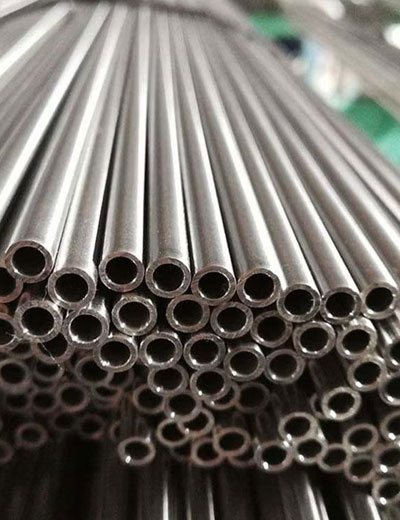
ASTM A789 Duplex Stainless Steel Tube Standard
ASTM A789 is a standard published by the American Society for Testing and Materials (ASTM) that covers the manufacturing and quality requirements for seamless and welded ferritic/austenitic (duplex) stainless steel tubing for general service. This standard applies to duplex grades like UNS S31803 (2205), UNS S32750 (2507), and UNS S32760, where an austenite-ferrite dual-phase microstructure delivers high mechanical strength and outstanding resistance to chloride stress corrosion cracking.
It defines chemical composition, mechanical properties, heat treatment conditions, dimensional tolerances, and testing requirements for duplex tubes produced by both seamless and welded processes. The specification emphasises resistance to stress corrosion cracking and pitting, two failure modes that conventional austenitic stainless steels struggle to resist in chloride-containing media.
ASTM A789 duplex stainless steel tubing is widely used in heat exchangers, condensers, offshore topside instrumentation, desalination plants, chemical process lines, and subsea umbilical systems. This guide covers every section of ASTM A789, from grades, chemical composition, mechanical properties, tolerances, heat treatment, ferrite content, and testing requirements to common questions.
ASTM A789 PDF Free Download ASTM A789 PDF Free Download
What is ASTM A789?
ASTM A789 is the standard specification for seamless and welded ferritic/austenitic stainless steel tubing for general service. It is published by ASTM International and maintained under ASTM Committee A01 on Steel, Stainless Steel, and Related Alloys, Subcommittee A01.10 on Stainless and Alloy Steel Tubular Products.
Duplex stainless steels contain a two-phase microstructure of roughly 50% austenite and 50% ferrite. This balanced structure gives them about twice the yield strength of standard austenitic grades (304, 316) while greatly improving resistance to chloride stress corrosion cracking.
The difference between ASTM A789 and ASTM A790 is that ASTM A789 covers tubing, while ASTM A790 covers pipe. Both standards list identical duplex and super duplex grade families with the same chemical and mechanical requirements. The difference is the form of the product: A789 tubes are ordered by precise OD and wall measurements for heat exchangers and instrumentation, while A790 pipes follow standard NPS schedules for pressure-containing fluid lines.
Chemical Composition of ASTM A789 Tubes
The chemical composition of ASTM A789 duplex tube grades is tightly controlled to keep the correct austenite-ferrite balance after solution annealing. Chromium (Cr), molybdenum (Mo), and nitrogen (N) drive corrosion resistance and determine the PREN value. Nickel (Ni) stabilises the austenite phase. Carbon is limited to 0.03% max for most grades to prevent carbide precipitation and sensitisation during welding.
| GRADE | UNS Designation |
C | Mn | P | S | Si | Ni | Cr | Mo | N | Cu | Other |
| S31500 | 0.03 | 1.2-2.0 | 0.03 | 0.03 | 1.4-2.0 | 4.2-5.2 | 18.0-19.0 | 2.5-3.0 | 0.05-0.1 | - | - | |
| S31803 | 0.03 | 2.0 | 0.03 | 0.02 | 1.0 | 4.5-6.5 | 21.0-23.0 | 2.5-3.5 | 0.08-0.2 | - | - | |
| 2205 | S32205 | 0.03 | 2.0 | 0.03 | 0.02 | 1.0 | 4.5-6.5 | 22.0-23.0 | 3.0-3.5 | 0.14-0.2 | - | - |
| S32520 | 0.03 | 1.5 | 0.035 | 0.02 | 0.8 | 5.5-8.0 | 24.0-26.0 | 3.0-5.0 | 0.2-0.35 | 0.5-3.0 | - | |
| 255 | S32550 | 0.04 | 1.5 | 0.04 | 0.03 | 1.0 | 4.5-6.5 | 24.0-27.0 | 2.9-3.9 | 0.1-0.25 | 1.5-2.5 | - |
| S32707 | 0.03 | 1.5 | 0.035 | 0.01 | 0.5 | 5.5-9.5 | 26.0-29.0 | 4.5-5.0 | 0.3-0.5 | 1.0 | Co:0.5-2.0 | |
| 2507 | S32750¹ | 0.03 | 1.2 | 0.035 | 0.02 | 0.8 | 6.0-8.0 | 24.0-26.0 | 3.0-5.0 | 0.24-0.32 | 0.5 | - |
| S32760² | 0.03 | 1.0 | 0.03 | 0.01 | 1.0 | 6.0-8.0 | 24.0-26.0 | 3.0-4.0 | 0.2-0.3 | 0.5-1.0 | W:0.5-1.0 |
Note: All values are maximum percentages unless a range is specified.
Mechanical Properties of ASTM A789 Tubing
Duplex tubes under ASTM A789 deliver significantly higher yield strengths than austenitic grades covered by ASTM A269 or A213. A standard 2205 tube has a minimum yield of 450 MPa (65 ksi), more than double that of the TP316. Super duplex grades increase this even more: S32750 reaches 550 MPa (80 ksi). All grades must be supplied in the solution-annealed and quenched condition. The table below lists the minimum mechanical properties for each major A789 grade.
| Grade | Standard | Heat Treating Temp. : min | Tensile Strength Min. MPa |
Yield Strength Min. MPa |
Elongation min. % |
| S31500 | A789 | 980–1040°C | 630 | 440 | 30 |
| S31803 | A789 | 1020–1100°C | 620 | 450 | 25 |
| S32205 | A789 | 1020–1100°C | 655 | 450 | 25 |
| S32520 | A789 | 1080–1120°C | 770 | 550 | 25 |
| S32550 | A789 | 1040°C min | 760 | 550 | 15 |
| S32707 | A789 | 1080–1120°C | 920 | 700 | 25 |
| S32750 | A789 | 1025–1125°C | 800 | 550 | 15 |
| S32760 | A789 | 1070–1140°C | 750 | 550 | 25 |
Note: Hardness must not exceed 293 HB / 31 HRC / 310 HV for most duplex grades. Duplex stainless steels can suffer 475°C embrittlement when exposed for long periods at 300–525°C and sigma phase formation at 600–1000°C. Because of this, they are not recommended for continuous service above 300°C, and the typical maximum service temperature is about 250°C, depending on grade and operating conditions.
ASTM A789 Tolerances
ASTM A789 defines permissible variations for outside diameter, wall thickness, and cut length. Since A789 covers tubing, dimensions are specified by OD and wall. To ensure dimensional compliance during procurement and inspection, refer to the OD and wall thickness tolerances detailed below for ASTM A789 tubing:
| STANDARD | OD(D) | TOLERANCE(MM) | THICKNESS(S) | TOLERANCE | LENGTH | TOLERANCE |
| MM | COMMON HIGH | MM | MM | MM | ||
| A789 | D<12.7 | ±0.13 | S(ave):±15% | S(Min):+30%/0 | OD<38.1 | +3.0/0 |
| 12.7≤D<38.1 | ±0.13 | |||||
| 38.1≤D<88.9 | ±0.25 | S(ave):±10% | S(Min):+20%/0 | OD≥38.1 | +5.00/0 | |
| 88.9≤D≤139.7 | ±0.38 | |||||
| 139.7≤D≤203.2 | ±0.76 |
If you want to know more product details, please contact us!
ASTM A789 Duplex Stainless Steel Tube Grades
ASTM A789 covers standard duplex and super duplex stainless steel grades. Standard duplex grades (like 2205) offer a Pitting Resistance Equivalent Number (PREN) above 30, while super duplex grades (like 2507) exceed PREN 40. Higher PREN means better resistance to pitting and crevice corrosion in chloride-rich environments like seawater or acidic process streams.
UNS S31803 / Duplex 2205
UNS S31803 is the most common duplex tube grade globally. With 21–23% chromium, 4.5–6.5% nickel, and 2.5–3.5% molybdenum, it provides roughly twice the yield strength of 316L while resisting chloride stress corrosion cracking at temperatures up to 250°F (120°C).
More About UNS S31803 MaterialUNS S32205 / Duplex 2205 (Enhanced)
UNS S32205 is the tighter-composition variant of the 2205 family with a controlled nitrogen minimum of 0.14%. The higher nitrogen content raises the PREN above 34 and improves weld-zone toughness compared to S31803. S32205 is specified for critical heat exchanger and condenser service.
More About UNS S32205 MaterialUNS S32550 / Alloy 255
UNS S32550 combines 24.0–27.0% Cr, 4.5–6.5% Ni, 2.9–3.9% Mo, and 0.5–3.0% Cu. The copper addition provides strong resistance to reducing acids like sulfuric acid. It is commonly used in flue gas desulfurisation (FGD) tube bundles, phosphoric acid plants, and chemical storage applications.
More About UNS S32550 MaterialUNS S32750 / Super Duplex 2507
UNS S32750 is the specified super duplex tube grade with a PREN above 41. Its composition of 24.0–26.0% Cr, 6.0–8.0% Ni, 3.0–5.0% Mo, and 0.24–0.32% nitrogen gives outstanding resistance to pitting, crevice corrosion, and stress corrosion cracking in hot seawater.
More About UNS S32750 MaterialUNS S32760 / Super Duplex 2760
UNS S32760 adds tungsten and copper to the super duplex base for extra corrosion performance in aggressive chloride and acidic media. The tungsten addition raises the modified PREN to above 40. It is specified for hot seawater cooling systems, sour gas condensers, and high-pressure chemical reactor tubing where both pitting and crevice corrosion resistance are critical.
More About UNS S32760 MaterialHeat Treatment Requirements for ASTM A789 Tubing
Every ASTM A789 tube must be supplied in the solution-annealed and quenched condition. Solution annealing dissolves intermetallic phases (sigma, chi) and carbide precipitates that form during hot working, then rapid cooling locks in the correct 50/50 austenite-ferrite phase balance.
Annealing temperatures vary by grade. Standard duplex 2205 (S32205) requires a temperature range of 1020–1100°C (1870–2010°F). Super duplex 2507 (S32750) is typically annealed at 1025–1125°C (1880–2060°F). After reaching the soak temperature, the tube must be quenched in water or cooled rapidly enough to prevent sigma phase re-formation.
For welded tubes, the weld zone receives a second thermal cycle from the welding process itself. That is why ASTM A789 requires a full-body solution anneal after welding, not just a localised weld heat treatment. This full anneal ensures the heat-affected zone (HAZ) has the same phase balance and corrosion resistance as the parent metal.
Ferrite Content and Microstructure
The ferrite-austenite phase balance is the single most critical quality factor for duplex stainless steel tubing. ASTM A789 requires the microstructure to consist of roughly equal proportions of ferrite and austenite after solution annealing. Most end-user specifications require 35–65% ferrite, measured by magnetic response (Feritscope) or metallographic point counting per ASTM E562.
Too much ferrite (above 70%) reduces impact toughness and corrosion resistance. Too little ferrite (below 30%) weakens resistance to stress corrosion cracking, which is the property that makes duplex tubing valuable over austenitic alternatives. During fabrication, welding heat input, interpass temperature, and post-weld cooling rate all affect the final ferrite count. Proper welding procedures (GTAW with nitrogen-added shielding gas, controlled heat input below 1.5 kJ/mm) are critical to maintaining the target phase balance in the weld and HAZ.
Testing and Inspection Requirements
ASTM A789 mandates multiple tests to verify tube quality. Every lot must pass chemical analysis, mechanical testing, and either a hydrostatic test or a nondestructive electric test. Additional tests apply to welded tubes. Here is a breakdown of each required test.
Tension Test
One tension test per lot for lots of 50 tubes or fewer. Lots with more than 50 tubes require 2 specimens. The test measures tensile strength, yield strength (0.2% offset), and elongation in a 2 in. (50 mm) gauge length. Longitudinal specimens are standard.
Flattening Test (Seamless Tubes)
For seamless tubes, a flattening test is performed on specimens from one end of one tube per lot. The tube section is crushed between parallel plates until the distance between plates equals 3 times the wall thickness. No cracks or breaks in the material shall appear during this test.
Flaring Test (Seamless Tubes)
A flaring test expands one end of the tube over a 60° tapered mandrel until the inside diameter increases by at least 10% of the original ID. The expanded end must show no cracks, splits, or other visible defects. This test validates ductility and forming capability.
Reverse Flattening Test (Welded Tubes)
For welded tubes, a reverse flattening test replaces the standard flattening test. One specimen is taken from each 1,500 ft (450 m) of finished tubing. The tube section is flattened with the weld at the point of maximum bending (6 o'clock or 12 o'clock position). No cracking at the weld is permitted.
Hardness Test
Brinell or Rockwell hardness tests are performed on 2 tubes per lot. Most duplex grades must not exceed 293 HB / 31 HRC / 310 HV. Hardness results above these limits indicate incomplete solution annealing or the presence of intermetallic phases like sigma.
Hydrostatic or NDE Test
Every tube must pass either a hydrostatic pressure test or a nondestructive electric test (eddy current per ASTM E426 or ultrasonic per ASTM E213). For the hydrostatic test, the formula is P = 2St/D, where S = 64,000 psi (441 MPa), t = wall thickness, and D = outside diameter. The test pressure need not exceed 2,500 psi (17 MPa) unless a higher pressure is specified in the purchase order.
Corrosion Test (Supplementary)
ASTM A923 (Practice B or C) is frequently specified as a supplementary requirement for duplex tubing. This test uses Charpy impact specimens or ferric chloride corrosion exposure to detect detrimental intermetallic phases. Many offshore and petrochemical buyers require ASTM A923 results on every heat as a condition of acceptance.
Frequently Asked Questions
-
What Is the Difference Between ASTM A789 and ASTM A790?
-
What Heat Treatment Does ASTM A789 Require?All grades require solution annealing followed by rapid water quenching. Duplex 2205 (S32205) is annealed at 1020–1100°C (1870–2010°F). Super duplex 2507 (S32750) is typically annealed at 1025–1125°C (1880–2060°F). Welded tubes must be full-body annealed after welding to restore the correct phase balance across the entire weld zone and HAZ.
-
How to Choose Between Duplex 2205 and Super Duplex 2507 Tubing?Choose 2507 when the environment involves high chloride levels (above 1,000 ppm Cl⁻), direct seawater contact, or operating temperatures above 140°F (60°C). For moderate chloride exposure and temperatures below 60°C, 2205 is adequate for the application at a lower alloy cost. The material cost difference between 2507 and 2205 is typically 30–50%, driven by higher nickel and molybdenum content in 2507.
-
Can ASTM A789 Tubes Be Used Under ASME Code?Yes. ASTM A789 has a corresponding ASME specification: SA-789. SA-789 is listed in the ASME Boiler and Pressure Vessel Code, Section II, Part A. Tubes produced to ASTM A789 that also meet ASME supplementary requirements can carry the SA-789 designation for code-stamped pressure vessels and heat exchangers.
-
What is the Difference Between ASTM A789 and ASTM A269?A789 covers ferritic/austenitic (duplex) stainless steel tubing; A269 covers austenitic stainless steel tubing. Duplex A789 tubes offer roughly double the yield strength and far better chloride SCC resistance than A269 grades like TP316L. However, A269 tubes are available in a wider range of sizes and are less expensive per kilogram. A269 is the standard for general-purpose austenitic tubing; A789 is specified when chloride resistance and higher strength are needed.