316 is usually better for heat exchanger tubes as it provides higher chloride corrosion resistance and better performance at elevated temperatures, especially in marine or chemical environments.

ASTM A213 Stainless Steel Heat Exchanger Tube Manufacturer
We are Xintongda Special Steel (XTD), a China-based leading manufacturer and supplier of Stainless steel heat exchanger tubes. Heat exchanger tubes are those hollow products used in heat exchangers to transfer heat between two fluids. We manufacture our heat exchanger tubes in accordance with ASTM A213, ASTM A269, and relevant EN pressure tube standards such as EN 10216-5. Our heat exchanger tubes are available in various sizes (ranging from 6.35 mm to 257 mm) and various shapes (straight lengths or U-bent tubes). At XTD, we have a wide range of grades, like SS 304/304L, 309, 310, 310H, 310S, 314, etc. The stainless steel tube for a heat exchanger can resist fouling and corrosive media, and provide a stable heat transfer and durability. These properties make it suitable for industries like power generation, oil & gas, pharmaceuticals, etc.
As a reliable manufacturer and supplier of high-quality stainless steel heat exchanger tubing, we have an annual production and supply capacity of 25,000 tons. Our 4 decades of experience and multiple international certifications help us to gain our customers' trust.
-
 Standards
ASTM A213
Standards
ASTM A213
-
 OD Range
6.35-257 mm
OD Range
6.35-257 mm
-
Thickness
0.89-12.7 mm
 Get a free quote now
Technical Data
Technical Data
Get a free quote now
Technical Data
Technical Data
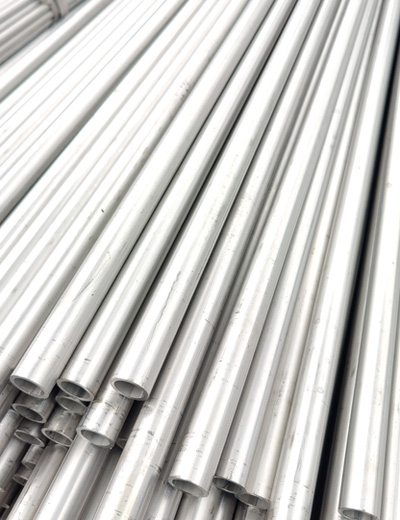
What is a Stainless Steel Heat Exchanger Tube?
A stainless steel heat exchanger tube is a tubular product made of various grades of stainless steel, usually austenitic."It is a component of the heat exchanger used to transfer heat between two fluids. Stainless steel is typically used to make the heat exchanger because of its high strength, good resistance to corrosion, and ability to withstand high temperatures. Some of its grades can resist corrosion even in environments like harsh chemicals and seawater. We specialise in manufacturing SS tubes for heat exchangers in seamless form. Based on the forms, there are two main HX stainless steel tubes: stainless steel tube coil heat exchangers and stainless steel finned tube heat exchangers. The SS coil tube is used to in chemicals, food/beverages, and other applications. It is made with high strength and toughness. The SS fin tube is a special type of tube with external fins or ridges. These fins help the tube to remove heat from the system. It is mainly used in HVAC systems, power plants, and renewable energy industries.
Manufacturing Process of Seamless Stainless Steel Heat Exchanger Tube
The stainless steel HX tube is made by heating and piercing a solid billet into a hollow shell. Then this shell undergoes hot-working and cold-drawing so that it gets its precise dimensions. After that, solution annealing is performed to restore the tube's mechanical properties and corrosion resistance. The last steps are acid pickling (to remove impurities) and straightening (to straighten and smooth the surface) before the tube is sent for testing. To learn the whole manufacturing process, kindly visit this page.
How Stainless Heat Exchanger Tubes Work?
A Stainless Steel Seamless Heat Exchanger Tubing allows one fluid to flow inside the tube while another flows around it. This enables heat transfer without the fluids mixing. In the SS tube wall, the heat moves from the hot fluid to the cold one because of the temperature difference. Despite its low thermal conductivity, stainless steel tubes’ thin uniform walls support efficient heat transfer, while their corrosion resistance protects the tubes during continuous operation.
Stainless Steel Heat Exchangers vs Other Materials
It is very important to select the best material for the heat exchanger tube, as the material's chemical composition and mechanical properties will affect the performance, lifespan, maintenance, and cost of the tube. Titanium, for instance, provides better corrosion resistance than stainless steel, but it is more costly, too. The table given below will help you understand which material would be suitable for your heat exchanger tube and why.
| Feature | Stainless Steel | Copper | Aluminum | Titanium |
| Corrosion Resistance | Excellent | Moderate | Fair | Excellent |
| Cost | Moderate | High | Low | High |
| Strength | High | Moderate | Low | Very High |
What are the advantages of Stainless Steel Tube for a Heat Exchanger?
The stainless steel tube for heat exchangers has 8 key properties: corrosion resistance, high-temperature stability, efficient heat transfer, excellent thermal performance, hygiene & cleanability, resistance to fouling & scaling, versatility & availability, and longevity & cost-effectiveness.
- Corrosion Resistance: The chromium content present in the stainless steel alloy forms a passive layer of chromium oxide when exposed to oxygen. This layer protects the tube from corrosion caused by water, chemicals, process fluids, and high-temperature environments commonly found in heat exchangers.
- High-Temperature Stability: The stainless steel HX tube gets high-temperature stability due to its mechanical strength and structural integrity.
- Efficient Heat Transfer: The heat exchanger stainless steel tube has thin and uniform walls, which allow heat to transfer efficiently from the hot fluid to the cold one.
- Excellent Thermal Performance: Stainless steel has good resistance to thermal fatigue, corrosion, and surface degradation, which makes the heat transfer process stable. This is why the SS heat exchanger tube provides excellent thermal performance.
- Hygiene & Cleanability: It is easy to maintain hygiene for the SS heat exchanger tube as its smooth internal surface doesn't allow contamination buildup and makes the cleaning and sterilisation easy.
- Resistance to Fouling & Scaling: The smooth surface finish, along with the corrosion resistance, reduces the adhesion of scale, deposits, and biofouling
- Versatility & Availability: We manufacture our SS heat exchanger tubes in a wide range of grades, diameters, wall thicknesses, and configurations (straight, U-bend, finned, coiled), which makes the tube versatile and adaptable to many industrial needs.
- Longevity & Cost-Effectiveness: Since the tube has a long service life, low maintenance requirements, and high resistance to corrosion and fouling, it remains cost-effective.
Stainless Steel Heat Exchanger Tube Specifications

Standard
ASTM A213/ A269
OD
6.35 mm - 257 mm
Thickness
0.89-12.7 mm

Surface Treatment
Oil-dip, Varnish, Passivation, Phosphating
Inner Packing
Caps on two ends of every pipe

Grades
304/304L/304H, 316/316L, 321/321H, 317/317L, 347/347H, 309S, 310

Form
Round, Coiled, Square, U Shape, Rectangular, Straight, Honed Tubes, Pan Cake Coils

End
Bevelled or plain end, square cut, burr free, plastic cap at both ends
Stainless Steel Grades for HX Tubes
The common stainless steel grades used for HX tubing are 304/ 304L and 316/ 316L. 304/ 304L is used for handling water, steam, and mild chemicals due to good corrosion resistance and thermal stability. The 316/ 316L can be found in heat exchangers exposed to chlorides, aggressive process fluids, or seawater, as the molybdenum present in this grade improves resistance to pitting and crevice corrosion. The 321 is a titanium-stabilised grade, which is used for high temperatures because it can resist carbide precipitation during thermal cycling. 347 is a niobium-stabilised grade used in chemical and refinery applications where heat exchangers are continuously used. We also supply a wide range of other stainless steel grades like 309, 310, 310H, 310S, 314, 316LN, 316Ti, 321H, and 347H.
| GRADE | UNS | GB | JIS | ISO | DIN/EN | GOST | |
| ISC | NEW | ||||||
| 304 | S30400 | S30408 | 06Cr19Ni10 | SUS 304 | X5CrNi18-10 | 1.4301 | 08X18H10 |
| 304L | S30403 | S30403 | 022Cr19Ni10 | SUS 304L | X2CrNi19-11 | 1.4307 | 03X18H11 |
| 309S | S30908 | S30908 | 06Cr23Ni13 | SUS 309S | X12CrNi23-13 | 1.4833 | 10X23H13 |
| 310 | S31000 | S31020 | 20Cr25Ni20 | SUS 310 | X15CrNi25-21 | 1.4841 | 20X25H20C2 |
| 310S | S31008 | S31008 | 06Cr25Ni20 | SUS 310S | X8CrNi25-21 | 1.4845 | 10X23H18 |
| 314 | S31400 | S31400 | 16Cr25Ni20Si2 | - | X15CrNiSi25-21 | 1.4841 | - |
| 316 | S31600 | S31608 | 06Cr17Ni12Mo2 | SUS 316 | X5CrNiMo17-12-2 | 1.4401 | 08X17H13M2 |
| 316L | S31603 | S31603 | 022Cr17Ni12Mo2 | SUS 316L | X2CrNiMo17-12-2 | 1.4404 | 03X17H14M2 |
| 316Ti | S31635 | S31668 | 06Cr17Ni12Mo2Ti | SUS 316Ti | X6CrNiMoTi17-12-2 | 1.4571 | 08X17H13M2T |
| 316N | S31651 | S31658 | 06Cr17Ni12Mo2N | SUS 316N | X2CrNiMoN17-13-3 | 1.4406 | - |
| 316LN | S31653 | S31653 | 022Cr17Ni12Mo2N | SUS 316LN | X2CrNiMoN17-11-2 | 1.4429 | - |
| 317 | S31700 | S31708 | 06Cr19Ni13Mo3 | SUS 317 | - | 1.4449 | - |
| 317L | S31703 | S31703 | 022Cr19Ni13Mo3 | SUS 317L | X2CrNiMo19-14-4 | 1.4438 | 03X16H15M3 |
| 321 | S32100 | S32168 | 06Cr18Ni11Ti | SUS 321 | X6CrNiTi18-10 | 1.4541 | 08X18H10T |
| 321H | S32109 | S32169 | 07Cr19Ni11Ti | SUS 321HTP | X7CrNiTi18-10 | 1.4878 | 12X18H10T |
| 347 | S34700 | S34778 | 06Cr18Ni11Nb | SUS 347 | X6CrNiNb18-10 | 1.4550 | 08X18H12B |
| 310MoLN | S31050 | S31053 | 022Cr25Ni22Mo2N | - | X1CrNiMoN25-22-2 | 1.4466 | - |
| 904L | N08904 | S31782 | 015Cr21Ni26Mo5Cu2 | SUS 890L | X1NiCrMoCu25-20-5 | 1.4539 | - |
Types of Stainless Steel Heat Exchanger Tubes
We at XTD provide 8 main types of stainless steel heat exchanger tubes.
Seamless Stainless Steel Heat Exchanger Tubes
Seamless stainless steel heat exchanger tubes are those without any welds. These tubes have uniform wall thickness and higher pressure resistance. The seamless nature eliminates weld weak points, making the tubes more reliable under high pressure and temperature. Seamless tubes are mainly used as the primary heat-transfer element in many heat exchangers.
Stainless Steel Shell and Tube Heat Exchanger
In a stainless steel shell and tube, the tube is placed inside a cylindrical shell. One fluid flows through the tube while the other fluid flows around the tube through the shell, exchanging heat without mixing with each other. This is a specialized heat exchanger tube that maintains high hygiene.
Finned Stainless Steel Heat Exchanger Tubes
A finned stainless steel tube has fins attached to the outer surface of the tube to increase the surface area of heat transfer. This type of tube is more useful when the heat is exchanged between a liquid inside the tube and air or gas outside the tube. The finned stainless steel tube maintains structural integrity and resists oxidation and corrosion.
Stainless Steel U Tube Heat Exchanger
In this, a stainless steel tube is bent into a U-shape so that both ends of the tube are fixed on the same tube sheet. This reduces the thermal stress on the exchanger because the tube can now freely expand and contract when exposed to various temperatures. The U-tube is generally used in applications with large temperature differences because its shape and the material itself promote durability and stable heat transfer.
Stainless Steel Tube Coil Heat Exchanger
A stainless steel tube coil HX is a coil or helical-shaped tube, which increases the length of the tube in a compact space. This improves the efficiency of heat transfer, enhances flexibility, increases corrosion resistance, and provides smooth internal surfaces. It is very useful in a compact heat exchanger system with limited space.
Stainless Steel Air-Cooled Heat Exchangers
In a stainless steel air-cooled heat exchanger tube, the air is allowed to flow around the tube to remove heat while the fluid inside the tube passes. This removes the need of water as a cooling medium. For such tubes, the stainless steel material is preferred more as it resists atmospheric corrosion, oxidation, and temperature fluctuations.
Stainless Steel Straight Tube Heat Exchangers
A stainless steel straight tube for a heat exchanger has straight tubes fixed between tube sheets. Because of the straight shape, it becomes easy to inspect, clean, and maintain these tubes. Straight tubes are commonly used in heat exchangers exposed to fouling fluids or places where mechanical cleaning is required.
Industrial Applications of SS Heat Exchanger Tubes
The SS heat exchanger tubes are used in industrial applications exposed to fouling fluids, chemicals, and other harsh environments.
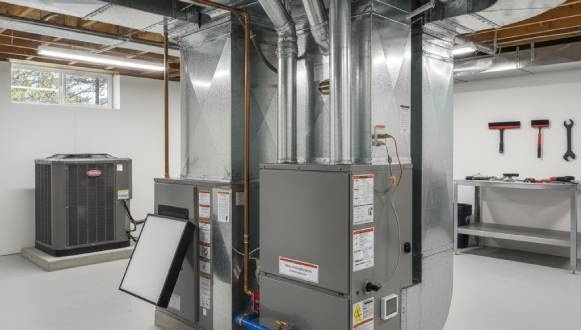
HVAC Systems
Mainly used in ventilation, heating, chillers, and air conditioning systems.

Power Generation
Used in feedwater heaters, steam condensers, boilers, and auxiliary cooling systems.

Chemical Processing
The SS tube for heat exchangers is used in process heaters and coolers, condensers, and reboilers.

Petrochemical Processing
In the petrochemical processing industry, the SS tube is used in crude oil preheaters, refinery processes, gas cooling exchangers, and fractionation column reboilers.
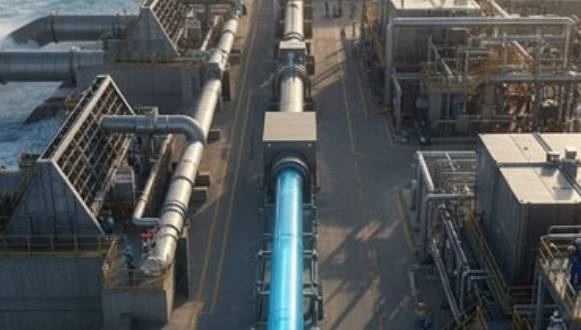
Seawater-cooled heat exchangers
Generally used in desalination plants, marine engine cooling systems, and coastal power plants.
Nitric Acid
Found in acid coolers, absorption systems, and process temperature control units.

Food & Beverage
The stainless steel HX tube is used in pasteurisers for milk, juices, and beverages, sterilisers, and brewing heat exchangers.
100% Certified Testing & Documentation
- EN 10204 3.1 and EN 10204 3.2 Material Test Certificates (MTC)
- Raw Materials Certificate
- 100% Positive Material Identification (PMI)
- Heat Treatment Charts
- Third-Party Inspection Report
- Surface roughness and size measurement
- Manufacturer Test Certificate (Impact Testing, Flattening, Flare, Bend, Hardness, Intergranular Corrosion, Pitting Corrosion, Grain size, Eddy Current (ET), Ultrasonic Testing (UT), Hydrostatic Testing (HT), etc.)
- Laboratory Test Certificate from Govt. Approved Lab
If you want to know more product details, please contact us!
Frequently Asked Questions
-
Is 304 or 316 stainless steel better for heat exchanger use?
-
Are stainless steel heat exchangers suitable for use in corrosive environments?Yes, stainless steel heat exchangers are very much suitable for use in corrosive environments mainly because of the chromium content, which creates a passive oxide layer to protect the tubes from oxidation and general/ localised corrosion.
-
Can stainless steel heat exchangers handle high pressure and temperature?Yes, a stainless steel heat exchanger can definitely handle high pressure and temperature because of the alloy’s high strength, durability, and resistance to corrosion and thermal stress.
-
Why choose a stainless steel heat exchanger instead of other materials?You should choose a stainless steel heat exchanger instead of other materials, as stainless steel has better corrosion resistance, higher temperature and pressure strength, better hygiene, more durability, and maintains efficient heat transfer despite its lower thermal conductivity due to thin-wall tube designs.
-
Which stainless steel grade is best for heat exchanger tubes?For heat exchanger tubes, stainless steel grades like 316 are considered superior and better than the others simply because these grades excel in corrosive or marine environments. Grades like 321/347 are more suitable for high-temperature applications.
-
Why is stainless steel preferred over carbon steel in heat exchangers?For heat exchangers, stainless steel is better than carbon steel because it doesn’t corrode or degrade as easily when exposed to moist and chemical-rich environments.
-
Can stainless steel heat exchanger tubes be used for both hot and cold fluids?Yes, you can use stainless steel heat exchanger tubes for both hot and cold fluids. This is because these tubes are strong, long-lasting, resistant to corrosion, and work well at high temperatures.
- What is a Stainless Steel Heat Exchanger Tube?
- Manufacturing Process of Seamless Stainless Steel Heat Exchanger Tube
- How Stainless Heat Exchanger Tubes Work?
- Stainless Steel Heat Exchangers vs Other Materials
- What are the advantages of Stainless Steel Tube for a Heat Exchanger?
- Stainless Steel Heat Exchanger Tube Specifications
- Types of Stainless Steel Heat Exchanger Tubes
- Industrial Applications of SS Heat Exchanger Tubes
- 100% Certified Testing & Documentation
- Frequently Asked Questions