Manufacturing Process of Seamless Pipes & Tubes
20-step precision process at our Fujian & Songyang facilities producing stainless steel, duplex and nickel alloy seamless pipes & tubes — fully compliant with international ASTM standards.
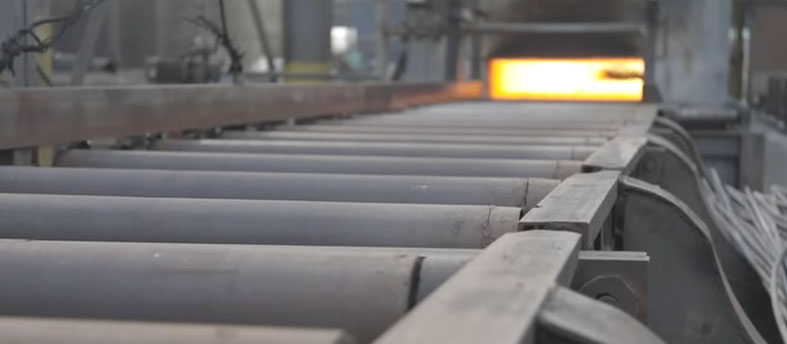
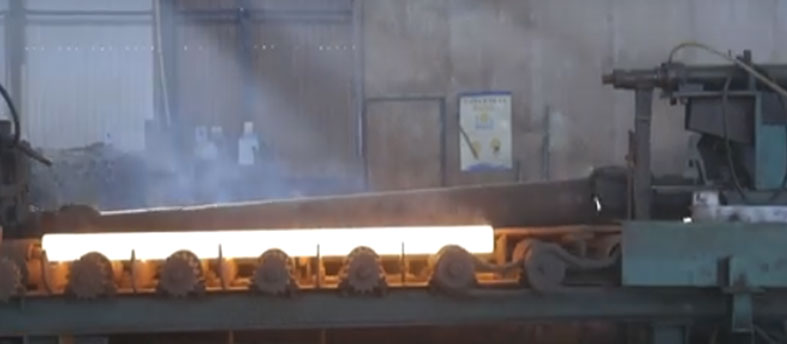
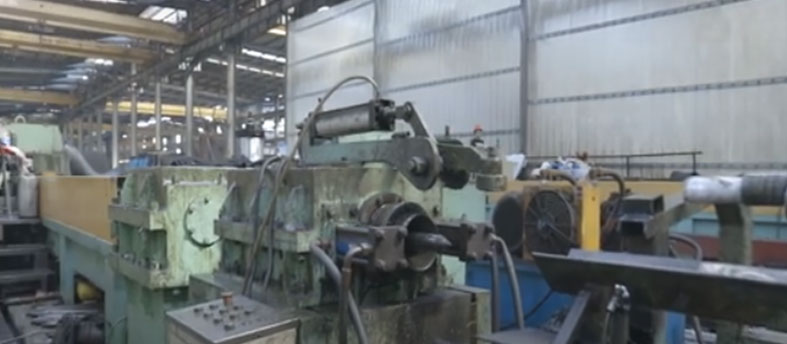
We at Xintongda Special Steel (XTD) have a detailed manufacturing process for seamless pipes and tubes. Our production facilities in Fujian and Songyang use high-end machines and technology to produce the best-quality products that comply with international ASTM standards. We have machines like heating furnaces, mandrel mills, rolling mills, dies, vacuum furnaces, and straightening machines. Due to such good manufacturing facilities, we at Xintongda can produce 25,000 tons annually.
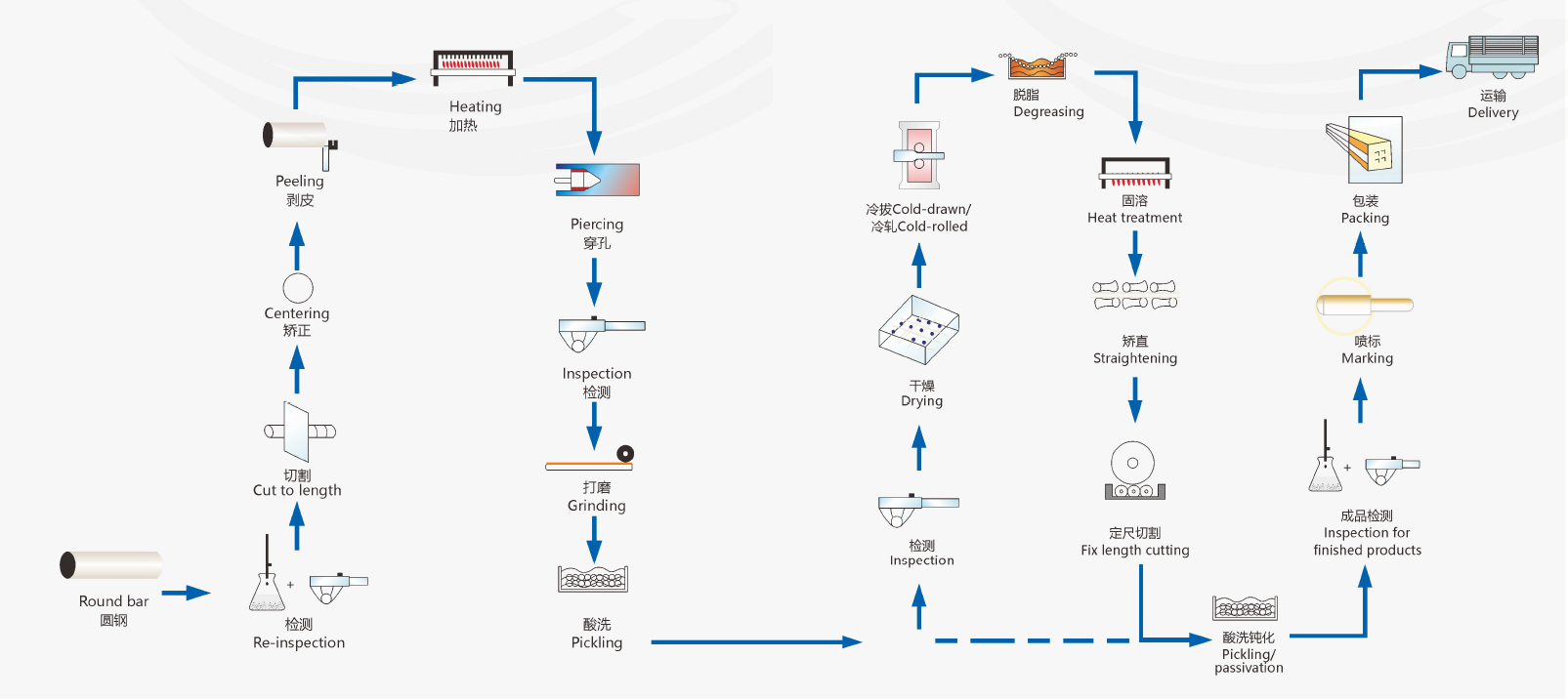
Step-by-Step Stainless Steel Seamless Pipe Manufacturing Process
Our detailed manufacturing process includes 20 key steps:
All the steps have been explained in detail below:
Re-inspection
Cut to Length
Centering
Peeling
Heating
Piercing
Inspection
Grinding
Pickling
Inspection (Post-Pickling)
Drying
Cold Drawing / Cold Rolling
Degreasing
Heat Treatment
Straightening
Fixed Length Cutting
Pickling / Passivation
Inspection for Finished Products
Marking

Detail Seamless Pipe Manufacturing Process Video
We at Xintongda have also documented the whole seamless pipe manufacturing process. If you are a visual learner, you can check out the videos attached below to learn about the process.
FAQ
-
How are Seamless Pipes Manufactured?Seamless pipes are manufactured by heating and piercing a solid billet or a round bar into a hollow shell, which is then hot-worked and cold-drawn for dimensional accuracy. This hollow shell then goes through heat treatment to restore its mechanical properties and corrosion resistance. Pickling and straightening come last, after which the seamless pipe is sent for testing.
-
Why is centering and peeling important during the production of seamless pipes and tubes?Centering and peeling are important during the production process of seamless pipes and tubes because centering makes sure the billet’s axis is aligned with the plug before it is pierced, and peeling removes the outer surface to prevent the billet from defects.