Seamless stainless steel boiler tubes are used due to their high strength, good corrosion resistance, high-pressure tolerance, and good thermal stability.

ASTM A213 Stainless Steel Boiler Tube Manufacturer
We at Xintongda Special Steel (XTD) specialise in manufacturing the best quality of stainless steel boiler tubes in Songyang, China. The main purpose of this SS boiler tube is to transform the heat from burning gases into steam or water within a boiler. This tube can provide high resistance to oxidation, pitting, and crevice corrosion in chloride-rich environments (depending on the grade). It also has good thermal stability. All our seamless stainless steel boiler tubes comply with ASTM A213, ASME SA213, ASTM A269, EN 10216-5, DIN 17458, and JIS G3463 standards. We provide these tubes in various austenitic grades like 304 and 316. Due to their excellent properties, the stainless steel boiler tubes are used in many high-pressure and high-temperature applications.
As a multiple international certified manufacturer with 4 decades of experience, we at Xintongda can deliver these tubes within a week for in-stock products. With our high-end manufacturing facilities in Zhejiang, we have an annual production capacity of 25,000 tons.
-
 Standards
ASTM A213
Standards
ASTM A213
-
 OD Range
6.35 - 257 mm
OD Range
6.35 - 257 mm
-
Thickness
0.89-12.7 mm
 Get a free quote now
Technical Data
Technical Data
Get a free quote now
Technical Data
Technical Data
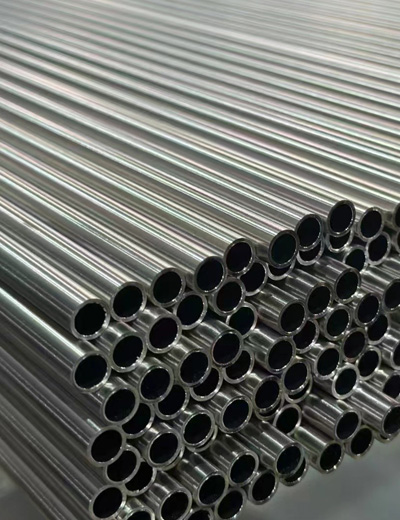
What is a Stainless Steel Boiler Tube?
A stainless steel boiler tube is a strong tubular product made of an austenitic stainless steel alloy. It primarily comprises chromium and nickel, and is made to withstand high temperatures and pressures within boiler systems. It is used to either transfer heat from the inside of the tube to the outside (firetube boilers) or from the outside to the inside (watertube boilers). Due to its thicker walls, this tube can easily withstand high-pressure and temperature. The boiler tube can be made using both seamless and welded means, however we specialise in manufacturing seamless stainless steel boiler tubes.
Manufacturing Process of Seamless Boiler Tubes
The manufacturing methods of a seamless SS boiler tube involve selecting a high-quality billet and heating and rotary piercing the billet into a hollow shell, followed by hot working and cold rolling to achieve precise dimensions. The next step is solution annealing, which retains the tube’s corrosion resistance and mechanical properties. The last step is to conduct pickling and straightening to remove surface oxides & scale and give it a better surface finish, after which the tube is sent for rigorous testing.
| Manufacturing Step | Explanation |
| Material Selection | Select Premium Stainless Steel Grade |
| Melting | Melt Raw Materials in an Electric Arc Furnace. |
| Casting | Put the Molten Metal Into Molds. |
| Hot Rolling | Heat Billets to High Temperatures and Then Rolled Into Tubes. |
| Cold Working | Shape the Tubes at Room Temperature. |
| Heat Treatment | To Improve Mechanical Properties Use Processes Like Annealing |
| Testing | To Guarantee the Tubes' Quality and Integrity Apply NDT |
| Finishing | Surface Treatments, Polishing, and Cutting Should Be Done |
| Inspection | Final Inspections to Ensure That Tube Meet Industry Guidelines |
| Packaging | When Packing Make Sure to Protect the Tubes From Damage |
What are the Features & Advantages of Stainless Steel in Boilers?
There are 6 main features of stainless steel boiler tubes:
- Corrosion & Oxidation Resistance: Chromium forms a layer of chromium oxide when exposed to oxygen at elevated temperatures to resist oxidation. The corrosion resistance comes from elements like nickel and molybdenum, which help the tube prevent pitting and crevice corrosion.
- Great Mechanical Properties: These tubes have high tensile strength and offer more durability.
- Broad Temperature Range: Stainless steel retains strength and integrity at elevated temperatures.
- Greater Efficiency: The efficiency comes from the tube’s high resistance to scaling and corrosion, which enhances heat transfer and prolongs service life.
- Efficient Heat Transfer and Thermal Stability: Boiler tube made from stainless steel allows good heat transfer, handles hot water/steam well, and maintains structural integrity at elevated temperatures.
- Ease of Cleaning and Low Maintenance Requirements: The tube’s smooth surface and corrosion resistance reduce scaling and fouling, which makes cleaning and maintenance easy.
Common Stainless Steel Grades for Boiler Tubes
Compared to carbon steel, stainless steel grades have a higher amount of chromium that forms a protective oxide layer. With many austenitic SS grades in stock, we offer ASTM A213 TP304/ 304L for good oxidation resistance and TP316/ 316L with added molybdenum for pitting and crevice corrosion resistance. Apart from these, we also provide 310/ 310S for high-temperature applications and 321 (Titanium-stabilised)/ 347 (Niobium-stabilised) for better high-temperature strength. Each grade has its own advantages and limitations.
| GRADE | UNS | GB | JIS | ISO | DIN/EN | GOST | |
| ISC | NEW | ||||||
| 304 | S30400 | S30408 | 06Cr19Ni10 | SUS 304 | X5CrNi18-10 | 1.4301 | 08X18H10 |
| 304L | S30403 | S30403 | 022Cr19Ni10 | SUS 304L | X2CrNi19-11 | 1.4307 | 03X18H11 |
| 309S | S30908 | S30908 | 06Cr23Ni13 | SUS 309S | X12CrNi23-13 | 1.4833 | 10X23H13 |
| 310 | S31000 | S31020 | 20Cr25Ni20 | SUS 310 | X15CrNi25-21 | 1.4841 | 20X25H20C2 |
| 310S | S31008 | S31008 | 06Cr25Ni20 | SUS 310S | X8CrNi25-21 | 1.4845 | 10X23H18 |
| 314 | S31400 | S31400 | 16Cr25Ni20Si2 | - | X15CrNiSi25-21 | 1.4841 | - |
| 316 | S31600 | S31608 | 06Cr17Ni12Mo2 | SUS 316 | X5CrNiMo17-12-2 | 1.4401 | 08X17H13M2 |
| 316L | S31603 | S31603 | 022Cr17Ni12Mo2 | SUS 316L | X2CrNiMo17-12-2 | 1.4404 | 03X17H14M2 |
| 316Ti | S31635 | S31668 | 06Cr17Ni12Mo2Ti | SUS 316Ti | X6CrNiMoTi17-12-2 | 1.4571 | 08X17H13M2T |
| 316N | S31651 | S31658 | 06Cr17Ni12Mo2N | SUS 316N | X2CrNiMoN17-13-3 | 1.4406 | - |
| 316LN | S31653 | S31653 | 022Cr17Ni12Mo2N | SUS 316LN | X2CrNiMoN17-11-2 | 1.4429 | - |
| 317 | S31700 | S31708 | 06Cr19Ni13Mo3 | SUS 317 | - | 1.4449 | - |
| 317L | S31703 | S31703 | 022Cr19Ni13Mo3 | SUS 317L | X2CrNiMo19-14-4 | 1.4438 | 03X16H15M3 |
| 321 | S32100 | S32168 | 06Cr18Ni11Ti | SUS 321 | X6CrNiTi18-10 | 1.4541 | 08X18H10T |
| 321H | S32109 | S32169 | 07Cr19Ni11Ti | SUS 321HTP | X7CrNiTi18-10 | 1.4878 | 12X18H10T |
| 347 | S34700 | S34778 | 06Cr18Ni11Nb | SUS 347 | X6CrNiNb18-10 | 1.4550 | 08X18H12B |
| 310MoLN | S31050 | S31053 | 022Cr25Ni22Mo2N | - | X1CrNiMoN25-22-2 | 1.4466 | - |
| 904L | N08904 | S31782 | 015Cr21Ni26Mo5Cu2 | SUS 890L | X1NiCrMoCu25-20-5 | 1.4539 | - |
Compare Medium and High Pressure Stainless Steel Boiler Tubes
When it comes to pressure handling capacity, the SS boiler tubes are classified into two types: medium pressure and high pressure.
| Feature / Property | Medium-Pressure SS Boiler Tubes | High-Pressure SS Boiler Tubes |
| Typical Pressure Range | Up to 450 psi (3.1 MPa) | Above 450 psi, up to 3000+ psi (20+ MPa) |
| Operating Temperature Range | Up to 425°C (800°F) | Up to 600°C (1112°F) or higher |
| Wall Thickness | Typically thinner wall construction | Usually thicker walls |
| Cost | Lower due to lighter construction | Higher due to thicker material and stricter heat-treatment requirements |
| Manufacturing Complexity | Less complex; standard fabrication | More complex fabrication and specialized heat treatment |
| Applications | Industrial heating, HVAC systems, food processing, low-pressure steam generation | Supercritical power plants, petrochemical processing, high-pressure steam systems |
| Stress Resistance | Moderate | High |
| Corrosion Resistance | Grade-dependent (e.g., 304, 316, 321) | Grade-dependent (higher grades often specified for critical service) |
| Ease of Installation & Maintenance | Easier due to less demanding service conditions | More complex due to tighter tolerances and critical joints |
| Flexibility | More flexible (easier bending/forming) | Less flexible due to thicker walls |
Types of Boiler Tubes
Seamless Boiler Tubing
A seamless boiler tube is a type of weld-free steel tube made to withstand high temperatures and pressures in steam boilers, fossil fuel plants, and power generation facilities.
Fire Tube Boiler
A fire tube is an important component in condensing and other boilers. It is mainly used as a heat exchanger to pass hot combustion gases surrounded by water.
Water Tube Boiler
A stainless steel water tube is a specialized tubular product made to withstand high temperatures and pressures. It is primarily used to transfer heat in various industrial applications.
Reheater Tubes
Reheater tubes increase the temperature of steam before it enters the low-pressure turbine to improve the efficiency and reduce CO2 emissions.
Economiser Tubes
An economiser tube’s main purpose is to preheat the boiler feedwater using residual heat energy from exhaust gases before releasing it into the atmosphere. It can easily improve thermal efficiency by recovering heat from the flue gases.
Superheater Tubes
A superheater tube converts saturated steam into superheated steam using additional heat beyond its saturation point.
Evaporator Tubes
An evaporator tube converts water into steam by absorbing heat from the combustion process.
Stay Tubes
A stay tube is a thick tube that provides heat transfer and structural support to the boiler's internal components.
Fin Tubes
The main purpose of a fin tube is to increase the surface area available for heat transfer and improve the efficiency of heat exchange between the hot combustion gases and the water or steam within the boiler system.
What are the Industrial Applications of Stainless Steel Boiler Tubes?
Stainless steel boiler tubes have many industrial applications due to their high strength, good corrosion resistance, and high stability at elevated temperatures.
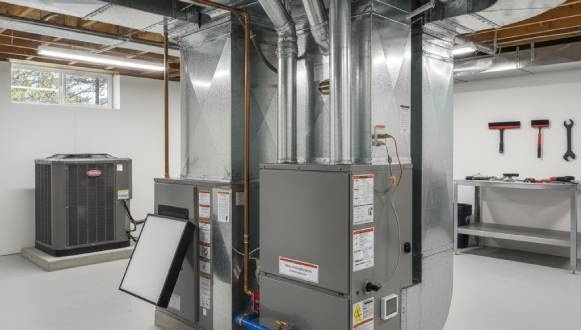
HVAC and District Cooling
Heat exchangers in chillers and cooling coils, central AC condensers or evaporators, heat transfer bundles in HVAC systems, and district cooling plants use SS boiler tubes.

Power Generation
These tubes are found in boiler heating surfaces, superheater tubes, economiser heat recovery tubes, and steam turbine reheater tubes.

Chemical Processing
In the chemical industry, these are used in heat exchanger tubes of chemical plants, tube bundles for process heat transfer, and condensers handling corrosive fluids.

Marine
The marine industry uses these tubes for boiler tubes in marine boiler systems, condenser tubes for seawater cooling, and heat exchanger tubing for shipboard systems.
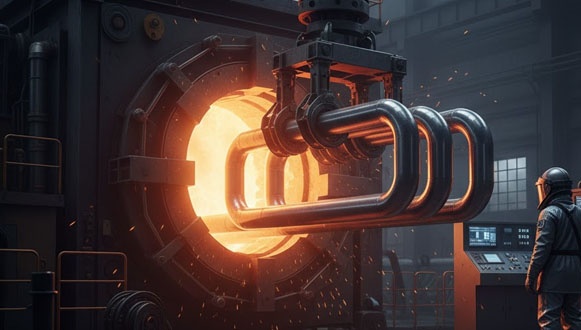
Pressure and Heat Transfer
It is found in boiler water tubes under pressure and superheater/ reheater tubes for thermal energy transfer.
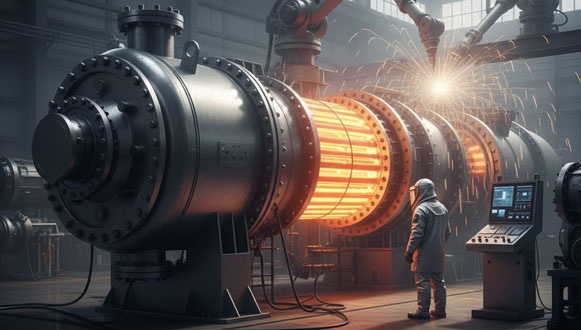
Boiler Heat Exchangers
Applied in superheater tubes to improve steam energy and tube exchanger bundles for efficient heat transfer.

Fluid, gas, and oil transportation
Mainly found in high-temperature fluid transport tubes, offshore oil and gas heat exchanger tubes, and fluid transfer lines.
100% Certified Testing & Documentation
- EN 10204 3.1 and EN 10204 3.2 Material Test Certificates (MTC)
- Raw Materials Certificate
- 100% Positive Material Identification (PMI)
- Heat Treatment Charts
- Third-Party Inspection Report
- Surface roughness and size measurement
- Manufacturer Test Certificate (Impact Testing, Flattening, Flare, Bend, Hardness, Intergranular Corrosion, Pitting Corrosion, Grain size, Eddy Current (ET), Ultrasonic Testing (UT), Hydrostatic Testing (HT), etc.)
- Laboratory Test Certificate from Govt. Approved Lab
If you want to know more product details, please contact us!
Frequently Asked Questions
-
Why are seamless stainless steel boiler tubes used?
-
What standards are followed for stainless steel boiler tubes?The ASTM A213 standard is followed for stainless steel boiler tubes.
-
SS Fire Tube vs Water Tube Boilers: What Is the Difference?The main difference between the SS Fire tube and the water tube is that in the fire tube, the hot gases travel inside the tube surrounded by water, and in the water tube, they travel outside the tube while the water travels inside it.
-
Why choose XTD for stainless steel boiler tubes?You should choose XTD for stainless steel boiler tubes because we are an ISO-certified, experienced manufacturer and supplier of high-quality boiler tubes in seamless form. We have been serving the industry for the last 4 decades and have a production capacity of 25,000 tons.
-
What is the difference between stainless steel and carbon steel boiler tubes?The primary difference between stainless steel and carbon steel boiler tubes is that stainless steel has chromium content to fight oxidation, while carbon steel is hard and strong but requires coating to prevent rust.
-
Can seamless SS tubes handle high temperature and pressure in boilers?Yes, seamless SS tubes can handle high-temperature and pressure in boilers due to their uniform structure, high strength, and good resistance to thermal stress.
-
Which is better, stainless steel seamless or welded boiler tubes?For boiler systems, stainless steel seamless tubes are considered better than welded ones because they provide better strength and have a uniform structure, with no risk of welded seams. The welded tubes, on the other hand, are cost-effective and are preferable for low-pressure and moderate temperature applications.
- What is a Stainless Steel Boiler Tube?
- Manufacturing Process of Seamless Boiler Tubes
- What are the Features & Advantages of Stainless Steel in Boilers?
- Common Stainless Steel Grades for Boiler Tubes
- Compare Medium and High Pressure Stainless Steel Boiler Tubes
- Types of Boiler Tubes
- What are the Industrial Applications of Stainless Steel Boiler Tubes?
- 100% Certified Testing & Documentation
- Frequently Asked Questions