A nickel 201 tube, also known as alloy 201 or Ni-201, is a tubular product made of commercially pure nickel (around 99.6%) and other elements like copper, iron, carbon, and manganese in very small proportions. It is one of the grades of nickel alloy seamless tube.

ASTM B163 Nickel 201 Seamless Tube Manufacturer in China
We are Xintongda Special Steel (XTD), a trusted manufacturer and supplier of Nickel alloy 201 seamless tube in Songyang, China. Commonly known in the market as Alloy 201 or Ni-201, this tube is a weld-free, high-purity tube made of commercially pure nickel (around 99.6%) and traces of other elements like copper, manganese, iron, etc. We manufacture our Nickel 201 tubes that comply fully with the ASTM B163 standard. This tube is designed to withstand corrosive environments like caustic alkalis. The low carbon content (less than 0.02%) makes it resistant to intergranular corrosion and graphitisation. The Alloy 201 tubes, with the help of these characteristics, are more suitable than Alloy 200 tubes for industries where the working temperature crosses 315 °C. This also shows its exceptional thermal stability.
At XTD, we have a production capacity of 25,000 tons annually, and our company is ISO certified, too. We can deliver the in-stock orders within a week and production orders in 15-60 days' lead time.
Product specifications:
-
 Standard
ASTM B163
Standard
ASTM B163
-
 OD Range
6–457 mm
OD Range
6–457 mm
-
 Thickness
1-65 mm
Thickness
1-65 mm
-
 Length
≤ 22 m
Length
≤ 22 m
 Get a free quote now
Technical Data
Technical Data
Get a free quote now
Technical Data
Technical Data
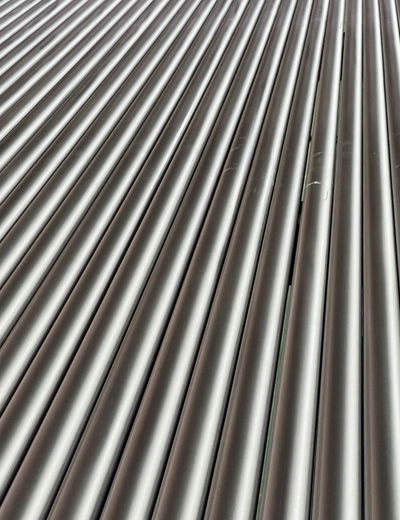
Steps involved in manufacturing Nickel 201 Tube
As a Nickel alloy 201 tube manufacturer, we make this tube by heating and hot extruded a solid billet into a hollow shell. The second step is to hot work and cold-draw/ cold-roll the tube to get the desired dimensions. Later, the tube undergoes controlled annealing, which helps regain its ductility, thermal stability, and other properties. Before we send the tube for testing, we perform acid pickling and straightening to smooth the surface and remove all the defects. For the whole step-by-step manufacturing process, check out this page.
What are the Features of Alloy 201 Nickel Tubing?
The Alloy 201 tube is an ideal choice for industry experts due to its 4 main characteristics: corrosion resistance, mechanical properties, thermal & electrical, and fabrication.
- Corrosion Resistance: The commercially pure nickel content (99.6%) and the low-carbon content (less than 0.02%) make this alloy highly resistant to corrosion. It also prevents oxidation as it forms a thin oxide layer when exposed to high temperatures.
- Mechanical Properties: Since it prevents graphitisation and intergranular corrosion, the Ni-201 eventually becomes mechanically strong and stable.
- Thermal & Electrical: The alloy 201 is made up of 99.6% nickel, which is why it inherits good thermal and electrical properties.
- Fabrication: As the low carbon content prevents graphite from forming, the nickel alloy 201 tube remains ductile and readily weldable using standard welding procedures.
What is the Equivalent Standard for Alloy 201?
The standard equivalent designation of commercially pure nickel tube is UNS N02201. It is also recognised by its Werkstoff number 2.4068 (per DIN 17740).
| STANDARD | WERKSTOFF NR. | UNS | JIS | BS | GOST | AFNOR | EN |
| Nickel 201 | 2.4068 | N02201 | NW 2201 | NA 12 | НП-2 | – | LC-Ni 99 |
100% Certified Testing & Documentation
- EN 10204 3.1 and EN 10204 3.2 Material Test Certificates (MTC)
- Raw Materials Certificate
- 100% PMI
- Heat Treatment Charts
- Third-Party Inspection Report
- Surface roughness and size measurement
- Manufacturer Test Certificate (Impact Testing, Flattening, Flare, Bend, Hardness, Intergranular, Pitting Corrosion, Grain size, ET, UT, HT)
- Laboratory Test Certificate from the Government-Approved Lab
In which Applications is Nickel 201 seamless tube used?

Chemical & Petrochemical
Alloy 201 tube is generally used in heat exchangers, piping systems, storage tanks, etc., as it can resist strong caustics, acids, and salts.
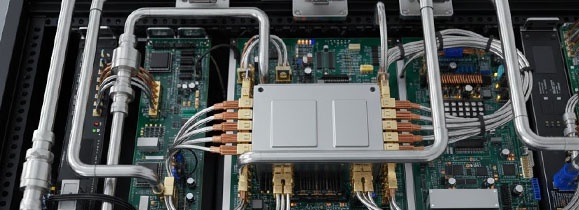
Electronics
For electrical applications, this tube is found in battery components, lead wires, sparking electrodes, etc.

Power Generation
Used for boiler components, nuclear power, high-pressure piping, heat transfer systems, etc.
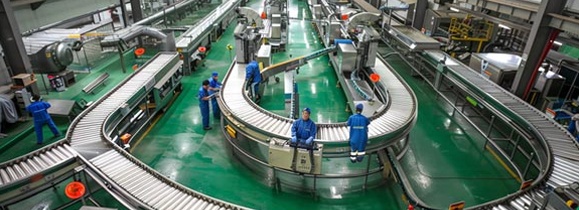
Food Processing
This commercially pure nickel tube is used in caustic handling, pressure vessels, tanks & vessels, and sanitary piping.

Aerospace
Due to its good thermal stability, the alloy 201 tube is used in aircraft components, rocket motor cases, and fuel & hydraulic systems.

Marine
The exceptional seawater resistance of the Ni-201 tube makes it suitable for shipbuilding, desalination plants, water handling, offshore systems, etc.
Frequently Asked Questions
-
What is a Nickel 201 tube?
-
What is the Annealing Temperature of Nickel 201 Seamless Tube?The annealing temperature of Nickel 201 seamless tube is around 700-871 °C (1300-1600 °F).