Alloy 31 has a PREN of about 54-55, showing very strong resistance to pitting in chloride-rich environments like seawater.

ASTM B622 Alloy 31 Seamless Tube
Alloy 31 seamless tube is a nickel-iron-chromium-molybdenum alloy tube manufactured to ASTM B622, used in highly corrosive environments where standard stainless steels fall short. XTD (Zhejiang Xintongda Special Steel) manufactures and supplies Alloy 31 seamless tube to ASTM B622. These tubes are designated UNS N08031 and W.Nr. 1.4562. Production uses cold rolling, cold drawing, annealing, pickling, and straightening. The tube works reliably at temperatures from -196°C to 400°C. Its chemical composition is: 26-28% Cr, 30-32% Ni, 6.0-7.0% Mo, 1.0-1.4% Cu, and 0.15-0.25% N. We can produce up to 25,000 tons per year. Stock orders are usually delivered in about one week, and production orders are completed within 15 to 60 days.
We hold multiple international certifications. and deliver from standard stock in about one week, and custom production orders take between 15 and 60 days. If you need a dependable supplier of UNS N08031 seamless tube with full mill certification, we are ready to help with your requirements.
Product specifications:
-
 Standard
ASTM B622
Standard
ASTM B622
-
 OD Range
6-219 mm
OD Range
6-219 mm
-
 Thickness
0.5-20 mm
Thickness
0.5-20 mm
-
 Length
≤ 18 m
Length
≤ 18 m
 Get a free quote now
Technical Data
Technical Data
Get a free quote now
Technical Data
Technical Data
How Alloy 31 Seamless Tube is Produced
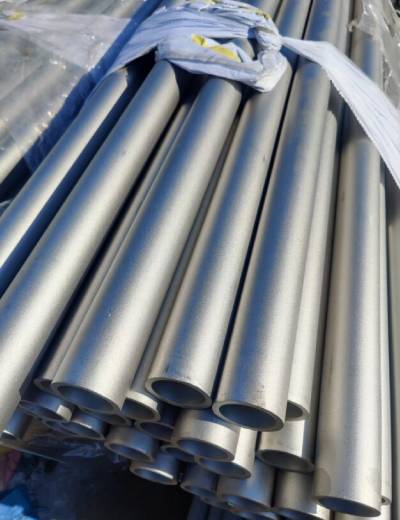
We produce high‑quality Alloy 31 seamless tubes by following strict manufacturing steps. Production starts with a nickel‑iron‑chromium‑molybdenum alloy ingot, which is hot extruded or pierced to form a seamless tube shell. The tube is then cold-drawn, cold-rolled, or processed by pilgering to achieve accurate dimensions. After that, solution annealing improves the microstructure, and pickling provides a clean surface finish. Finally, the tubes are straightened and tested by eddy current and hydrostatic methods before cutting to length and packaging. Visit this page to learn more about Alloy 31 production process.
Key Features of Alloy 31 Seamless Tube
Alloy 31 seamless tube is selected for applications where corrosion resistance, strength, and weldability all matter. Below are the main properties that make it suitable.
- Superior Pitting and Crevice Corrosion Resistance: Alloy 31 has a PREN above 54. It performs well in chloride environments. Its high molybdenum and nitrogen levels help prevent pitting and crevice corrosion in seawater, acidic brines and oxidising chloride solutions.
- Outstanding Sulfuric Acid Resistance: This alloy works reliably in sulfuric acid over many concentrations, especially when hot and concentrated. Its nickel, chromium, molybdenum, and copper give strong corrosion resistance where lower‑alloy materials usually fail.
- Excellent Phosphoric Acid Resistance: Alloy 31 performs well in wet‑process phosphoric acid, even when it contains chlorides, fluorides, and sulfates, and keeps corrosion rates low in both reaction and concentration stages of production.
- Resistance to Stress Corrosion Cracking: The high nickel content at 30-32% in Alloy 31 gives it strong resistance to stress corrosion cracking caused by chlorides. This makes the alloy a reliable choice for pressurised systems and heat exchangers where SCC is a serious risk.
- Good Mechanical Strength: Alloy 31 has good tensile and yield strength at all of its working temperatures. It meets ASTM B622 mechanical requirements and can handle applications that need to hold up under pressure without needing extra support.
- Weldability and Fabricability: The alloy can be welded using standard nickel alloy methods, including GTAW and GMAW. It usually does not need pre‑ or post‑weld heat treatment and can be cold worked and formed without major difficulty.
ASTM B622 Alloy 31 Seamless Tube Equivalent Materials
Alloy 31 is listed under different designations depending on the standard used. The table below covers the most common equivalents across UNS, EN and DIN.
| Standard | Grade |
| UNS | N08031 |
| W.Nr. | 1.4562 |
| EN | X1NiCrMoCu32-28-7 |
| ASTM | Alloy 31 |
100% Certified Testing and Documentation
Each shipment of Alloy 31 seamless tube comes with complete documentation confirming its chemical composition, mechanical properties, corrosion performance, and dimensions. XTD also offers full third‑party inspection support and all standard mill certificates.
- Mill Test Certificate (MTC) per EN 10204 3.1 / 3.2
- Chemical composition report
- Mechanical properties test report
- Intergranular corrosion test (ASTM A262 Practice E)
- Pitting corrosion test (ASTM G48 Method A/B)
- Hydrostatic test report
- Eddy current test report
- Dimensional inspection report
Alloy 31 Seamless Tube Industrial Applications
XTD’s Alloy 31 seamless tube is used in chemical plants, power plants, environmental systems, and other industries where the fluids are very corrosive or the temperatures are very high.
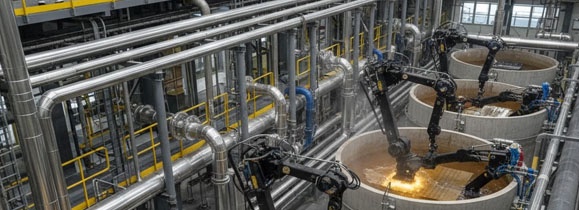
Phosphoric Acid Production
Alloy 31 tube is used in wet-process phosphoric acid plants, such as in reactors, heat exchangers, and evaporators. It handles impure phosphoric acid that contains chlorides and fluorides, which usually corrode standard stainless steels.

Sulfuric Acid Concentration and Handling
In sulfuric acid concentration units and pipelines, Alloy 31 can handle both weak and strong sulfuric acid at high temperatures. Its copper content helps keep the alloy stable in reducing acid conditions, where many other high‑chromium alloys usually fail.
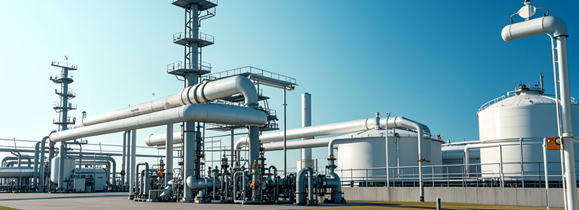
Flue Gas Desulfurisation (FGD) Systems
In FGD scrubber systems, tubing faces hot, acidic, chloride-rich liquids. Alloy 31 seamless tube is ideal for absorber parts, heat exchangers, and recirculation pipes where pitting and crevice corrosion are common.

Pulp and Paper Bleaching Plants
Bleaching circuits use chlorine dioxide and hypochlorite, which attack most stainless steels. Alloy 31 tube resists this corrosion and is used in bleach washers, piping, and heat exchangers.
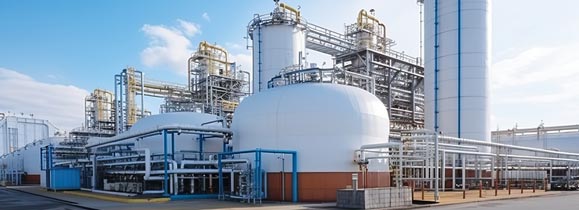
Chemical Processing
Alloy 31 tube is used in reactors, condensers, and transfer lines handling mixed acid systems, halide-containing solutions, and other corrosive process streams. It works across a broad pH range and handles both oxidising and mildly reducing conditions.
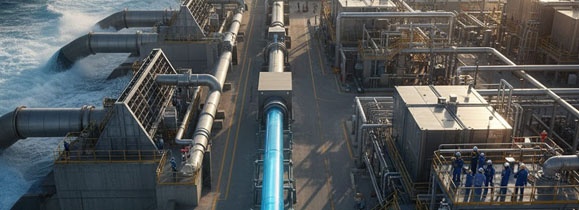
Seawater and Brine Handling
With a PREN above 54, Alloy 31 resists pitting in seawater and concentrated brine at elevated temperatures. It is used in desalination equipment, offshore heat exchangers, and any system that deals with chloride-induced corrosion is a concern.
Frequently Asked Questions
-
What is the PREN of Alloy 31, and why does it matter?
-
Can Alloy 31 replace Alloy 926 or Alloy 625?Often yes. Alloy 31 matches or beats Alloy 926 in chloride acids and is usually cheaper than Alloy 625 for corrosion-critical, non‑high‑temperature uses.
-
What standards apply to Alloy 31 seamless tubes?The main standard is ASTM B622. It is also known as EN/DIN 1.4562 and X1NiCrMoCu32‑28‑7, with ASTM A262 and G48 for corrosion tests.
-
Is Alloy 31 suitable for NACE sour service?It performs well in mildly sour H2S environments. For severe sour service, NACE MR0175 / ISO 15156 testing must be performed before use