SS Seamless pipes are manufactured by heating and piercing a solid billet into a hollow shell, then passing them through hot-working and cold-drawing to get the precise dimensions. The next step is to perform solution annealing to relieve internal stresses while optimising corrosion resistance and mechanical properties. The last step is pickling and straightening before the pipes are sent for testing.

Stainless Steel Seamless Pipes Manufacturer
We are Zhejiang Xintongda Special Steel (XTD), a trusted manufacturer and supplier of stainless steel seamless pipe based in Songyang, China. A stainless steel seamless pipe is a hollow, tubular product formed from a solid stainless steel billet by hot piercing over a mandrel, followed by hot rolling and cold drawing to the final dimensions. Because there is no weld, the pipe has high strength, stable performance at high temperatures, and consistent corrosion resistance across its full circumference.
We manufacture seamless stainless steel pipe to ASTM A312 (equivalent ASME SA-312) and other international standards. We supply the full commercial-grade range in seamless SS pipe, including 304, 304L, 304H, 309, 310, 310S, 316, 316L, 316Ti, 321, 347, 904L, SMO 254, and other austenitic grades, in a wide range of sizes, wall thicknesses, and custom lengths. Our seamless stainless steel pipes are widely used in oil and gas, chemical and petrochemical plants, and power generation, anywhere pipelines face high temperatures, aggressive chemicals, or corrosive fluids. We have been producing seamless stainless steel pipe since 1985 under multiple international certifications, listed on our Certificate page, and supply 25,000 tons annually.
-
 Standard
ASTM A312
Standard
ASTM A312
-
 OD Range
6 - 1016 mm
OD Range
6 - 1016 mm
-
 Thickness
1 - 65 mm
Thickness
1 - 65 mm
-
 Length
≤ 18 m
Length
≤ 18 m
 Get a free quote now

What is a Stainless Steel Seamless Pipe?
A Seamless Stainless Steel Pipe is a high-strength tubular product made of stainless steel material. It is made from a solid billet of stainless steel without any welds. The seamless SS pipe mainly consists of iron and chromium, with other added elements such as nickel, carbon, molybdenum, sulfur, manganese, etc. The seamless nature of this pipe ensures uniform strength and wall thickness, more toughness, and integrity. It can resist localised corrosion, oxidation, and stress corrosion cracking.
Top Features of Seamless Stainless Steel Pipes
The seamless austenitic stainless steel has 8 main characteristics that make it stand out:
- Superior Corrosion Resistance: Stainless steel contains at least 10.5% chromium. When the surface is exposed to oxygen, the chromium forms a thin, passive chromium-oxide layer that protects the metal underneath from rust and general corrosion. The layer is self-healing when it is scratched. Molybdenum-alloyed grades (316, 316L, 317, 317L, 904L) add resistance to chloride pitting and crevice corrosion for marine and aggressive chemical service.
- High Mechanical Strength and Toughness: The seamless SS pipe is made by piercing and rolling a solid billet into a hollow shell. Due to this process, the pipe gets a uniform finish and a refined grain structure.
- Microstructural Stability: Many austenitic grades of the SS seamless pipe have stable crystal structures across wide temperature ranges. Their nickel and chromium content helps maintain austenite at room temperature and prevents phase changes or brittleness.
- High Pressure & Temperature Capability: The stainless seamless steel pipe has high pressure capability and good temperature strength (depending on grade) due to its seamless nature, which helps it withstand creep and deformation.
- Resistance to Extreme Environments: The chemical composition (chromium, nickel, molybdenum, etc) helps the alloy resist aqueous corrosion, oxidation, scaling at high temperatures, and stress corrosion cracking.
- Dimensional Precision and Surface Quality: The hot-working and cold-rolling/ cold-drawing manufacturing steps result in dimensional precision and good surface finish.
- Hygienic, Non-Reactive & Easy to Clean: The surface of this stainless seamless pipe is non-porous and smooth, which is why it is easy to clean and maintain.
- Weldability and Formability: Seamless pipe has no longitudinal weld, no heat-affected zone, and no crevice. That gives uniform wall integrity, higher pressure containment, no risk of weld-line failure in service, and clean full-bore flow. It is the defining commercial reason to choose seamless over welded pipe.
Material Grades of Austenitic Stainless Steel Seamless Pipes
We at Xintongda provide a wide range of austenitic stainless steel grades for seamless pipes. All of these are made from the austenitic structure, which is generally non-magnetic and resists corrosion very well. It has good weldability and formability, and can even perform well in temperatures up to 1500°F (depending on the grade).
01
Stainless Steel 304 Seamless Pipe
SS 304 seamless pipe is commonly known as 18/8 pipe because it has 18% chromium and 8% nickel. It is a durable, corrosion-resistant pipe widely used in food processing, petrochemical and general industrial piping applications.
02
Stainless Steel 304L Seamless Pipe
SS 304L seamless pipe is a low-carbon version of 304 and is designed to resist carbide precipitation during welding, thereby reducing the risk of intergranular corrosion.
03
Stainless Steel 304H Seamless Pipe
SS 304H is the high-carbon variant of 304, with carbon in the range of 0.04 to 0.10%. The higher carbon improves creep and stress-rupture strength at elevated temperature, so 304H is specified for boiler and superheater piping in the temperature range where creep dominates over sensitization risk (typically 540 to 815 °C). Chromium and nickel content match 304.
04
Stainless Steel 309 Seamless Pipe
SS 309 seamless pipe is a heat-resistant tubular product consisting of a high amount of chromium and nickel. It has good oxidation resistance and high-temperature strength.
05
Stainless Steel 310 Seamless Pipe
The 310 seamless pipe has approximately 24-26% chromium and 19-22% nickel, which helps it provide superior corrosion and oxidation resistance. SS 310 has excellent oxidation resistance in air up to about 1150 °C (2100 °F) in continuous service. Intermittent service, with thermal cycling, is typically limited to about 1035 °C (1895 °F) because thermal cycling causes the oxide scale to spall.
06
Stainless Steel 310S Seamless Pipe
310S seamless pipe is the low-carbon version of 310 stainless steel, developed to improve resistance to carbide precipitation after welding. Its high chromium and nickel content provides excellent oxidation resistance and structural stability at elevated temperatures, making it more suitable for high-temperature service than grades such as 304 and 309.
07
Stainless Steel 310MoLN Seamless Pipe
310MoLN is a fully austenitic stainless steel with about 25% chromium and 22% nickel, an addition of about 2% molybdenum, low carbon, and controlled nitrogen. Molybdenum improves pitting and crevice corrosion resistance in acidic and chloride environments. Low carbon and controlled nitrogen stabilize the austenitic phase and prevent intergranular carbide precipitation during welding. The grade is used in sulfuric acid, phosphoric acid, and chloride process piping.
08
Stainless Steel 314 Seamless Pipe
The 314 seamless pipe contains high chromium and increased silicon content, which provide excellent oxidation and scaling resistance at elevated temperatures, with service capability up to approximately 2102°F (1150°C).
09
Stainless Steel 316 Seamless Pipe
SS 316 seamless pipe is the molybdenum-alloyed austenitic grade, with about 16 to 18% chromium, 10 to 14% nickel, and 2 to 3% molybdenum. The molybdenum sharply improves resistance to chloride pitting and crevice corrosion in acidic and marine service, which is why 316 is specified over 304 for coastal atmospheres, dilute chloride process streams, and pharmaceutical piping. Typical service temperature in continuous oxidation is up to about 870 °C (1600 °F).
10
Stainless Steel 316L Seamless Pipe
SS 316L is the low-carbon variant of 316, with carbon capped at 0.030% instead of 0.08% for 316. The lower carbon suppresses chromium-carbide precipitation in the heat-affected zone during welding, so 316L is specified for welded fabrications where a post-weld solution anneal is not practical. To ASTM A312, minimum yield strength is 170 MPa (25 ksi) and minimum tensile strength is 485 MPa (70 ksi). Corrosion behavior in typical chloride, marine, and pharmaceutical service is equivalent to 316.
11
Stainless Steel 316LN Seamless Pipe
The 316LN seamless pipe is very similar to the 316L, with the only difference being the added amount of nitrogen. The nitrogen element increases the alloy’s tensile and yield strength and stabilises the austenitic structure.
12
Stainless Steel 316Ti Seamless Pipe
The addition of titanium in 316Ti seamless pipe stabilises carbon by forming titanium carbides, which helps prevent sensitisation and intergranular corrosion, especially at elevated temperatures.
13
Stainless Steel 317 Seamless Pipe
Stainless steel 317 seamless pipe is an austenitic chromium–nickel–molybdenum alloy with higher molybdenum content than 316, providing improved corrosion resistance. It offers good strength and toughness for moderately elevated-temperature and corrosive environments.
14
Stainless Steel 317L Seamless Pipe
SS 317L seamless pipe is a low-carbon version of 317 with a lower amount of carbon. The molybdenum content makes it a suitable choice for corrosive environments and aqueous conditions.
15
Stainless Steel 321 Seamless Pipe
321 seamless pipe is a titanium-stabilised austenitic stainless steel that offers good strength and excellent resistance to intergranular corrosion, especially after exposure to elevated temperatures.
16
Stainless Steel 321H Seamless Pipe
SS 321H seamless pipe is a high-carbon version of 321, developed to improve creep and stress-rupture strength for high-temperature applications.
17
Stainless Steel 347 Seamless Pipe
The 347 seamless pipe has niobium (columbium) and tantalum stabilisation, which increases the intergranular corrosion resistance at temperatures ranging from 800 to 1500°F.
18
Stainless Steel 347H Seamless Pipe
The high amount of carbon is the only difference between 347H and 347. The higher carbon content enhances creep strength at elevated temperatures, while the columbium and tantalum work as stabilisers to prevent intergranular corrosion.
19
Stainless Steel 904L Seamless Pipe
904L seamless pipe has low carbon content and high nickel content, which resists intergranular corrosion and stress corrosion cracking, respectively. The 4-4.5% molybdenum content makes it highly resistant to pitting and crevice corrosion.
20
Stainless Steel SMO 254 Seamless Pipe
SMO 254 (UNS S31254) is a 6-molybdenum super-austenitic stainless steel with about 20% chromium, 18% nickel, 6.1% molybdenum, and 0.20% nitrogen. The combination gives a PREN over 40 and near-immunity to chloride pitting and crevice corrosion in seawater, bleach, and aggressive chemical service. Common in seawater cooling piping, offshore risers, and pulp bleach plants.
21
Stainless Steel SMO 654 Seamless Pipe
SMO 654 (UNS S32654) is a 7-molybdenum super-austenitic with about 24% chromium, 22% nickel, 7.3% molybdenum, 0.50% nitrogen, and 3% manganese. PREN is above 55, giving performance close to nickel alloys in the most aggressive chloride and warm seawater service. Used in flue-gas desulfurization, seawater cooling in tropical service, and hot chloride process streams.
22
Stainless Steel 253MA Seamless Pipe
253MA (UNS S30815) is a heat-resistant austenitic stainless steel with about 21% chromium, 11% nickel, 1.7% silicon, 0.17% nitrogen, and micro-alloyed with cerium (0.05%). The silicon and cerium give exceptional oxidation resistance and scale adhesion in cyclic high-temperature service. Continuous service in air is up to about 1150 °C (2100 °F). Used for furnace tubes, radiant tubes, kiln liners, and high-temperature process piping.
100% Certified Testing & Documentation
- EN 10204 3.1 and EN 10204 3.2 Material Test Certificates (MTC)
- Raw Materials Certificate
- 100% PMI
- Heat Treatment Charts
- Third-Party Inspection Report
- Surface roughness and size measurement
- Manufacturer Test Certificate (Impact Testing, Flattening, Flare, Bend, Hardness, Intergranular, Pitting Corrosion, Grain size, ET, UT, HT)
- Laboratory Test Certificate from the Government-Approved Lab
Industrial Applications of Seamless Stainless Steel Pipes
The stainless steel seamless pipe finds its application in various industries exposed to high heat, corrosive fluids, saltwater, and marine environments.
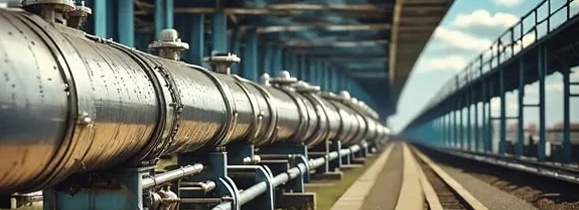
Oil and Gas
It is extensively used in the oil and gas industry to transport crude oil, natural gas, and refined petroleum products under high-pressure and high-temperature conditions
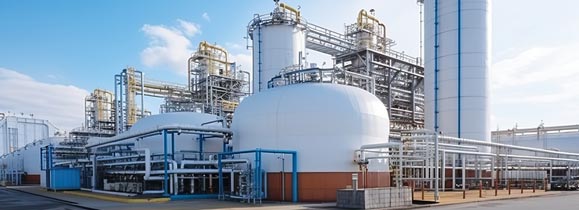
Chemical and Petrochemical industry
For the chemical and petrochemical industry, it is mainly used for pipelines, heat exchangers, reactors, and process equipment handling corrosive chemicals and aggressive media.
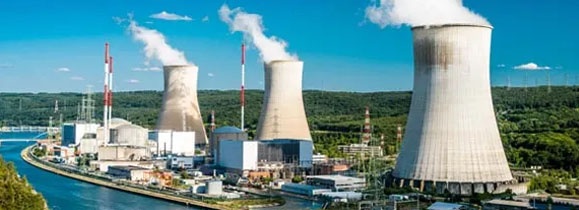
Power generation
SS Seamless (SMLS) pipe is used in boilers, steam pipelines, cooling water systems, and superheaters.
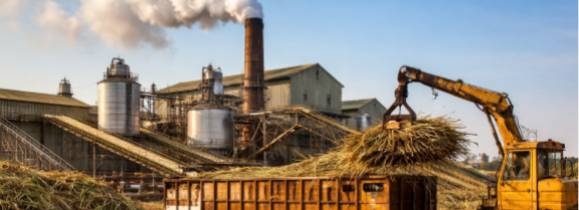
Sugar Industry
The seamless SS pipe is applied for transporting raw juice, clarified juice, syrup, molasses, and components for vacuum crystallisers.
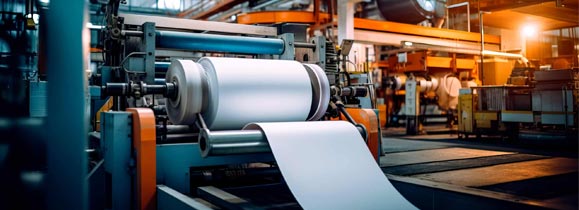
Pulp & Paper
Mainly used in bleaching systems to transport chemicals, process water systems to handle filtrate & recycled process water, and digesters & washers.
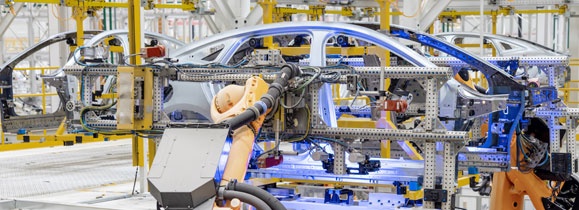
Automotive & Aerospace
It is found in exhaust systems, braking systems, hydraulic systems, structural components, and selected aerospace fluid systems.
Frequently Asked Questions
-
What is the manufacturing process of SS Seamless Pipes?
-
What is the difference between a seamless and a welded pipe?The major difference between a seamless pipe and a welded pipe is that a seamless pipe is made using a solid billet without any welded seams, and a welded pipe is made by rolling and joining steel coils or plates into a tubular shape.
-
Is a seamless pipe stronger than a welded one?Yes, a seamless pipe is generally considered stronger than a welded one because the lack of a welded seam makes it more suitable for high-temperature, high-pressure, and highly corrosive environments. It also has a more uniform wall thickness and strength
-
Which is better, seamless or ERW pipe?Seamless and ERW (Electric Resistance Welded) pipes are both good in their own ways. A seamless pipe is used for high-pressure, high-temperature, and critical service applications. ERW, on the other hand, is more suitable for general-purpose and low-to-medium pressure applications.
-
Where can I buy seamless stainless pipe?Order seamless stainless steel pipe direct from Zhejiang Xintongda Special Steel (XTD). Since 1985 we’ve supplied 25,000 tons a year across all commercial grades, with multiple international certifications. Standard delivery meets ASTM A312/ASME SA-312 with EN 10204 3.1 or 3.2 certificates. Share your grade, size, wall thickness, quantity, and delivery port for a quote.
-
What is the standard surface finish of seamless stainless steel pipe?Seamless stainless steel pipe comes in a few standard finishes. Hot-finished pipe is pickled and passivated (typical mill finish). Cold-drawn pipe has a bright finish. For hygienic or architectural use, the pipe can be polished, brushed, or mirror-finished. 2B is a sheet finish, not for seamless pipe.