Condenser tubes use heat to turn vapour into liquid while heat exchanger tubes move heat between two fluids without changing the phase of fluid.

ASTM A213 Stainless Steel Condenser Tube Manufacturer
At Zhejiang Xintongda Special Steel Manufacturing Co., Ltd, we make high-quality Stainless Steel Condenser Tubes designed for demanding industries. Our seamless SS tubes are made as per the ASTM A213 standard. They meet strict quality and performance requirements. Stainless steel condenser tubes are widely used in heat exchangers and condensers. They help transfer heat efficiently. These tubes are commonly manufactured from ASTM A213 TP304 and TP316 grades, offering superior corrosion resistance and durability. SS 304 contains chromium (18–20%) and nickel (8–10%). These elements improve strength at high pressure and temperature.
Our stainless steel condenser tubes offer excellent thermal conductivity. They resist scaling and reduce fouling. These features make them highly effective in industries like power generation, chemical processing, HVAC, and desalination plants. We conduct stringent quality checks before delivery and offer competitive pricing. Additionally, our company is Multiple international certified, ensuring reliable and efficient service to both domestic and international markets. With a 25,000 tons yearly capacity, we can handle stock orders in one week and production orders in 15–60 days.
-
 OD Range
6.35-257 mm
OD Range
6.35-257 mm
-
 Thickness
0.89-12.7 mm
Thickness
0.89-12.7 mm
-
 Length
≤ 22 m
Length
≤ 22 m
 Get a free quote now
Technical Data
Technical Data
Get a free quote now
Technical Data
Technical Data

What is a Stainless Steel Condenser Tube?
A Stainless Steel Condenser Tube is a cylindrical tube fabricated from stainless steel that is used for heat transfer in condenser systems. Due to its resistance to corrosion, scaling, and high temperature, it is becoming popular in industrial severe environments. Features include long life, good heat transfer, low maintenance cost and freedom from chemical and environmental damage. Its applications are diverse, including thermal power plants, chemical processing, HVAC systems, and desalination plants, where steam or hot gases are condensed into liquids. Their robust construction ensures long service life and reliable performance in critical heat exchange operations. The stainless steel condenser tube can handle the heat that expands and contracts while it is working. This makes sure that it works well and lasts a long time.
Manufacturing Process of Stainless Steel Condenser Tube
The production of seamless condenser tubes follows multiple steps to guarantee high quality and reliable performance. Every tube is built with advanced processes to perform reliably under demanding conditions. To know more about the process, check out this page.
- Heating: The process starts by heating a solid ss billet to a specific temperature. This step softens the metal, making it easier to shape and form. Depending on the grade, the billet is heated between 1000°C and 1200°C to make it malleable for further processing.
- Piercing: The billet is heated and then sent through a piercing mill, where a mandrel is put in to make a hollow tube. This process makes the tube's basic shape, and the hole in the middle of the billet lets it be stretched and shaped even more.
- Drawing and Sizing: After the tube is pierced, it undergoes a "drawing" or "cold rolling" process. Here, the tube is drawn through dies that progressively reduce the diameter and the wall thickness of the tube to the exact dimensions. In addition to this, the cold working process also enhances the mechanical strength and the surface finish of the tube.
- Heat Treatment: The tube undergoes a heat treatment process, which involves heating it again to a specific temperature followed by a controlled cooling phase. This process relieves internal stresses, stabilises the structure and ensures the material has the needed strength and flexibility.
- Finishing: After the heat treatment, the tube is straightened to ensure it has a uniform shape and length. The tube is cut to the required size. It then undergoes non-destructive tests, like eddy current or hydrostatic testing, to check for defects. The tube undergoes a final inspection to verify its integrity before being packaged for delivery.
Key Features and Advantages of Seamless Stainless Steel Condenser Tubes
Seamless stainless steel condenser tubes provide many benefits making them a top choice for heat exchange systems in various industries.
- Superior Heat Transfer Efficiency: Condenser stainless steel tubes are excellent at transferring heat between two fluids efficiently. This makes it ideal for use in heat exchangers, where efficient heat transfer is critical to system performance.
- High Pressure and Temperature Resistance: These tubes are made to withstand high temperatures and pressures in industrial settings. The tube is very reliable as it can handle a lot of stress and bad weather. It works well all the time, even in the hardest conditions.
- Exceptional Corrosion Resistance: The high chromium content in stainless steel provides the tubes with very good resistance to corrosion even when used in severe conditions. Thus, these become perfect for the environments where corrosive fluids are present or there is the constant exposure to water and air, because the corrosion and degradation of the metal occur to a lesser extent.
- Smooth Surface Finish: The smooth inner surface of seamless stainless steel condenser tube helps prevent fouling and scaling. A smooth finish enhances flow efficiency and reduces the need for frequent maintenance.
- Reduced Fouling and Scaling: They use these tubes to stop deposits from building up inside. This keeps the unit from losing efficiency and saves costs on maintenance. The material of the tubes is also resistant to fouling and scaling this extends the life of the system and makes it stable operation.
- Enhanced Durability and Reliability: Seamless stainless steel condenser tubes are very robust and can deliver long-term performance without visual signs of wear. In fact, their long-lasting nature is what keeps the tubes operational for a prolonged period of time, thus saving on repair and downtime costs.
- Excellent Thermal Conductivity: These tubes enable an efficient heat exchange, which is a vital requirement to sustain the optimal performance of the system. The capability to cool down the heat source in an effective manner results in energy efficiency to be enhanced and operational costs to be reduced in several industrial processes.
Specification of Stainless Steel Condenser Tube
In this section, the main features of stainless steel condenser tubes are important to understand the power and the applications of these tubes. The specifications talked about below are inclusive of the details regarding the standard, range of sizes, the length and the shape of the tube, thus guaranteeing that every tube is appropriate for all industrial requirements.

Standard
ASTM A213
Outside Diameters
6.35-257 mm
Length
≤ 22 m

Shape
Round, Square, Rectangular, Hydraulic etc
ASTM A213 Stainless Steel Condenser Tube Tolerance
The ASTM A213 standard outlines the tolerance levels for stainless steel condenser tubes. These tolerances define the acceptable variations in dimensions, including outer diameter, wall thickness, and length, ensuring the tubes meet specific quality and performance criteria.
| STANDARD | OD (D) mm |
OD TOLERANCE (mm) | THICKNESS (S) | THICKNESS TOLERANCE | LENGTH | LENGTH TOLERANCE |
| A213 HFD |
D≤100 | +0.4/-0.8 | D≤100.S≤2.4 | +40%/0 | HFD, all size | +5.00 |
| +0.4/-1.2 | D≤100.2.4| +35%/0 |
| ||||
| +0.4/-1.6 | D≤100.3.6| +33%/0 |
| ||||
100| +0.4/-1.2 |
D>100.2.4 | +35%/0 |
| |||
200| +0.4/-1.6 |
D>100.S≤43.6 |
+33%/0 |
| |||
| +0.4/-1.6 | D>100.S>8.6 | +28%/0 | ||||
| A213 CFD |
D=25 | +0.10 | D≤38.1 | +20%/0 | CFD, D<50.8 | +3.00 |
25| +0.15 |
| |||||
40| +0.20 |
D≤38.1 |
+20%/0 |
CFD, D≤50.8 |
+5.00 |
| |
50| +0.25 |
| |||||
65| +0.30 |
| |||||
75| +0.38 |
| |||||
100| +0.38/-0.64 |
| |||||
200| +0.38/-1.14 |
|
Stainless Steel Condenser Tubes Equivalent Grades
SS condenser tubes come in several grades that comply with internationally recognised standards. These grades are developed to have comparable mechanical and corrosion-resistant characteristics, thus they can be used in various industrial sectors and for different purposes. The following are the main global equivalents:
| GRADE | UNS | GB | JIS | ISO | DIN/EN | GOST | |
| ISC | NEW | ||||||
| 304 | S30400 | S30408 | 06Cr19Ni10 | SUS304 | X5CrNi18-10 | 1.4301 | 08X18H10 |
| 304L | S30403 | S30403 | 022Cr19Ni10 | SUS304L | X2CrNi19-11 | 1.4306 | 03X18H11 |
| 309S | S30908 | S30908 | 06Cr23Ni13 | SUS309S | X12CrNi23-13 | 1.4833 | 10X23H13 |
| 310 | S31000 | S31020 | 20Cr25Ni20 | SUS310 | X15CrNi25-21 | 1.4841 | 20X25H20C2 |
| 310S | S31008 | S31008 | 06Cr25Ni20 | SUS310S | X8CrNi25-21 | 1.4845 | - |
| 314 | S31400 | S38400 | 16Cr25Ni20Si2 | - | X15CrNi25-21 | 1.4841 | - |
| 316 | S31600 | S31608 | 06Cr17Ni12Mo2 | SUS316 | X5CrNiMo17-12-2 | 1.4401 | 08X16H13M2 |
| 316L | S31603 | S31603 | 022Cr17Ni12Mo2 | SUS316L | X2CrNiMo17-12-2 | 1.4404 | 03X17H14M2 |
| 316Ti | S31635 | S31668 | 06Cr17Ni12Mo2Ti | SUS316Ti | X6CrNiMoTi17-12-2 | 1.4571 | 08X17H13M2T |
| 316N | S31651 | S31658 | 06Cr17Ni12Mo2N | SUS316N | - | 1.4406 | - |
| 316LN | S31653 | S31653 | 022Cr17Ni12Mo2N | SUS316LN | X2CrNiMo17-12-2 | 1.4429 | - |
| 317 | S31700 | S31708 | 06Cr19Ni13Mo3 | SUS317 | - | 1.4449 | - |
| 317L | S31703 | S31703 | 022Cr19Ni13Mo3 | SUS317L | X2CrNiMo19-14-4 | 1.4438 | 03X16H15M3 |
| 321 | S32100 | S32168 | 06Cr18Ni10Ti | SUS321 | X6CrNi18-10 | 1.4541 | 08X18H10T |
| 321H | S32109 | S32169 | 07Cr19Ni10Ti | SUS321HTP | X7CrNi18-10 | 1.4878 | 12X18H10T |
| 347 | S34700 | S34778 | 06Cr18Ni11Nb | SUS347 | X6CrNiNb18-10 | 1.4550 | 08X18H12Б |
| 310MoLN | S31050 | S31053 | 022Cr25Ni20Mo2N | - | X1CrNiMo25-22-2 | 1.4466 | - |
| 904L | N08904 | S31725 | 015Cr20Ni18Mo6Cu2 | SUS890L | X1NiCrMoCu25-20-5 | 1.4539 | - |
100% Certified Testing & Documentation
- EN 10204 3.1 and EN 10204 3.2 Material Test Certificates (MTC)
- Raw Materials Certificate
- 100% PMI
- Heat Treatment Charts
- Third-Party Inspection Report
- Surface roughness and size measurement
- Manufacturer Test Certificate (Impact Testing, Flattening, Flare, Bend, Hardness, Intergranular, Pitting Corrosion, Grain size, ET, UT, HT)
- Laboratory Test Certificate from the Government-Approved Lab
Industrial Applications of SS Condenser Tube
Stainless steel condenser tubes are the components of the condenser unit made in stainless steel. They are widely used in demanding industries for their long lasting performance, corrosion resistance and heat transfer efficiency, thus they are indispensable for different applications. The exhaustive list of applications comprises:

Power Generation
In power plants, SS condenser tubes are used in condensers to cool steam after it has passed through turbines. These tubes condense steam back into water, ensuring the efficient operation of the power generation cycle and maintaining system performance.
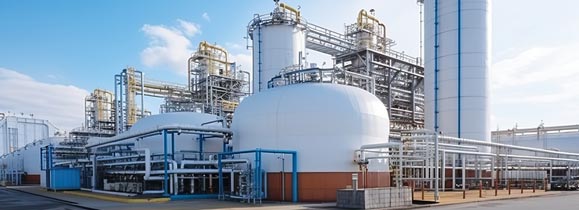
Chemical and Petrochemical Processing
We use our stainless steel condenser tubes in heat exchangers to keep chemicals at the proper temperature during different processes. The tubes help cool down hot liquids which keeps the chemical processes safe and at the right temperatures for responses.

Oil and Gas Industry
Refineries and offshore platforms use our tubes to cool gases and liquids. It is important for keeping compressors, turbines and heat exchangers at safe operating temperatures, especially in places where the air is corrosive.

HVAC and Refrigeration
In HVAC and refrigeration systems ss condenser tubes move heat from one refrigerant to another or from cooling air or water to another refrigerant. They help refrigerants condense quickly which keeps air conditioners, chillers and industrial refrigeration units working well.
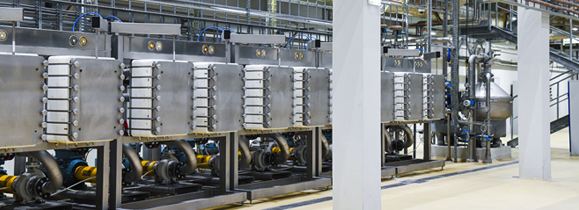
Desalination Plants
SS condenser tubes are an essential component of desalination plants. They are the parts that cool the steam used to produce freshwater from seawater. Their ability to withstand corrosion from saltwater guarantees that they can operate in the tough conditions of the sea without any problems thus making it the best choice for desalination.
Frequently Asked Questions
-
What is the difference between condenser tubes and heat exchanger tubes?
-
What are condenser tube cleaning methods?Chemical cleaning, mechanical cleaning and high-pressure water jetting are all common ways to get rid of fouling and scale buildup.
-
What is the typical operating temperature range of condenser tubes?The operating temperature limits for stainless steel depend on the grade and the design of the system. For austenitic grades, they usually range from very low temperatures to about 600°C.
-
Where are condenser tubes commonly installed?Power plants, HVAC systems, chemical processing plants and refrigeration systems all use condenser tubes extensively.
-
How do condenser tubes improve system efficiency?Condenser tubes help heat move quickly, which helps systems keep the right temperature and use less energy.
- What is a Stainless Steel Condenser Tube?
- Manufacturing Process of Stainless Steel Condenser Tube
- Key Features and Advantages of Seamless Stainless Steel Condenser Tubes
- Specification of Stainless Steel Condenser Tube
- ASTM A213 Stainless Steel Condenser Tube Tolerance
- Stainless Steel Condenser Tubes Equivalent Grades
- 100% Certified Testing & Documentation
- Industrial Applications of SS Condenser Tube
- Frequently Asked Questions