
Yes. ASTM A269 grades TP304, TP304L, and TP347 are accepted by ASME Section VIII Division 1 for pressure vessel service at temperatures from -425°F (-254°C) to elevated temperatures without impact testing. Other grades are also accepted for pressure service at temperatures as low as -325°F (-198°C). The tubing must meet all A269 requirements, and the purchaser must specify the applicable code and supplementary requirements.

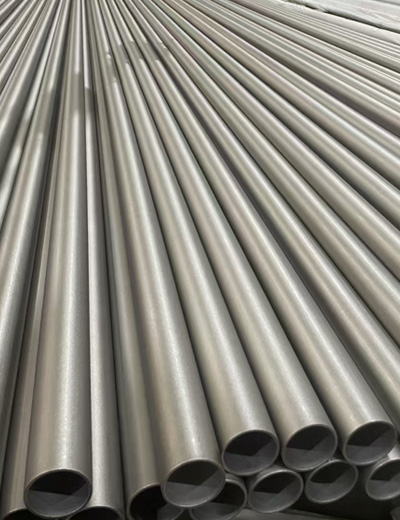
ASTM A269 Seamless & Welded Stainless Steel Tubing Standard
ASTM A269 is the standard specification for seamless and welded austenitic stainless steel tubing. If ASTM A213 is the specification for boiler and heat exchanger tubes and ASTM A312 is for pipe, ASTM A269 is used for everything else. It covers the broadest range of applications: instrumentation lines, hydraulic tubing, pharmaceutical transfer systems, food processing, semiconductor fabrication, and any general corrosion-resisting or temperature service where tubing (not pipe) is specified.
The specification covers grades from basic TP304 through super-austenitic alloys like 6Mo (N08367) and high-performance duplex-adjacent grades. Both seamless and welded manufacturing are permitted, a critical distinction from A213, which covers only seamless tubes. Tubing sizes typically start at 1/4 in. (6.4 mm) inside diameter with 0.020 in. (0.51 mm) nominal wall thickness and heavier.
ASTM A269 stainless steel tubing is the specification engineers prefer when they need corrosion-resistant tubing that does not fall under a specialized boiler, condenser, or pipe standard. This guide covers the key grades, chemical composition, mechanical requirements, hardness limits, dimensional tolerances, heat treatment, and testing protocols, giving engineers and procurement teams the data to specify the right general-service stainless tubing.
ASTM A269 PDF Free Download ASTM A269 PDF Free Download
What Is ASTM A269?
ASTM A269 is the standard specification for seamless and welded austenitic stainless steel tubing for general service. It falls under the ASTM International Committee A01 on Steel, Stainless Steel, and Related Alloys, Subcommittee A01.10 on Tubing. This standard has been approved for use by agencies of the U.S. Department of Defence.
The specification covers stainless steel seamless tube and welded tube in nominal-wall-thickness grades for corrosion-resisting and low- or high-temperature service. General requirements conform to ASTM A450/A450M for carbon, ferritic alloy, and austenitic alloy steel tubes, and A480/A480M for flat-rolled stainless and heat-resisting steel plate, sheet, and strip.
One important feature is that certain austenitic grades covered by A269, including TP304, TP304L, and TP347, are accepted by ASME Pressure Vessel Code, Section VIII, Division 1, for service at temperatures as low as -425°F (-254°C) without impact testing. This makes A269 a dual-purpose specification: it covers both ambient general service and cryogenic applications in the same document.
Chemical Composition of ASTM A269 Seamless Stainless Steel Tubing
ASTM A269 defines chemical composition, which mirrors the compositions in the corresponding AISI grades. The table below lists the most commonly ordered grades. Carbon is the most critical element for grade selection. The “L” suffix (304L, 316L) means 0.035% max C for welding; the “LN” suffix adds nitrogen for strength recovery.
| GRADE | UNS Designation |
C | Mn | P | S | Si | Cr | Ni | Mo | Ti | Cu | Al | Other |
| 304 | S30400 | 0.080 | 2.00 | 0.045 | 0.030 | 1.00 | 18.0-20.0 | 8.0-11.0 | - | - | - | - | - |
| 304L | S30403 | 0.035 | 2.00 | 0.045 | 0.030 | 1.00 | 18.0-20.0 | 8.0-13.0 | - | - | - | - | - |
| 304H | S30409 | 0.04-0.1 | 2.00 | 0.045 | 0.030 | 1.00 | 18.0-20.0 | 8.0-11.0 | - | - | - | - | - |
| 253MA | S30815 | 0.05-0.1 | 0.80 | 0.040 | 0.030 | 1.4-2.0 | 20.0-22.0 | 10.0-12.0 | N:0.14-0.20 Ce:0.03-0.08 |
||||
| 309S | S30908 | 0.080 | 2.00 | 0.045 | 0.030 | 1.00 | 22.0-24.0 | 12.0-15.0 | 0.75 | - | - | - | - |
| 310S | S31008 | 0.080 | 2.00 | 0.045 | 0.030 | 1.00 | 24.0-26.0 | 19.0-22.0 | 0.75 | - | - | - | - |
| 310H | S31009 | 0.04-0.1 | 2.00 | 0.045 | 0.030 | 1.00 | 24.0-26.0 | 19.0-22.0 | - | - | - | - | - |
| 254SMO | S31254 | 0.020 | 1.00 | 0.030 | 0.010 | 0.80 | 19.5-20.5 | 17.5-18.5 | 6.0-6.5 | 0.5-1.0 | N:0.18-0.25 | ||
| 316 | S31600 | 0.080 | 2.00 | 0.045 | 0.030 | 1.00 | 16.0-18.0 | 10.0-14.0 | 2.0-3.0 | - | - | - | - |
| 316L | S31603 | 0.035 | 2.00 | 0.045 | 0.030 | 1.00 | 16.0-18.0 | 10.0-14.0 | 2.0-3.0 | - | - | - | - |
| 316Ti | S31635 | 0.080 | 2.00 | 0.045 | 0.030 | 0.75 | 16.0-18.0 | 10.0-14.0 | 2.0-3.0 | 5(C+N)-0.7 | - | - | N:≤0.1 |
| 317 | S31700 | 0.080 | 2.00 | 0.045 | 0.030 | 1.00 | 18.0-20.0 | 11.0-15.0 | 3.0-4.0 | - | - | - | - |
| 317L | S31703 | 0.035 | 2.00 | 0.045 | 0.030 | 1.00 | 18.0-20.0 | 11.0-15.0 | 3.0-4.0 | - | - | - | - |
| 321 | S32100 | 0.080 | 2.00 | 0.045 | 0.030 | 1.00 | 17.0-19.0 | 9.0-12.0 | - | 5(C+N)-0.7 | - | - | N:≤0.1 |
| 321H | S32109 | 0.04-0.1 | 2.00 | 0.045 | 0.030 | 1.00 | 17.0-19.0 | 9.0-12.0 | - | 4(C+N)-0.7 | - | - | N:≤0.1 |
| 654SMO | S32654 | 0.020 | 2.0-4.0 | 0.030 | 0.005 | 0.50 | 24.0-25.0 | 21.0-23.0 | 7.0-8.0 | 0.3-0.6 | N:0.45-0.55 | ||
| 347 | S34700 | 0.080 | 2.00 | 0.045 | 0.030 | 1.00 | 17.0-19.0 | 9.0-13.0 | - | - | - | - | Nb:10C-1.0 |
| 347H | S34709 | 0.04-0.1 | 2.00 | 0.045 | 0.030 | 1.00 | 17.0-19.0 | 9.0-13.0 | - | - | - | - | Nb:8C-1.0 |
| 904L | N08904 | 0.020 | 2.00 | 0.040 | 0.030 | 1.00 | 19.0-23.0 | 23.0-28.0 | 4.0-5.0 | - | 1.0-2.0 | - | N:≤0.1 |
| 926 | N08926 | 0.020 | 2.00 | 0.030 | 0.010 | 0.50 | 19.0-21.0 | 24.0-26.0 | 6.0-7.0 | - | 0.5-1.5 | - | N:0.15-0.25 |
Mechanical Properties of ASTM A269 Stainless Steel Tube
For standard 300-series grades, tensile and yield values are governed by A450/A450M. Higher-alloy grades such as S31254 and N08367 have grade-specific minimum mechanical property requirements within A269. However, A269 does specify hardness limits, which is a critical requirement that distinguishes it from A312 (pipe). The table below shows the hardness limits for the major A269 grades, along with the typical room-temperature mechanical properties that buyers can expect from properly annealed material.
| Grade | Condition & Size | Heat Treating Temp. : min | Tensile Strength Min. MPa |
Yield Strength Min. MPa |
Elongation min. % |
| 304 | 1040°C | 515 | 205 | 35 | |
| 304L | 1040°C | 485 | 170 | 35 | |
| 304H | Cold Finished | 1040°C | 515 | 205 | 35 |
| 304H | Hot Finished | 1040°C | 515 | 205 | 35 |
| 253MA | 1040°C | 600 | 310 | 35 | |
| 309S | 1040°C | 515 | 205 | 35 | |
| 310S | 1040°C | 515 | 205 | 35 | |
| 310H | 1040°C | 515 | 205 | 35 | |
| 254SMO | t≤5mm | 1150°C | 675 | 310 | 35 |
| 254SMO | t>5mm | 1150°C | 655 | 310 | 35 |
| 316 | 1040°C | 515 | 205 | 35 | |
| 316L | 1040°C | 485 | 170 | 35 | |
| 316Ti | 1040°C | 515 | 205 | 35 | |
| 317 | 1040°C | 515 | 205 | 35 | |
| 317L | 1040°C | 515 | 205 | 35 | |
| 321 | t≤9.5mm | 1040°C | 515 | 205 | 35 |
| 321 | t>9.5mm | 1040°C | 485 | 170 | 35 |
| 321H | Cold Finished; t≤9.5mm | 1100°C | 515 | 205 | 35 |
| 321H | Cold Finished; t>9.5mm | 1100°C | 480 | 170 | 35 |
| 321H | Hot Finished; t≤9.5mm | 1050°C | 515 | 205 | 35 |
| 321H | Hot Finished; t>9.5mm | 1050°C | 480 | 170 | 35 |
| 654SMO | 1150°C | 750 | 430 | 35 | |
| 347 | 1040°C | 515 | 205 | 35 | |
| 347H | Cold Finished | 1100°C | 515 | 205 | 35 |
| 347H | Hot Finished | 1050°C | 515 | 205 | 35 |
| N08904 | - | 1100°C | 490 | 215 | 35 |
ASTM A269 Tolerances
ASTM A269 tolerances define the permissible variations in outside diameter, wall thickness, and length for seamless and welded austenitic stainless steel tubing, as detailed in the table below.
| STANDARD | OD(D) | TOLERANCE(MM) | THICKNESS(S) | TOLERANCE | LENGTH | TOLERANCE |
| MM | COMMON HIGH | MM | MM | MM | ||
| A269 | D≤13 | ±0.13 | D≤13 | ±15% | D<38 | +3.2/0 |
| 13<D≤38 | ±0.13 | |||||
| 38<D≤89 | ±0.25 | 13<D<356 | ±10% | D≥38 | +4.8/0 | |
| 89≤D≤140 | ±0.38 | |||||
| 140≤D≤203 | ±0.76 | |||||
| 203≤D≤305 | ±1.01 | |||||
| 305≤D≤356 | ±1.26 |
If you want to know more product details, please contact us!
ASTM A269 Grades
ASTM A269 covers the full range of austenitic stainless steel grades, from standard 300-series (TP304 through TP348) to super-austenitic and high-alloy grades (S31254, S32654, N08904, N08367, N08926). The most commonly specified grades are TP304, TP304L, TP316, TP316L, TP321, and TP347. The table below covers the primary grades with their chemical composition and typical applications.
| Grade (TP) | UNS | Cr, % | Ni, % | Mo, % | Key Feature |
| 304 | S30400 | 18–20 | 8–11 | — | General purpose, most widely used |
| 304L | S30403 | 18–20 | 8–12 | — | Low carbon (0.035% max), welded service |
| 304LN | S30453 | 18–20 | 8–12 | — | Low C + nitrogen, higher strength |
| 316 | S31600 | 16–18 | 10–14 | 2.0–3.0 | Molybdenum for pitting resistance |
| 316L | S31603 | 16–18 | 10–14 | 2.0–3.0 | Low C + Mo, most popular grade |
| 316LN | S31653 | 16–18 | 10–14 | 2.0–3.0 | Low C + Mo + nitrogen |
| 317 | S31700 | 18–20 | 11–15 | 3.0–4.0 | Higher Mo for severe pitting |
| 321 | S32100 | 17–19 | 9–12 | — | Ti-stabilised, high-temp service |
| 347 | S34700 | 17–19 | 9–13 | — | Nb-stabilised, high-temp service |
| 348 | S34800 | 17–19 | 9–13 | — | Nb-stabilised, nuclear grade |
| N08904 (904L) | — | 19–23 | 23–28 | 4.0–5.0 | Super-austenitic, sulfuric acid |
Grade 304
SS 304 is an austenitic stainless steel with 18–20% Cr and 8–11% Ni, containing up to 0.08% carbon. It offers excellent general corrosion resistance and good mechanical strength for structural and process applications. This grade is widely used for seamless tubing where welding is limited or post-weld heat treatment is acceptable.
More About 304 MaterialGrade 304L
SS 304L is the low-carbon variant of 304 with 0.035% max carbon to minimise sensitisation during welding. It maintains similar corrosion resistance while preventing chromium carbide precipitation in the heat-affected zone. It is preferred for welded tubing in the as-welded condition without post-weld solution annealing.
More About 304L MaterialGrade 316
This grade is a molybdenum-bearing grade (2.0–3.0% Mo) for improved resistance to pitting and crevice corrosion. It performs reliably in chloride-containing environments such as marine and chemical processing services. SS 316 is specified where higher corrosion resistance than 304 is required.
More About 316 MaterialGrade 316L
SS 316L is the low-carbon version of 316 with enhanced weldability and resistance to intergranular corrosion. It combines molybdenum-driven pitting resistance with suitability for welded fabrication. It is commonly used in pharmaceutical, food, and high-purity process tubing systems.
More About 316L MaterialGrade 321
SS 321 is the titanium-stabilised austenitic grade — Ti ≥ 5×(C+N) min, 0.70% max, designed to resist sensitisation at elevated temperatures, particularly in the range of 800–1500°F (427–816°C) per ASME Section II Part D, where unstabilised grades are susceptible to intergranular corrosion. It remains serviceable below this range as well.
More About 321 MaterialGrade 347
SS 347 is the niobium-stabilised grade (Nb ≥ 10×C, 1.10 max) offering resistance to intergranular corrosion and improved creep strength. It provides better high-temperature stability than 321 due to thermally stable niobium carbides. It is preferred for welded components and high-temperature service above 1000°F (538°C).
More About 347 MaterialGrade 317
SS 317 is a higher-molybdenum austenitic grade (3.0–4.0% Mo, 17.0–20.0% Cr) for applications where SS 316 does not provide sufficient pitting or crevice corrosion resistance. It is specified for aggressive chemical processing, bleach plant service in pulp and paper, and concentrated acid handling where chloride concentrations are high.
More About 317 MaterialHeat Treatment Requirements for ASTM A269
All ASTM A269 tubing is supplied in the heat-treated condition. The standard requirement is solution annealing at a minimum of 1900°F (1040°C), followed by water quenching or rapid cooling to restore full corrosion resistance and achieve the required austenitic microstructure. Certain speciality grades require modified solution temperatures to meet specific metallurgical objectives. For stabilised grades such as TP321, TP347, and TP348, solution annealing above 1950°F (1065°C) can reduce resistance to intergranular corrosion after subsequent exposure to sensitising temperatures. When specified by the buyer, a separate stabilisation anneal may be performed after solution treatment in accordance with Supplementary Requirement S3.
Testing and Inspection Requirements
ASTM A269 requires a broader range of mechanical tests than A312 pipe. In addition to chemical analysis, A269 tubing must pass flaring, flanging (welded tubes), hardness, reverse flattening (welded tubes only), and either hydrostatic or non-destructive electric testing.
Flaring Test (Seamless Tubes)
One test per lot from one end of one tube. The tube end is flared by expanding it over a mandrel until the specified OD increase is achieved without cracking or splitting. This verifies the ductility and soundness of the tube wall.
Flange Test (Welded Tubes)
One test per lot from one end of one tube. A flange is formed perpendicular to the tube axis. The flange must be free of cracks and must demonstrate adequate ductility in the weld zone and base metal.
Hardness Test
Brinell or Rockwell hardness on specimens from two tubes per lot. The hardness limit for standard 300-series grades (304, 316, 321, 347) is 192 HB / 90 HRB maximum. Super-austenitic grades (S31254, N08367) are permitted up to 220–256 HB / 96–100 HRB due to their higher alloy content and nitrogen strengthening. Hardness is not required on tubes <1/4 in. (6.4 mm) ID or <0.020 in. (0.51 mm) wall.
Reverse Flattening Test (Welded Tubes Only)
For welded tubes, one reverse flattening test is made per 1,500 ft (460 m) of finished tubing. The weld is positioned at 90° to the applied force. The tube section is flattened until the opposite walls meet. No cracks or openings in the weld are permitted. Coiled tubing over 1,500 ft (450 m) must be sampled at both ends, and the coil must be continuous without circumferential butt welds.
Hydrostatic or Non-Destructive Electric Test
Each tube, seamless or welded, is tested by either a hydrostatic pressure test or NDE (eddy current), at the manufacturer’s option unless the purchaser specifies which test. The hydrostatic test pressure is calculated per P = 2St/D, with the fibre stress S not exceeding the allowable values in A450/A450M.
Frequently Asked Questions
-
Can A269 Tubing Be Used for Pressure Service?
-
What is the Difference Between A269 and A249?ASTM A249 covers welded austenitic stainless steel tubing specifically for boiler, superheater, heat exchanger, and condenser service. ASTM A269 covers both seamless and welded tubing for general service. A249 mandates hydrostatic testing and flattening tests specific to boiler service. A269 requires flaring, flanging, and hardness tests appropriate for general-service tubing, with hydrostatic or NDE testing at the manufacturer's option because of the higher-consequence failure modes in boiler service. For general instrumentation, pharma, or food service, A269 is the correct specification.
-
What is Stress-Relieved Annealing in A269?Supplementary Requirement S1 allows A269 tubing in TP304L, TP316L, TP321, TP347, and TP348 to be furnished in the stress-relieved annealed condition. The stress relief heat treatment is 1550–1650°F (845–900°C) after cold-working (such as roll straightening). This condition is specified for chloride-containing environments where residual stresses from cold work could initiate stress corrosion cracking.
-
How Does A269 Compare to A213 for Heat Exchanger Service?A213 is the proper specification for heat exchanger and boiler tubes. It requires seamless manufacturing and includes flattening tests specific to heat exchanger service. A269 welded tubing is sometimes used in less critical heat exchanger applications for cost savings, but this requires purchaser approval and may not satisfy ASME code requirements. For ASME-code heat exchangers, always specify A213.
-
What is the Maximum Service Temperature for A269 TP304L?ASME Section II Part D allows TP304L for continuous service up to approximately 800°F (427°C) for pressure design. Above this temperature, the lower carbon content reduces creep strength compared to TP304 or TP304H. For high-temperature service above 800°F, use TP304 or the stabilised grade TP321 seamless tube, which maintains strength and intergranular corrosion resistance at elevated temperatures.
-
What is the Intergranular Corrosion Test in A269?Supplementary Requirement S4 allows the purchaser to specify intergranular corrosion testing as per ASTM A262, Practice E (copper sulfate–sulfuric acid test). This is required for low-carbon and stabilised grades in the sensitised condition. For stabilised grades (TP321, TP347, TP348) containing titanium or niobium, a stabilisation heat treatment per Supplementary Requirement S3 may be needed to pass the A262 test.