
A270 adds controlled surface finish requirements (grit polish, electropolish, Ra specification) and pharmaceutical-quality supplementary requirements that A269 does not have. If your application needs a defined surface finish for sanitary or pharma service, specify A270. For general instrumentation or mechanical service, A269 is sufficient.

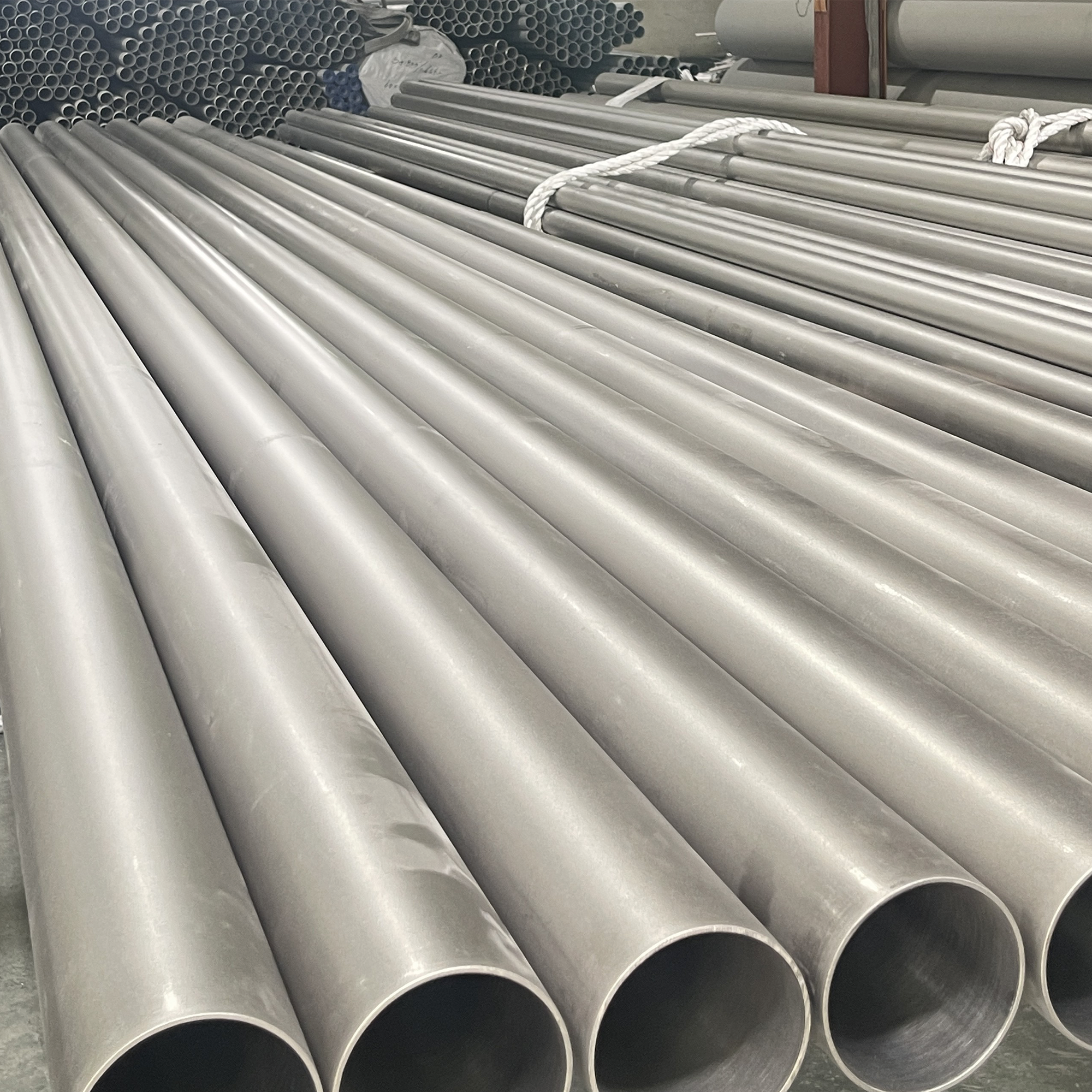
ASTM A270 Seamless & Welded
Stainless Steel Standard
ASTM A270 is the standard specification for seamless and welded austenitic and ferritic/austenitic stainless steel sanitary tubing. It is the specification that separates food-grade and pharmaceutical-grade tubing from standard industrial tubing. While ASTM A269 covers general-service austenitic stainless tubing, A270 adds what A269 lacks: controlled surface finishes, pharmaceutical-quality supplementary requirements, and sanitary-grade cleanliness standards.
The specification covers seamless (SML), welded (WLD), and heavily cold-worked (HCW) tubes in sizes up to 12 in. (300 mm) OD. It includes standard austenitic grades (TP304, TP304L, TP316, TP316L), super-austenitic alloys (S31254, N08926, N08367), and duplex grades (S31803, S32205, S32750, S32003), making A270 one of the few ASTM tube specifications that covers both austenitic and duplex stainless in the same document.
ASTM A270 PDF Free Download ASTM A270 PDF Free Download
What is ASTM A270?
ASTM A270/A270M is the Standard Specification for Seamless and Welded Austenitic and Ferritic/Austenitic Stainless Steel Sanitary Tubing. It falls under ASTM Committee A01 on Steel, Stainless Steel, and Related Alloys, Subcommittee A01.10 on Stainless and Alloy Steel Tubular Products. The current edition is A270/A270M--24, originally approved in 1944.
The specification covers stainless steel tubes intended for use in the dairy and food industry with special surface finishes. Pharmaceutical quality can be requested through Supplementary Requirement S2. General requirements conform to ASTM A1016/A1016M.
What makes A270 unique is its Section 13 on Surface Finishes—no other ASTM tube specification defines mechanical polish grit numbers (80, 120, 180, 240), electropolish requirements, and Ra (roughness average) surface measurements per ASME B46.1 as ordering criteria. Surface finish is the entire reason A270 exists as a separate specification from A269.
ASTM A270 vs A269: When to Specify Which?
Both specifications cover the same austenitic grades and the same manufacturing methods. The question is always: Do you need a controlled surface finish? The table below draws the line.
| Parameter | ASTM A270 | ASTM A269 |
| Product | Sanitary tubing (OD × wall) | General-service tubing (OD × wall) |
| Manufacturing | Seamless, welded, HCW | Seamless, welded |
| Primary Service | Dairy, food, pharma, biotech | Instrumentation, hydraulics, general |
| Surface Finish | Defined (grit #, EP, Ra) | Mill finish (pickled) |
| Duplex Grades? | Yes (S31803, S32205, S32750) | No (austenitic only) |
| Pharma Quality? | Yes (Supplementary Req. S2) | No |
| Chemical Passivation? | Yes (Supplementary Req. S3) | No |
| IGC Testing? | Yes (Supplementary Req. S1) | Yes (Supplementary Req. S4) |
| Wall Tolerance | ±12.5% | ±10–15% (by OD group) |
| General Requirements | A1016/A1016M | A450/A450M + A480/A480M |
The practical rule: if the tubing will contact food, dairy products, beverages, pharmaceutical ingredients, biotech media, or cosmetics, and surface finish matters, specify A270. For everything else (instrumentation, hydraulics, mechanical, semiconductor), A269 is the correct specification.
Chemical Composition of ASTM A270
Chemical composition is defined in Table 1 of A270. The austenitic grades mirror A269 chemistry, while the duplex grades follow A789 compositions. The table below covers the most commonly ordered austenitic and duplex grades.
| Element | TP304 | TP304L | TP316 | TP316L | 2205 (S32205) | 2507 (S32750) |
| Carbon, max | 0.08 | 0.035 | 0.08 | 0.035 | 0.030 | 0.030 |
| Manganese, max | 2.00 | 2.00 | 2.00 | 2.00 | 2.00 | 1.20 |
| Phosphorus, max | 0.045 | 0.045 | 0.045 | 0.045 | 0.030 | 0.035 |
| Sulfur, max | 0.030 | 0.030 | 0.030 | 0.030 | 0.020 | 0.020 |
| Silicon, max | 1.00 | 1.00 | 1.00 | 1.00 | 1.00 | 0.80 |
| Chromium | 18.0–20.0 | 18.0–20.0 | 16.0–18.0 | 16.0–18.0 | 22.0–23.0 | 24.0–26.0 |
| Nickel | 8.0–13.0 | 8.0–13.0 | 10.0–14.0 | 10.0–14.0 | 4.5–6.5 | 6.0–8.0 |
| Molybdenum | — | — | 2.0–3.0 | 2.0–3.0 | 3.0–3.5 | 3.0–5.0 |
| Nitrogen | — | — | — | — | 0.14–0.20 | 0.24–0.32 |
| Iron | Bal | Bal | Bal | Bal | Bal | Bal |
Pharmaceutical note: When TP316 or TP316L is ordered with Supplementary Requirement S2 (Pharmaceutical Quality), sulfur is restricted to 0.005–0.017%. This controlled sulfur range prevents MnS inclusions from creating micro-pitting during electropolishing, giving a smoother, more uniform EP surface that meets the Ra requirements demanded by pharma and biotech facilities.
Mechanical Properties of ASTM A270
A270 does not define mechanical properties in the base specification. Standard dairy/food-grade A270 tubing follows the mechanical requirements of A1016/A1016M and the applicable product test methods. When Supplementary Requirement S2 (Pharmaceutical Quality) is specified, Table S2.1 defines tensile, yield, elongation, and Rockwell hardness requirements.
| Grade | UNS | Tensile Min, ksi (MPa) | Yield Min, ksi (MPa) | Elong. Min, % | Rockwell Max |
| TP304 | S30400 | 75 (515) | 30 (205) | 35 | B90 |
| TP304L | S30403 | 70 (485) | 25 (170) | 35 | B90 |
| TP316 | S31600 | 75 (515) | 30 (205) | 35 | B90 |
| TP316L | S31603 | 70 (485) | 25 (170) | 35 | B90 |
| 2205 | S31803/S32205 | 90 (620) / 95 (655) | 65 (450) / 70 (485) | 25 | C30.5 |
| 2507 | S32750 | 116 (800) | 80 (550) | 15 | C32 |
| 2003 | S32003 | 90 (620) | 65 (450) | 25 | C30 |
Note: Duplex grade 2507 (S32750) has the highest strength in the A270 family: 116 ksi (800 MPa) tensile and 80 ksi (550 MPa) yield—more than 3× the yield strength of TP316L. This allows significantly thinner walls for the same pressure rating, reducing both cost and weight in high-pressure sanitary systems.
Surface Finish Options (Section 13)
Surface finish is the defining feature of ASTM A270. Section 13 defines four finish categories that can be specified for ID, OD, or both surfaces. Surface roughness is measured as Ra (roughness average) per ASME B46.1 and reported in microinches (µin.) or micrometres (µm).
| Finish Type | Description | Typical Ra, µin. (µm) | Common Application |
| Mill Finish | No additional polishing or smoothing | 80–120 (2.0–3.0) | Basic food/dairy transfer |
| #80 Mechanical Polish | 80-grit abrasive media | 60–80 (1.5–2.0) | Dairy CIP systems |
| #120 Mechanical Polish | 120-grit abrasive media | 40–60 (1.0–1.5) | Food processing |
| #180 Mechanical Polish | 180-grit abrasive media | 20–40 (0.5–1.0) | Beverage, cosmetics |
| #240 Mechanical Polish | 240-grit abrasive media | 15–25 (0.38–0.63) | Pharma pre-EP |
| Electropolish (EP) | Electrochemical material removal | 10–20 (0.25–0.50) | Pharma, biotech, BPE |
| Custom Ra | Purchaser-specified max Ra | Per order | Semiconductor, critical pharma |
Mechanical polishing can be longitudinal (usually ID only) or circumferential/rotary (ID, OD, or both). When circumferentially polished, Ra is measured in the longitudinal direction. Combinations of finishes are permitted—for example, #180 MP on the OD with EP on the ID.
For pharmaceutical and biotech facilities, the typical specification is A270 TP316L + S2 + EP ID at Ra ≤20 µin. (0.50 µm) + MP OD. Some semiconductor and ultrapure applications specify Ra ≤10 µin. (0.25 µm) ID EP.
ASTM A270 Tolerances
A270 defines dimensional tolerances in Table 2 for OD and length. Wall thickness tolerance is specified separately in Section 12.1.3.
Outside Diameter and Length Tolerances (Table 2)
Permissible variations by OD size range.
| OD Range, in. (mm) | OD (±), in. (mm) | Cut Length Over, in. (mm) | Under |
| 1.000 (25) and under | ±0.005 (0.13) | 1/8 (3) | 0 |
| Over 1 to 2 (25–50) | ±0.008 (0.20) | 1/8 (3) | 0 |
| Over 2 to 3 (50–75) | ±0.010 (0.25) | 1/8 (3) | 0 |
| Over 3 to 4 (75–100) | ±0.015 (0.38) | 1/8 (3) | 0 |
| Over 4 to 5-1/2 (100–140) | ±0.015 (0.38) | 3/16 (5) | 0 |
| 5-1/2 to 8 (140–200) | ±0.030 (0.75) | 3/16 (5) | 0 |
| 8 to 12 (200–300) | ±0.050 (1.25) | 3/16 (5) | 0 |
Wall Thickness Tolerance: Wall thickness at any point shall not vary more than ±12.5% from the specified wall thickness. When Supplementary Requirement S2 (Pharmaceutical Quality) is specified, the wall tolerance tightens to ±10%. Thin-wall tubing (wall <0.150 in. / 3.8 mm for OD >4 in.) gets additional ovality provisions: max and min OD at any cross-section shall not deviate by more than 2× the Table 2 tolerance.
If you want to know more product details, please contact us!
ASTM A270 Tube Grades
A270 covers 12 grades spanning two metallurgical families: austenitic stainless steels (TP304, TP304L, TP316, TP316L, S30416, S31254, N08926, N08367) and duplex (ferritic/austenitic) stainless steels (S31803/2205, S32205, S32750/2507, S32003/2003). The table below summarises all grades with their key chemistry highlights and typical service.
| Grade | UNS | Cr, % | Ni, % | Mo, % | Key Feature |
| TP304 | S30400 | 18–20 | 8–11 | — | General dairy/food service |
| TP304L | S30403 | 18–20 | 8–12 | — | Low C, welded sanitary systems |
| — | S30416 | 17.5–19.5 | 9–11 | — | N-bearing, Si 0.80–2.00% |
| TP316 | S31600 | 16–18 | 10–14 | 2.0–3.0 | Chloride-resistant sanitary |
| TP316L | S31603 | 16–18 | 10–14 | 2.0–3.0 | Pharma standard grade |
| — | S31254 | 19.5–20.5 | 17.5–18.5 | 6.0–6.5 | 6Mo super-austenitic |
| — | N08926 | 19–21 | 24–26 | 6.0–7.0 | 6Mo + Cu, acid service |
| — | N08367 | 20–22 | 23.5–25.5 | 6.0–7.0 | AL-6XN, seawater |
| 2205 | S31803 | 21–23 | 4.5–6.5 | 2.5–3.5 | Duplex, 2× yield of 316 |
| — | S32205 | 22–23 | 4.5–6.5 | 3.0–3.5 | Duplex, tighter chemistry |
| 2507 | S32750 | 24–26 | 6–8 | 3.0–5.0 | Super duplex, highest strength |
| 2003 | S32003 | 19.5–22.5 | 3–4 | 1.5–2.0 | Lean duplex, cost-effective |
Grade 304
SS TP 304 is the baseline sanitary grade. TP304 contains 18–20% Cr and 8–13% Ni with 0.08% max carbon. It resists organic acids (citric, lactic, and acetic) and standard CIP (Clean-in-Place) chemicals used in dairy and food processing.
Grade 304L
SS TP 304L is the welded-system standard with 0.035% max carbon for sensitisation prevention. Since most sanitary piping systems are orbital-welded in the field, TP304L is the default choice for new installations.
Grade 316
SS TP316 adds 2.0–3.0% molybdenum for pitting resistance in chloride-bearing environments. TP316 is specified when CIP chemicals include sodium hypochlorite (bleach), chlorinated sanitisers, or when the process stream contains chloride ions.
Grade 316L
SS TP316L is the global pharmaceutical standard grade. Supplementary Requirement S2 (Pharmaceutical Quality) restricts sulfur to 0.005–0.017% for TP316L—this narrow sulfur range gives better electropolish quality. Nearly all BPE (ASME BioProcessing Equipment Standard) systems specify A270 TP316L with S2 as the base material.
Duplex 2205 (S31803/S32205)
Duplex 2205 delivers 90 ksi (620 MPa) minimum tensile and 65 ksi (450 MPa) minimum yield—roughly twice the yield strength of TP316L. This allows thinner walls for the same pressure rating, reducing material cost and weight. Specified for high-pressure sanitary systems and CIP manifolds handling aggressive chemicals.
Super Duplex 2507 (S32750)
Super Duplex 2507 delivers the highest strength in the A270 family: 116 ksi (800 MPa) tensile and 80 ksi (550 MPa) yield. Specified for the most demanding high-pressure sanitary systems and food processing equipment exposed to chloride-containing brines.
Lean Duplex 2003 (S32003)
Lean Duplex 2003 provides 90 ksi (620 MPa) tensile and 65 ksi (450 MPa) yield at a more cost-effective price point than standard 2205. It is the economic choice for high-pressure sanitary applications that need improved strength over standard austenitic grades without the full cost of 2205.
6Mo Super-Austenitic (S31254)
S31254 contains 6.0–6.5% molybdenum, giving it exceptional pitting and crevice corrosion resistance in aggressive chloride environments. Specified for pharmaceutical and biotech applications where high alloy content is needed to handle aggressive cleaning agents and process media.
Heat Treatment Requirements for ASTM A270
All A270 tubing is furnished in the heat-treated condition. Solution annealing temperature depends on the metallurgical family.
| Grade(s) | Anneal Temp, °F (°C) | Cooling |
| TP304, TP304L, TP316, TP316L, S30416 | 1900 (1040) min | Water quench or rapid cool |
| S31254 (6Mo) | 2100 (1150) min | Water quench or rapid cool |
| N08926 (Alloy 926) | 2010 (1100) min | Water quench or rapid cool |
| N08367 (AL-6XN) | 2025 (1110) min | Rapid quench |
| S31803 / S32205 (Duplex 2205) | 1870–2010 (1020–1100) | Water quench or rapid cool |
| S32750 (Super Duplex 2507) | 1880–2060 (1025–1125) | Water quench or rapid cool |
| S32003 (Lean Duplex 2003) | 1850–2010 (1010–1100) | Water quench or rapid cool |
Duplex grades require a narrow annealing range to achieve the target 50/50 austenite-ferrite phase balance. Over-annealing above the upper limit risks excessive ferrite content, which reduces pitting corrosion resistance and increases susceptibility to sigma phase formation and 475°C embrittlement during subsequent thermal exposure. Under-annealing below the lower limit risks intermetallic phase precipitation (sigma, chi) that causes embrittlement.
Testing and Inspection Requirements
A270 testing requirements are minimal for standard dairy/food-grade tubing—only the reverse flattening test (for welded tubes) and hydrostatic or NDE testing are required by the base specification. Pharmaceutical quality (S2) adds tensile, hardness, flattening, and flange tests.
Reverse Flattening Test (Welded Tubes)
One test per 1,500 ft (450 m) of finished welded tubing. A 4 in. (100 mm) section is split 90° from each side of the weld, opened flat, and the weld is placed at the point of maximum bend. No cracks, lack of penetration, or flash-removal overlaps are permitted.
Hydrostatic or NDE Test
Each tube is tested by either hydrostatic pressure or a non-destructive electric test (eddy current). The test type is at the manufacturer’s option unless specified in the purchase order.
Pharmaceutical Quality Tests (Supplementary Requirement S2)
When S2 is specified: one tension test per lot (up to 50 tubes), Rockwell hardness on two tubes per lot, one flattening test from each end of one tube per lot, and one flange test from the opposite ends. S2 also tightens wall thickness tolerance to ±10% and cut-length tolerance to +2 in. (50 mm) / –0.
Supplementary Requirements
A270 provides three supplementary requirements that buyers can invoke individually or in combination.
S1: Intergranular Corrosion Test
When specified, IGC tests are performed per ASTM A262 Practice E (copper sulphate–sulphuric acid) for austenitic grades or ASTM A923 Practice C (ferric chloride corrosion test to detect the effects of intermetallic phases on corrosion resistance) for duplex grades. Tests are performed on specimens in the as-shipped condition.
S2: Pharmaceutical Quality Tubing
The most important supplementary requirement. S2 adds restricted sulfur (0.005–0.017% for TP316/316L), tensile and hardness requirements per Table S2.1, flattening and flange tests, tighter wall tolerance (±10%) and length tolerance (+2 in./–0), and end-capped, plastic-sleeved, boxed packaging.
S3: Chemical Passivation
When specified, tubing is chemically cleaned (passivated) per ASTM A967/A967M after the final polishing or finishing operation. Passivation removes free iron and contaminants from the surface, forming a uniform chromium-enriched passive oxide layer. This is standard practice for pharmaceutical and biotech installations.
Key Applications of ASTM A270 Sanitary Tubing
Dairy and Food Processing
TP304 and TP304L in A270 with 180 or 240 mechanical polish are the standard for dairy transfer lines, milk processing, cheese manufacturing, and yoghurt production. The smooth ID surface prevents bacterial harbourage and allows effective CIP cleaning with caustic and acid cycles.
Pharmaceutical and Biotech
The global pharmaceutical standard is A270 TP316L with S2 and S3, electropolished ID at Ra ≤20 µin. (0.50 µm), used for WFI distribution, CIP/SIP systems, and biotech media transfer. The controlled sulfur range (0.005–0.017%) in S2 is critical for consistent electropolish quality.
Beverage Production
Brewery, winery, and soft drink production facilities specify A270 TP304L with 120 or 180 mechanical polish. The lower polish level (vs pharma) reduces cost while still providing adequate cleanability for beverage-contact surfaces.
Cosmetics and Personal Care
A270 TP316L with EP finish is specified for lotion, cream, and fragrance production, where product purity and absence of metallic contamination are requirements. The molybdenum in TP316L resists the mild chloride content found in some cosmetic formulations.
Physical Properties
Key physical property values for the primary ASTM A270 grades at room temperature.
| Property | TP304/304L | TP316/316L | Duplex 2205 |
| Density, lb/in³ (g/cm³) | 0.290 (8.03) | 0.290 (8.03) | 0.278 (7.70) |
| Melting Range, °F (°C) | 2550–2650 (1400–1455) | 2500–2600 (1371–1427) | 2500–2600 (1371–1427) |
| Modulus, 10&sup6; psi (GPa) | 28.0 (193) | 28.0 (193) | 29.0 (200) |
| Thermal Cond., BTU/ft·h·°F (W/m·K) | 9.4 (16.2) | 9.4 (16.2) | 8.7 (15.0) |
| Mean CTE (70–400°F), 10&sup6;/°F (/°C) | 9.6 (17.3) | 9.0 (16.2) | 7.5 (13.5) |
| Magnetic Properties | Non-magnetic | Non-magnetic | Magnetic (ferritic phase) |
Frequently Asked Questions
-
What Is the Difference Between A270 and A269?
-
What Surface Finish Should I Specify for Pharmaceutical Service?A270 TP316L with Supplementary Requirement S2, electropolished ID at Ra ≤20 µin. (0.50 µm), with S3 (passivation). This matches ASME BPE requirements for pharmaceutical process piping. For ultra-high-purity applications, specify Ra ≤15 µin. (0.38 µm) or Ra ≤10 µin. (0.25 µm) ID EP.
-
Why Does Supplementary Requirement S2 Restrict Sulfur to 0.005–0.017%?Sulfur forms manganese sulfide (MnS) inclusions in stainless steel. During electropolishing, MnS dissolves preferentially, leaving micro-pits that raise the measured Ra and create potential bacterial harbourage sites. The 0.005–0.017% range keeps sulfur high enough for machinability (tube drawing) but low enough for consistent EP quality. Below 0.005%, the absence of sulfide inclusions increases cold-drawing difficulty due to higher work hardening and tool galling, complicating tube manufacturing.
-
Does A270 Cover Duplex Stainless Steel Sanitary Tubing?Yes. A270 covers four duplex grades: S31803, S32205 (Duplex 2205), S32750 (Super Duplex 2507), and S32003 (Lean Duplex 2003). Duplex sanitary tubing is specified for high-pressure CIP manifolds, brine-handling food systems, and any sanitary application where twice the yield strength of TP316L allows thinner walls and weight savings.
-
What Is the Difference Between WLD and HCW Manufacturing?WLD (welded) tubes are made by automatic welding without filler metal, followed by cold drawing and annealing. HCW (heavily cold-worked) tubes receive substantial cold-work reduction (commonly ≥35% per mill practice) before the final anneal. HCW tubes have superior mechanical properties and are specified for critical pressure-rated sanitary service.
-
Is A270 Tubing Suitable for ASME Pressure Vessel Service?Yes. A270 tubing can be used in ASME Section VIII pressure vessel construction when the appropriate grade is selected and the design code requirements are met. The ASME equivalent for A270 material is listed in ASME BPVC Section II. Duplex grades in A270 provide significantly higher design stress than austenitic grades, allowing thinner-wall construction.
-
What Chemical Passivation Treatment Is Required?When Supplementary Requirement S3 is specified, passivation is performed per ASTM A967/A967M after the final polishing operation. Common treatments include citric acid passivation and nitric acid passivation. Citric acid is preferred for pharmaceutical installations because it is less hazardous and produces equivalent or better corrosion resistance compared to nitric acid methods.
-
What Is the Maximum OD Covered by A270?ASTM A270 covers tubes up to 12 in. (300 mm) OD. For thin-wall tubing less than 0.049 in. (1.24 mm) in wall thickness, diameter tolerances are agreed between manufacturer and purchaser rather than specified in Table 2.
- What is ASTM A270?
- ASTM A270 vs A269
- ASTM A270 Tube Grades
- Chemical Composition of ASTM A270
- Mechanical Properties of ASTM A270
- Surface Finish Options
- ASTM A270 Tolerances
- Heat Treatment Requirements
- Testing and Inspection Requirements
- Supplementary Requirements
- Key Applications
- Physical Properties
- Frequently Asked Questions
- Explore Other ASTM Standards