
No. A999 supplements the product specification. The hierarchy is: purchase order > product specification > A999. When A312 or A790 conflicts with A999, the product specification governs.

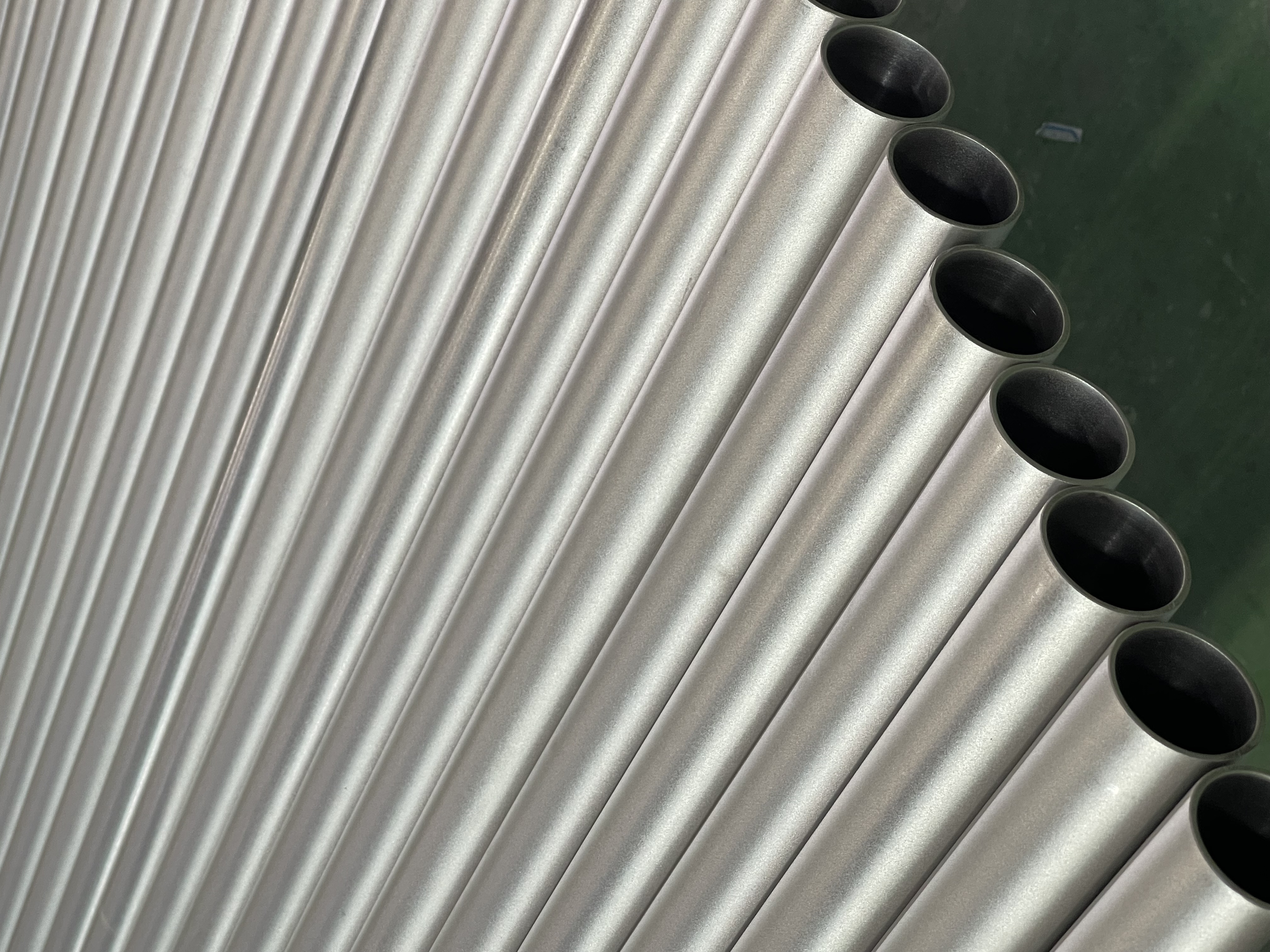
ASTM A999 Seamless & Welded
Stainless Steel Pipe Standard
ASTM A999 is the Standard Specification for General Requirements for Alloy and Stainless Steel Pipe. If A1016 is the umbrella document governing all ASTM stainless steel tube specifications, A999 is its pipe counterpart—the general requirements specification that governs every ASTM alloy and stainless steel pipe specification from A312 (austenitic) through A790 (duplex) to A358 (electric-fusion-welded).
Every time a mill produces a stainless steel pipe to any of the 17 ASTM pipe specifications listed in its scope, the general requirements of A999 apply, unless the individual product specification states otherwise. A999 defines the common rules for manufacture, chemical analysis, mechanical testing, dimensional tolerances (wall, OD, length), flattening tests, NDE, hydrostatic testing, repair welding, straightness, certification, and product marking.
ASTM A999 PDF Free Download ASTM A999 PDF Free Download
What is ASTM A999?
ASTM A999/A999M is the general requirements specification that provides the common technical framework for all alloy and stainless steel pipe specifications. It consolidates requirements that would otherwise be repeated across 17 individual product specifications—dimensional tolerances, NDE calibration procedures, hydrostatic test formulas, flattening test methods, and marking rules.
The current edition is A999/A999M–23, published September 2023, under ASTM Committee A01, Subcommittee A01.10. The ASME equivalent is SA-999 in Section II of the Boiler and Pressure Vessel Code. The three-tier hierarchy is the same as A1016: purchase order > product specification > A999. If a product specification (such as A312) conflicts with A999, the product specification governs. If the purchase order imposes more stringent requirements than either, the purchase order governs.
Product Specifications Governed by ASTM A999
A999 applies to 17 ASTM pipe specifications covering seamless, welded, forged and bored, centrifugally cast, and spray-formed pipe in ferritic alloy, austenitic, and duplex stainless steel. When specifying stainless steel seamless pipe to A312, the wall thickness tolerances, OD tolerances, hydrostatic test formula, flattening test parameters, NDE calibration procedures, and marking requirements all come from A999.
Chemical Analysis Requirements
A999 requires one heat analysis per heat of steel. When secondary melting (ESR, VAR) is used, the heat analysis comes from one remelted ingot per primary melt. Product analysis requirements are defined in the individual product specification.
Section 6.2.1 contains the same cross-grade contamination rule as A1016: steel shall not contain an unspecified element to the extent that it would conform to a different grade where that element has a required minimum content. This prevents substitution of one alloy for another within the same heat.
Dimensional Tolerances
A999 defines three core tolerance tables for pipe: Table for wall thickness (nominal wall), table for wall thickness (minimum wall), and table for outside diameter. Length tolerances are in Section 12.
Wall Thickness — Nominal Wall
Permitted variations from nominal wall thickness for seamless and welded pipe. Nominal wall allows –12.5% under-tolerance.
Wall Thickness — Minimum Wall
When the purchase order specifies minimum wall, there is zero under-tolerance. All variation is on the over side only. Key difference: Nominal wall pipe has a –12.5% under-tolerance—meaning the actual wall can be 12.5% thinner than the stated value. Minimum wall pipe has zero under-tolerance—the actual wall is always at or above the specified minimum. Minimum wall costs are higher because the manufacturer targets a heavier wall to guarantee no under-tolerance.
Outside Diameter Tolerances
Permitted OD variations for alloy and stainless steel pipe. Note: The under-tolerance is a constant 1/32 in. (0.8 mm) for all sizes—only the over-tolerance increases with NPS. For thin-wall pipe (wall ≤3% of OD), OD tolerance applies to the mean of extreme diameter readings, and ovality shall not exceed 1.5% of specified OD.
Length Tolerances (Section 12)
For cut lengths of 24 ft (7.3 m) or less: +1/4 in. (6 mm), –0 for seamless and welded pipe. For forged/bored and cast pipe: +1/8 in. (3 mm), –0. Lengths over 24 ft require agreement between manufacturer and purchaser. No girth welds are permitted unless agreed upon.
Flattening Test (Section 20)
A999 defines the flattening test used by all covered pipe specifications. A pipe section is flattened cold between parallel plates in two steps.
Step 1 (Ductility): No cracks until the plate gap reaches the H-value: H = (1+e) × t / (e + t/D). The deformation constant e = 0.07 for medium-carbon steel, 0.08 for ferritic alloy, 0.09 for austenitic steel, 0.09 for duplex stainless, and 0.09 for low-carbon steel.
Step 2 (Soundness): Flattening continues until the specimen breaks or opposite walls meet. Any lamination, defective material, or incomplete weld causes rejection. For welded pipe, the weld is positioned at 90° to the force. Specimen length: 2-1/2 in. (60 mm) min for seamless, 4 in. (100 mm) min for welded.
Non-Destructive Examination and Hydrostatic Test
Hydrostatic Test (Section 21.2)
Each pipe is tested to a minimum hydrostatic pressure producing a wall stress of 60% of min yield for ferritic alloy/stainless steel, or 50% of min yield for austenitic and duplex stainless steel. Formula: P = 2St/D. Maximum required test pressure is capped at 2,500 psi (17 MPa) for OD ≤3.5 in. (88.9 mm), or 2,800 psi (19 MPa) for OD >3.5 in. Hold time: minimum 5 seconds. For welded pipe, hold is sufficient to inspect the entire weld seam.
Non-Destructive Electric Test (Section 21.3)
NDE per ASTM E213 (ultrasonic), E309 (eddy current, ferromagnetic), E426 (eddy current, non-magnetic), or E570 (flux leakage). Reference notch depth: 12.5% of wall or 0.004 in. (0.1 mm), whichever is greater. Signal-to-noise ratio ≥2.5:1. Standardisation at start/end of each run and every 4 hours.
Eddy current frequency limits: 100 kHz for walls <0.050 in., 50 kHz for 0.050–0.150 in., 10 kHz for ≥0.150 in. Ultrasonic: 2.0 MHz min frequency, 1.5 in. max transducer size. Pipes producing signals ≥ reference standard are designated suspect and evaluated per Section 21.3.10.
Straightness Requirements
Finished pipe must be reasonably straight. Metal-arc welded pipe: maximum deviation of 1/8 in. (3.2 mm) from a 10 ft (3 m) straightedge. For shorter pipes, the tolerance is prorated. Government procurement adds tighter limits by OD range.
Repair Welding, Marking, and Certification
Repair Welding (Section 16)
Repair welding of base metal defects in seamless pipe and plate defects in welded pipe requires purchaser approval. Repaired pipes are marked "WR," filler metal must be suitable, defects are ground out before welding, each repaired length is reheat-treated and NDE-tested. Procedures qualified per ASME Section IX.
Product Marking (Section 25)
Each pipe is stenciled with the manufacturer's name, specification number, and grade, starting approximately 12 in. (300 mm) from the end. For pipe < NPS 2 or < 3 ft (1 m) long, marking may be on a tag. For austenitic steel pipe, marking paint/ink must not contain zinc, lead, or copper salts—these metals cause corrosive attack when heated.
Certification (Section 24)
The manufacturer furnishes a certificate of compliance (no signature required) plus a test report covering: heat number, heat analysis, product analysis (when specified), tensile properties, flattening test results, hydrostatic test pressure or NDE method, and impact test results. Maximum two reheat treatments are permitted without purchaser approval.
Physical Properties of Common Pipe Grades
A999 does not specify physical properties. The values below cover the austenitic and duplex grades most commonly ordered under A999-governed specifications.
If you want to know more product details, please contact us!
Frequently Asked Questions
-
Does A999 Replace the Product Specification?
-
What is the Difference Between A999 and A1016?A999 is the general requirements specification for pipe (NPS-dimensioned products). A1016 is the general requirements specification for tubes (OD × wall-dimensioned products). Pipe specifications (A312, A358, A790) reference A999. Tube specifications (A213, A249, A269) reference A1016.
-
What is the Difference Between Nominal Wall and Minimum Wall?Nominal wall allows –12.5% under-tolerance. Minimum wall has zero under-tolerance. Minimum wall pipe costs 10–20% more because the manufacturer targets a heavier wall to guarantee no under-tolerance. Specify the minimum wall when the design calculation depends on the full wall thickness being present at every point.
-
How is the Hydrostatic Test Pressure Calculated?P = 2St/D, where S = Typically 60% of min yield for ferritic or 50% of min yield for austenitic/duplex steel. Capped at 2,500 psi (≤3.5 in. OD) or 2,800 psi (>3.5 in. OD). Example: NPS 4 Sch 40S TP316L (0.237 in. wall, 4.500 in. OD): S = 0.50 × 25,000 = 12,500 psi; P = 2 × 12,500 × 0.237 / 4.500 = 1,317 psi.
-
How Many Reheat Treatments Are Allowed?A999 permits a maximum of two reheat treatments without purchaser approval. Each reheat cycle risks grain growth (reduced toughness) and sensitisation in unstabilised austenitic grades. Investigate the root cause after the first failure rather than relying on repeated reheat treatment.
-
Does A999 Cover Duplex Stainless Steel Pipe?Yes. A790 (seamless/welded duplex pipe), A928 (EFW duplex pipe with filler), A872 (centrifugally cast duplex pipe), and A949 (spray-formed duplex pipe) are all governed by A999.
-
What Flattening Test Constant Applies to Austenitic Pipe?The deformation constant e = 0.09 for austenitic and duplex steel, 0.08 for ferritic alloy steel, 0.07 for medium-carbon steel. Higher e-values mean the pipe must flatten further before cracking is acceptable—reflecting the higher ductility of austenitic and duplex alloys.
-
Does A999 Apply to Carbon Steel Pipe?Partially. A999 covers A333 (low-temp carbon/alloy steel pipe), A335 (high-temp ferritic alloy pipe), and A369 (forged carbon/ferritic alloy pipe). Plain carbon steel pipe (A53, A106) is governed by ASTM A530, not A999. A999 applies to alloy and stainless steel pipe; A530 applies to carbon steel and specialized alloy pipe.
- What is ASTM A999?
- Product Specifications Governed by ASTM A999
- Chemical Analysis Requirements
- Dimensional Tolerances
- Flattening Test
- Non-Destructive Examination and Hydrostatic Test
- Straightness Requirements
- Repair Welding, Marking, and Certification
- Physical Properties
- Frequently Asked Questions
- Explore Other ASTM Standards