
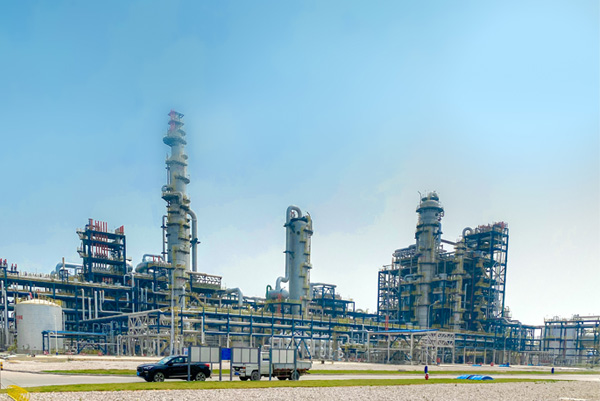
Stainless Steel & Alloy Pipes for the Petrochemical Industry
The Scale of the Global Petrochemical Industry
Petrochemicals are chemical products derived from petroleum and hydrocarbons, petroleum being the primary source. These chemicals feed into plastics, agriculture, pharmaceuticals, textiles, automotive components, construction materials, and packaging.
The global petrochemical market is valued at approximately USD 700–743 billion (2025–2026), growing at a compound annual rate of 4.4–6%. Asia-Pacific holds roughly 52% of the global revenue share as of 2025. In China alone, a Sinopec-Aramco refinery-petrochemical complex worth USD 9.82 billion is currently under construction. While petrochemicals represent around 10% of petroleum by volume, their end-product value is significantly higher. Major production centres are spread across the USA, Western Europe, the Middle East, and Asia. Ethylene production remains the central driver of petrochemical processing capacity worldwide.
Why Petrochemical Processing Demands Specialist Alloys
Petrochemical environments do not present a single challenge. Ethylene cracker furnaces operate above 1,000°C, and at those temperatures, materials face oxidation, carburisation, and creep simultaneously. Downstream units add a different set of problems: sulfuric acid, hydrochloric acid, caustic soda, amines, and chlorides, often in combination.
Two failure modes that are specific to petrochemical service are intergranular corrosion and polythionic acid stress corrosion cracking (PTA-SCC). Both are linked to sensitisation, a metallurgical change that happens in standard austenitic stainless steel when it is exposed to temperatures in the range of 425–900°C, particularly around weld zones. Sensitised material loses its corrosion resistance at grain boundaries and becomes vulnerable to cracking.
Standard carbon steel cannot handle this combination of thermal and chemical stress. The consequence of piping failure in a petrochemical plant is not just a maintenance cost. It means explosion risk, toxic release, environmental damage, and production losses running into millions. Grades like 321, 347 (stabilised) and 304L, 316L (low-carbon) were specifically developed to prevent sensitisation in welded piping. Scrupulous non-destructive and destructive testing is a requirement, not an option, for fitness-for-service in these plants.
High-Performance Alloys for Petrochemical Applications
High-Temperature Stainless Steels (310S, 310H, 321, 321H, 347, 347H)
Duplex & Super Duplex Stainless Steel
Nickel Alloys for Extreme Petrochemical Service
Where Our Pipes & Tubes Serve Petrochemical Plants
Cracking & Pyrolysis: Ethylene cracker furnace tubes use 310S, 310H, Incoloy 800H/800HT. Radiant and convection coil piping. Transfer line exchangers (TLEs).
Refining & Processing: Catalytic reformer piping uses 321H, 347H. Distillation column piping. Amine treating and gas sweetening lines. Sulfuric acid alkylation piping uses 904L and alloy grades. See also oil and gas piping for upstream applications.
Heat Exchange & Condensing: Shell-and-tube heat exchangers use seamless U-tubes and straight tubes. Air-cooled exchanger tubes. Condenser tubes in overhead systems.
Storage, Transfer & Utilities: Pressure vessel piping and storage tank connections. Cooling water systems use duplex and super duplex grades. Steam piping and boiler tubes.
Why Choose XTD for Petrochemical Piping
XTD (Zhejiang Xintongda Special Steel Manufacturing Co., Ltd.) has been manufacturing special steel pipes since 1985, with over 40 years of production experience. The company specialises in seamless pipe manufacturing, which is the correct choice for high-pressure, high-temperature petrochemical service. What separates XTD from most suppliers is the range held from a single manufacturer: high-temperature grades (310S, 310H, 321H, 347H, 253MA), duplex and super duplex, nickel alloys (Alloy C276, Inconel 625, Incoloy 800H/825), and standard austenitic grades (304L, 316L, 904L).
The full product range covers seamless pipes, tubes, U-tubes, heat exchanger tubes, condenser tubes, and boiler tubes. Certifications include PED, AD2000, NORSOK M650, DNV, BV, and LR. Quality systems are certified to ISO 9001, ISO 14001, and ISO 45001. Testing includes hydrostatic testing, NDT (UT, ET, RT), PMI, intergranular corrosion testing per ASTM A262, full material traceability, and EN 10204 3.1/3.2 documentation. XTD supplies to petrochemical regions across the Middle East, Asia, and Europe.
XTD’s technical team can assist with material selection, dimensional specifications, and pricing for your petrochemical project. Contact us with your application details, required grades, and delivery requirements, and we will respond with a formal quotation.
Industry Applications
Applied across cracking furnaces, catalytic reformers, and chemical processing units for transporting fluids, gases, and chemicals under extreme heat and pressure.
All Industry Applications
 All Industry Applications