
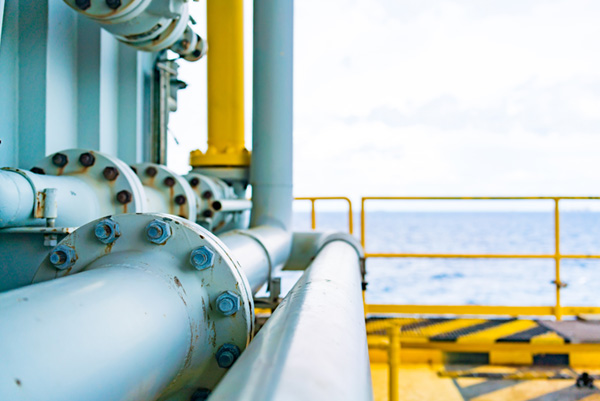
Stainless Steel & Alloy Pipes for the Oil & Gas Industry
The Scale of the Global Oil & Gas Industry
Oil and gas is one of the largest industries globally in terms of capital investment, and its pipeline infrastructure reflects that scale. The global oil and gas infrastructure market is valued at nearly USD 800 billion in 2025 and is projected to almost double by 2035. Pipelines simply account for nearly USD 100 billion and are expanding. About a third of global stainless steel welded pipe demand comes from the oil and gas sector. The industry has three sectors: upstream, midstream, and downstream, each with separate piping and performance requirements.
Why Oil & Gas Demands High-Performance Alloys
Oil and gas environments are among the most demanding environments on earth due to their extreme pressures, high temperatures, and highly corrosive chemical compositions. Pipes are exposed to extreme pressures, elevated temperatures, and highly corrosive chemicals, including hydrogen sulphide, carbon dioxide, chlorides, and sulphur compounds. It’s not one challenge; it’s several at once.
Sour service environments, where hydrogen sulphide is present, create the risk of sulphide stress cracking and hydrogen-induced cracking. Both are sudden, brittle failure modes with no warning. Offshore and subsea conditions add seawater corrosion, wave-loading fatigue, and depth pressure on top of that. Standard carbon steel simply can’t survive these combined stresses.
Corrosion-resistant alloys (CRAs) are essential, and materials must comply with NACE MR0175 / ISO 15156, the global benchmark for metallic materials in hydrogen sulphide environments. The cost of getting this wrong includes environmental damage, regulatory penalties, and lost production. Lifecycle cost is what drives CRA adoption, and rightly so.
Corrosion-Resistant Alloys for Every Oil & Gas Application
We manufacture seamless CRA pipe across the full spectrum of grades used in oil and gas, from austenitic stainless steel through to high-performance nickel alloys. Each material family addresses a specific range of operating conditions.
Duplex & Super Duplex Stainless Steel
Austenitic Stainless Steel (304/304L, 316/316L, 904L)
Nickel Alloys (Inconel 625, Inconel 718, Alloy C276, Incoloy 825)
Serving the Full Oil & Gas Value Chain
These pipes are used in subsea flowlines, offshore platform topsides, wellhead components, and produced water management systems in exploration and production. These are essential for reliable long-distance pipelines and gathering systems in the midstream sector. In downstream refining and petrochemicals, they are the preferred option for process pipes and heat exchangers due to their ability to withstand severe temperatures and corrosive chemical conditions without failure. We supply across all three sectors from a single manufacturing source.
Why Choose XTD for Oil & Gas Piping
We’ve been manufacturing seamless pipe since 1985, with over 40 years of production experience focused on high-specification alloys. Seamless construction isn’t optional in high-pressure, sour-service, and subsea applications. It’s required. Our range covers the full CRA spectrum from a single manufacturer: duplex, super duplex, austenitic stainless steel, and nickel alloys.
All grades comply with NACE MR0175 / ISO 15156. Our facility holds certifications including NORSOK M650, PED, DNV, BV, LR, and ABS, alongside ISO 9001, 14001, and 45001. We subject every pipe to hydrostatic testing, NDE, and PMI. We provide full traceability to EN 10204 3.1 or 3.2 material certification to guarantee your project’s complete compliance.
Contact our team to discuss material selection, NACE compliance, and specifications for your oil and gas project. Our team provides technical guidance and detailed pricing based on project requirements. Reach us via our enquiry form or contact page to get started.
Industry Applications
Specified for offshore platforms, subsea flowlines, and sour gas processing systems handling high-pressure hydrocarbons, hydrogen sulphide, and corrosive well fluids.

All Industry Applications
 All Industry Applications