
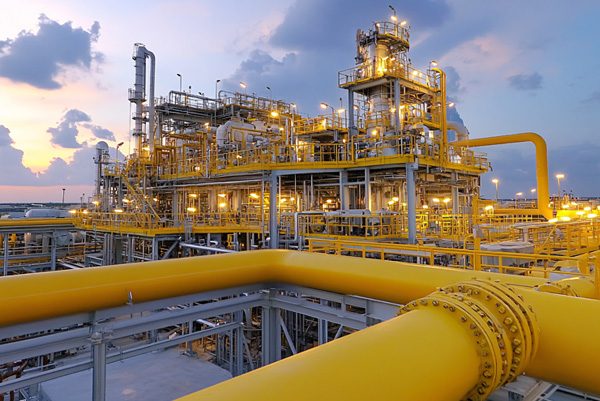
Stainless Steel & Nickel Alloy Pipes for the LNG Industry
The Global Growth of LNG
LNG is natural gas that has been cooled to -162°C, reducing its volume to roughly 1/600th of its gaseous form. That compression makes long-distance transport by sea practical. At the destination, it is regasified and fed into pipeline networks for distribution.
The market is large and still expanding. Global LNG trade reached 411 million tonnes in 2024, across 22 exporting and 48 importing markets. Valued at USD 117.8 billion in 2025 and expected to climb to USD 228.8 billion by 2032, the LNG market is accelerating, with record 57 MTPA capacity additions in 2026 and dozens of new terminals and liquefaction projects, ensuring strong, ongoing demand for cryogenic-grade piping materials.
Why Cryogenic Service Demands Specialist Materials
At -162°C, most standard steels do not behave the way they do at ambient temperature. Carbon steels and low-alloy steels undergo what is called a ductile-to-brittle transition, a point at which the material loses its ability to absorb impact energy and becomes prone to sudden fracture. For ferritic and martensitic steels, that transition happens well above -162°C, which makes them unsafe for LNG service.
The critical property for cryogenic piping is low-temperature toughness — the ability to remain ductile and absorb impact energy at operating temperature without cracking.
Austenitic stainless steels, which contain 8-14% nickel, maintain a face-centred cubic (FCC) crystal structure at cryogenic temperatures. That structure does not undergo the ductile-to-brittle transition, which is why these austenitic grades are used in LNG piping.
There are additional mechanical demands beyond the operating temperature. As LNG systems transition between liquefaction, transport, and regasification, piping undergoes repeated heating and cooling cycles, driving expansion and contraction that continuously load and stress both the pipe walls and weld joints. Weld quality is critical. Any defect in a weld can become a brittle fracture initiation site at cryogenic temperatures. Material selection, weld procedure, and inspection are all directly tied to safety and regulatory compliance.
Cryogenic-Grade Alloys for LNG Applications
Austenitic Stainless Steel (304/304L, 316/316L, 316LN)
High-Nickel Alloys (Incoloy 825, Inconel 625)
Complementary Grades for LNG Infrastructure
Where Our Pipes & Tubes Serve the LNG Value Chain
XTD pipes and tubes are used in all major stages of LNG processing and transport:
Liquefaction plants need cryogenic process piping, heat exchanger tubes, and condenser tubes operating at -162°C. LNG storage tanks use transfer piping and containment system components. On LNG carriers and FSRU vessels, cargo piping, deck lines, and boil-off gas piping must all perform reliably under cryogenic conditions and marine exposure.
Regasification terminals require vaporiser piping and high-pressure send-out lines. Cryogenic loading and unloading arms handling ship-to-shore transfer use cryogenic-grade piping throughout.
Beyond the main process flow, boil-off gas (BOG) compressor piping handles gas management during storage, and seawater intake and cooling systems at coastal LNG sites typically use duplex or super duplex grades. XTD supplies for all of these.
Why Choose XTD for LNG Piping
XTD has been manufacturing stainless steel and nickel alloy pipes and tubes for over 40 years. The focus is on seamless pipe, which eliminates the weld seam and reduces the risk of brittle fracture in cryogenic service. That matters particularly in LNG applications.
The full product range includes seamless pipes, tubes, U-tubes, heat exchanger tubes, and condenser tubes. Cryogenic grades held in stock include 304/304L, 316/316L, 316LN, Inconel 625, Incoloy 825, and Alloy 800/800H/800HT. Duplex and super duplex grades are also available for terminal topside piping.
XTD holds marine and terminal certifications, including DNV, BV, LR, ABS, CCS, and meets NORSOK M650 and PED/AD2000 standards. Quality system certifications cover ISO 9001, ISO 14001, and ISO 45001. QA includes Charpy impact testing at cryogenic temperatures, pressure testing, NDT, and full material traceability from melt to finished pipe.
Reach out to XTD’s technical team to review material options, define specifications, and obtain pricing for your LNG project. We work with EPC contractors, terminal operators, and vessel builders at all stages of project development.
Industry Applications
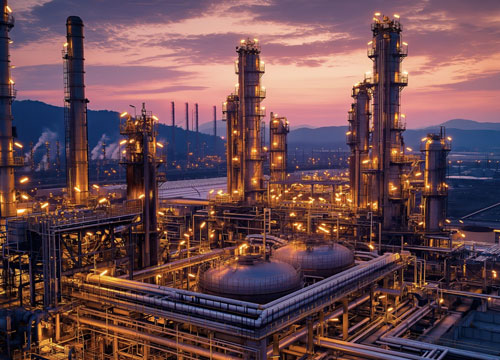
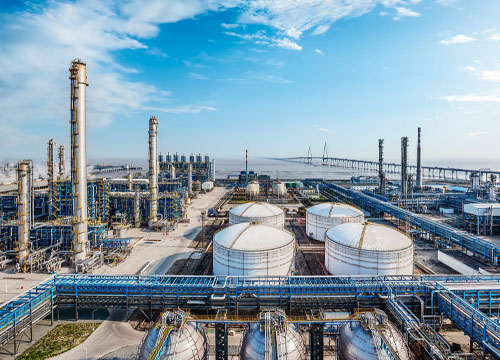
Engineered for liquefaction plants, cryogenic transfer lines, and regasification terminals where liquefied natural gas is transported safely at temperatures down to -162°C.
All Industry Applications
 All Industry Applications