
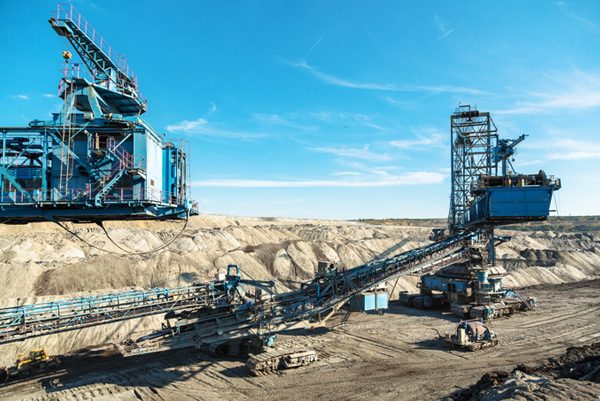
Stainless Steel & Alloy Pipes for Mining & Minerals Processing
Critical Mineral Demand and Hydrometallurgy Piping Trends
Critical minerals are driving most of this. The market is already over USD 400 billion. Lithium demand may increase close to five times by 2040. Copper demand is also rising, with supply gaps expected in both copper and lithium over the next decade. Investment is increasing, especially in lithium, followed by copper and nickel. A lot of new processing is shifting to hydrometallurgy. This involves acid leaching and solvent extraction, which require corrosion-resistant piping.
Why Mining Demands Dual Corrosion and Abrasion Resistance
Mining environments are not just corrosive. They are also abrasive at the same time. In mining, the primary issue is that both act together. Acids like sulfuric acid are used in leaching. Chlorides and acidic slurries are common. At the same time, pipelines carry slurry with solid particles. These particles hit the pipe wall continuously. This leads to erosion-corrosion.
Material loss is faster than normal corrosion or wear alone. HPAL circuits are one of the harshest cases. Temperatures can reach around 250°C with concentrated sulfuric acid. Carbon steel does not last long here. Even standard stainless grades struggle. Tailings pipelines also face similar conditions over long distances. Failure usually means shutdown, cleanup issues, and safety risk.
Corrosion-Resistant Alloys for Mining & Mineral Processing
Mining operations use a mix of alloy systems. Selection depends on acid concentration, temperature, and slurry conditions. In most cases, there is a step-up in material grade as conditions get more aggressive.
Duplex & Super Duplex Stainless Steel
Superaustenitic & High-Alloy Stainless Steel (904L, SMO 254)
Nickel Alloys for Extreme Mining Conditions
Where Our Pipes & Tubes Serve the Mining Industry
Hydrometallurgy circuits include HPAL discharge lines, leach tank piping, and sulfuric acid distribution. 904L is used in controlled acid conditions, while super duplex and nickel alloys are selected for higher temperature and concentration. SX and electrowinning circuits also use these materials, especially where chlorides are present.
Slurry transport systems handle ore, concentrate, and tailings over long distances. Duplex and super duplex are used due to higher strength and better resistance to erosion-corrosion. Thickener underflow and high-velocity lines fall in this group.
Processing equipment includes heat exchanger tubes, U-tubes, condenser tubes, and scrubbers. Seamless tubes help reduce failure points in these systems.
Infrastructure covers dewatering, process water, cooling water, and chemical dosing lines. Selection depends on pH, chloride levels, and flow conditions.
Why Choose XTD for Mining & Minerals Piping
XTD has over 40 years of manufacturing experience. The focus is on seamless pipes, which avoid weld-related weak points in slurry service.
The full material range is available. This includes duplex, super duplex, 904L, SMO 254, and nickel alloys like C276, Inconel 625, and Incoloy 825. Standard grades like 304L and 316L are also supplied. We include a variety of products, including pipes, tubes, U-tubes, and heat exchanger tubes.
Our products cover testing for hydro, UT, ET, RT, PMI, and IGC for quality assurance. Material traceability is maintained as per EN 10204. Certifications include PED, AD2000, NORSOK M650, and major classification bodies. We supply to mining regions across Australia, South America, Africa, and the Middle East.
Contact our team to discuss material selection, sizes, and pricing for your project. Send your requirement through the enquiry form or email. For quick support, call our sales team.
Industry Applications
Deployed across hydrometallurgy circuits, slurry pipelines, and acid leaching systems for handling abrasive ore concentrates, sulfuric acid, and corrosive process streams.
All Industry Applications
 All Industry Applications