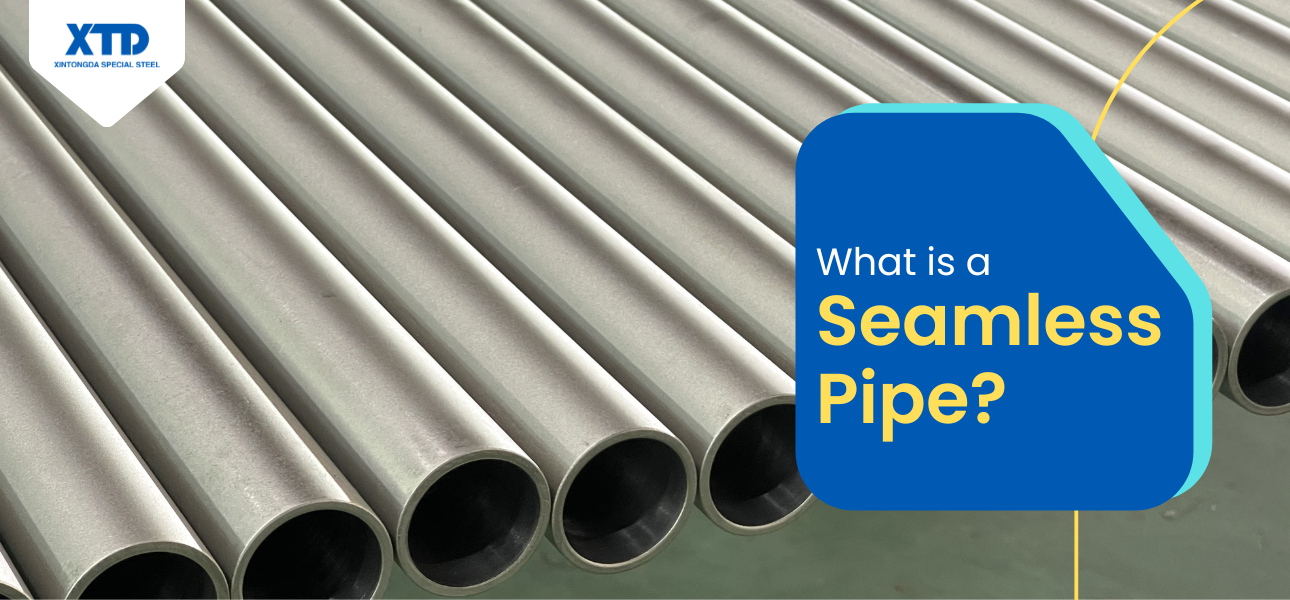
A seamless pipe is a hollow, cylindrical steel tube made from a solid steel billet, with no weld joints or seams. The billet is heated until it is soft enough to form, pierced in the centre, and then shaped into a pipe. This process produces a pipe with an even grain structure and no weak points along its length.
This article explains how seamless pipes are made, why they perform better than welded pipes in critical uses, which ASTM standards apply, and the six main industries that depend on seamless stainless steel pipes. We also teach how to select the appropriate grade and size.
How is a Seamless Pipe Made?
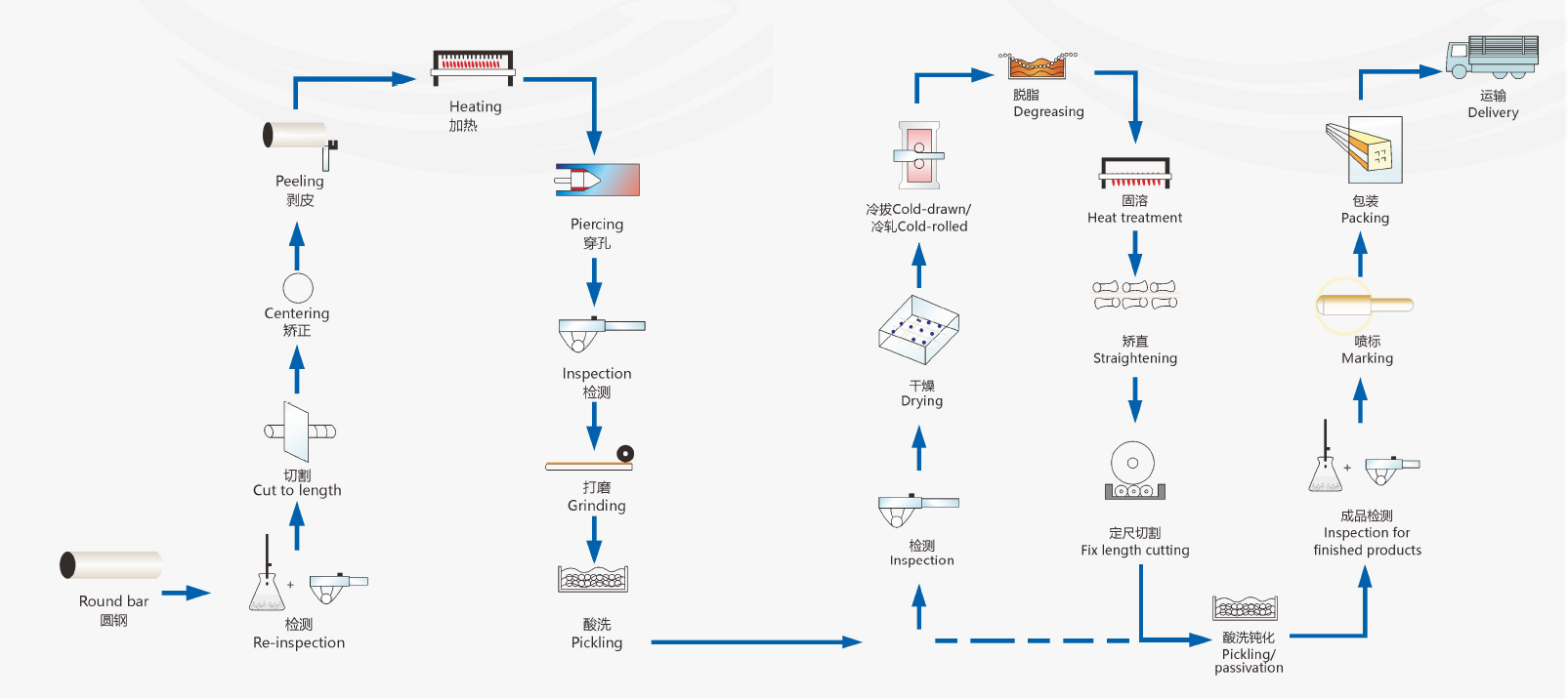
Seamless pipe manufacturing starts with a solid round billet of stainless steel. The procedure consists many steps as shown in the above infographic. The 5 major stages: heating, piercing, elongation, sizing, and heat treatment are explained below.
Stage 1: Billet Heating
The solid stainless steel billet is heated in a rotary hearth furnace to 1,150–1,280°C (2,100–2,340°F). The exact temperature depends on the alloy grade. At this temperature, the steel can bend and stretch without cracking.
Stage 2: Piercing
The heated billet passes through a rotary piercing mill (Mannesmann piercer). Two barrel-shaped rolls rotate the billet while a pointed mandrel is forced through its centre. This creates a rough hollow tube called a mother tube or shell.
The Mannesmann brothers of Germany invented the piercing procedure in 1885. It is still the usual method for producing seamless pipes today.
Stage 3: Elongation
The rough shell is then milled with a pilger mill, plug mill, or mandrel mill to reduce wall thickness while increasing length. This phase brings the pipe closer to its final dimension.
- Pilger mill: uses reciprocating dies in a hot rolling process and produces pipes with tight dimensional tolerances.
- Mandrel mill: uses a continuous mandrel through multiple roll stands, with high production speed.
- Plug mill: uses a stationary plug inside the pipe with rotating rolls outside
Stage 4: Sizing and Straightening
The elongated pipe passes through a sizing mill that brings the OD to its final dimension. A straightening machine then removes any bow or curvature from the pipe.
Stage 5: Heat Treatment
Stainless steel seamless pipes require solution annealing after forming. The pipe is heated to 1,040–1,120°C (1,900–2,050°F) and then rapidly cooled (water quench or forced air). This dissolves any chromium carbides that formed during hot working and restores full corrosion resistance.
We at Zhejiang have completed all 5 stages at our production facility during manufacturing.
5 Advantages of Seamless Pipe Over Welded Pipe
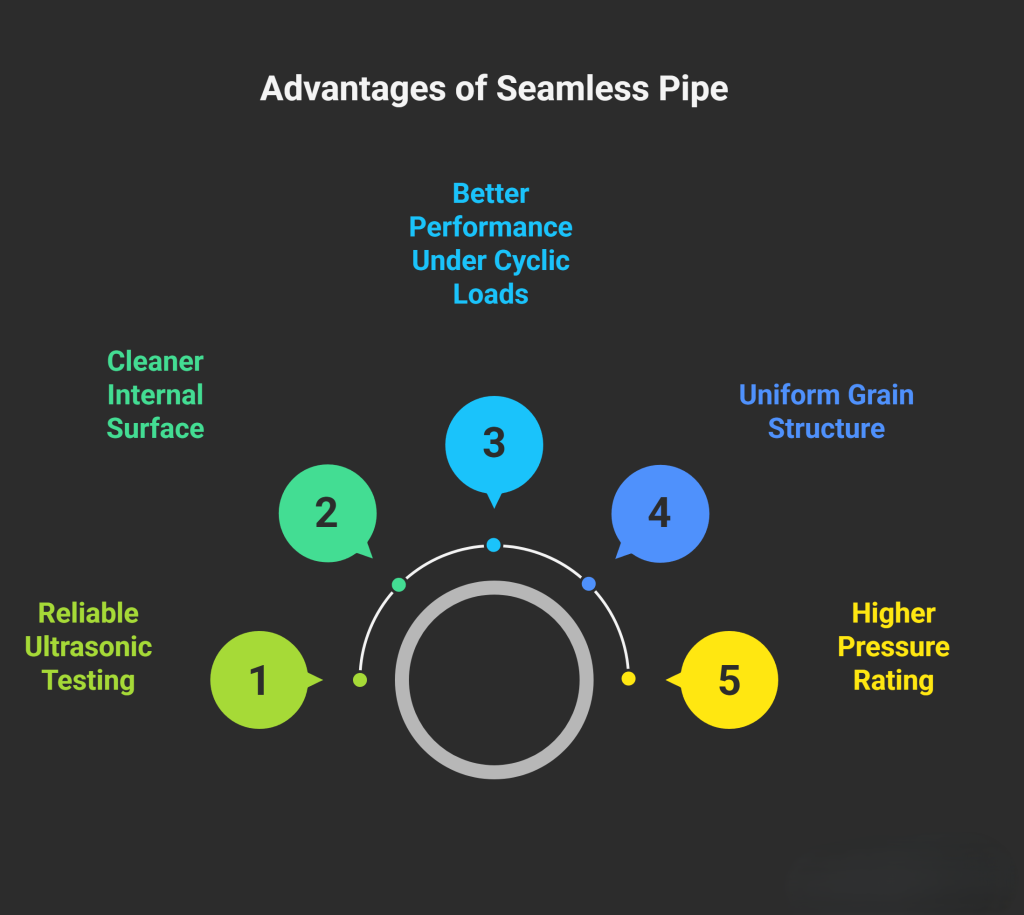
Seamless pipes outperform welded pipes in 5 specific ways:
1. Higher Pressure Rating
Seamless pipes carry the full rated pressure of the base material. No weld seam reduces the rated pressure. A welded pipe of the same size and grade uses a weld joint efficiency factor of 0.85, reducing its rated pressure by 15%.
For example, an NPS 4 Schedule 80 TP316L seamless pipe handles a working pressure of approximately 4,200 psi (29 MPa) at room temperature. The same pipe in welded form handles about 3,570 psi (24.6 MPa).
2. Uniform Grain Structure
The grain structure in a seamless pipe flows continuously around the full circumference. There is no heat-affected zone (HAZ), the narrow band near a weld where the microstructure changes. HAZ areas have reduced corrosion resistance and are more likely to crack under cyclic stress.
3. Better Performance Under Cyclic Loads
Piping systems in oil refineries, power plants, and chemical plants experience thermal cycling and pressure fluctuations. Weld seams are stress concentrators where fatigue cracks start. Seamless pipes remove this failure point.
4. Cleaner Internal Surface
Seamless pipes have a smooth inner bore without any internal weld bead. Welded pipes may have a protruding weld bead inside that restricts flow, traps debris, and initiates corrosion. For hygienic and instrumentation applications, the smooth bore of a seamless pipe is a must.
5. Reliable Ultrasonic Testing
Seamless pipes provide clearer ultrasonic testing (UT) results because there are no weld seams to induce misleading reflections. This makes flaw detection easier and more accurate.
What ASTM Standards Cover Seamless Stainless Steel Pipes?
Seamless stainless steel pipes and tubes fall under several ASTM standards based on the alloy family and the intended application. Here are the 5 most commonly referenced standards.
| ASTM Standard | Material | Application |
| ASTM A312 | Austenitic SS (304, 316L, 321, 347) | Seamless and welded pipe for high-temp and corrosive service |
| ASTM A790 | Duplex and super duplex SS | Seamless and welded duplex pipe |
| ASTM B444 | Inconel 625 (N06625) | Seamless nickel alloy pipe and tube |
| ASTM B423 | Incoloy 825 (N08825) | Seamless nickel-iron-chromium alloy pipe and tube |
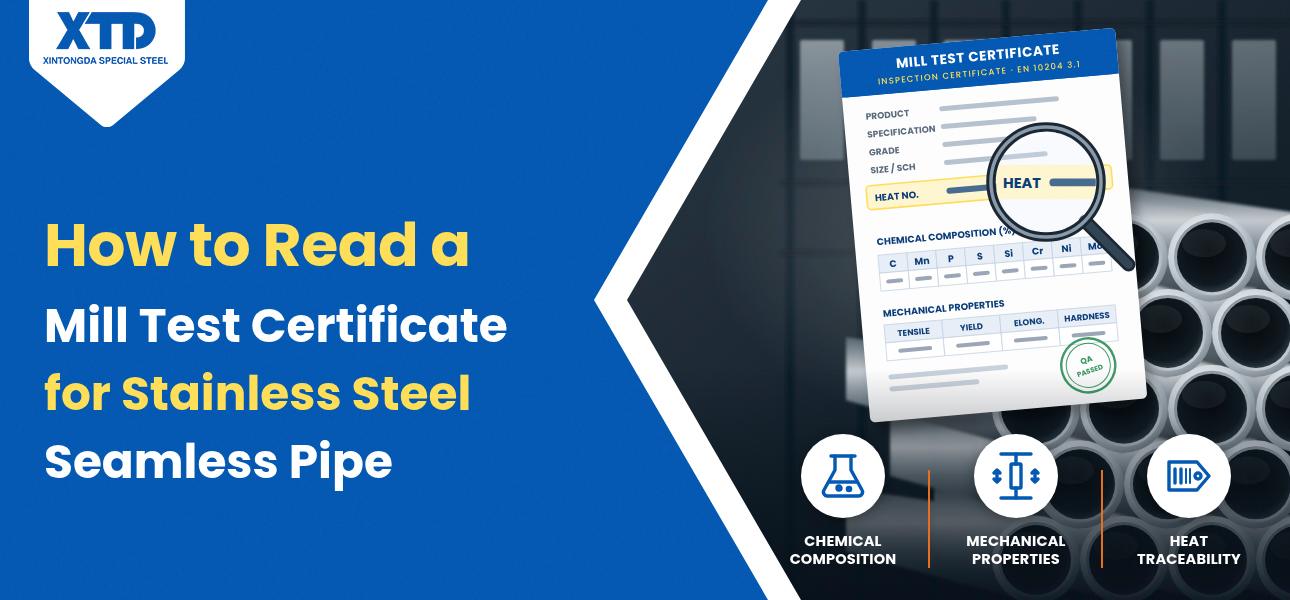
All of our seamless pipes are supplied with material test certificates (MTC) per EN 10204 3.1, which include chemical composition, mechanical specifications, and NDT results.
Common grades of seamless stainless steel pipes
We produce seamless pipes of the following grade families:
Austenitic Stainless Steel:
- SS 304 / 304L — general purpose, food grade
- SS 316 / 316L — chloride and chemical resistance
- SS 321 / 321H — high-temperature cycling
- SS 347 / 347H — high-temperature creep resistance
- SS 310S — continuous oxidation resistance up to 1,050°C (1,922°F); intermittent service up to 1,100°C
- SS 904L—a super-austenitic grade with high resistance to sulfuric and phosphoric acid environments
Duplex and Super Duplex:
- Duplex 2205 (S32205) — 2x strength of 316L
- Super Duplex 2507 (S32750) — PREN > 40 for subsea
Nickel Alloys:
- Inconel 625 — seawater and high-temperature
- Incoloy 825 — sulfuric acid and sour gas
- Hastelloy C276 — aggressive mixed-acid service
6 Industries That Rely on Seamless Stainless Steel Pipes
1. Oil and Gas
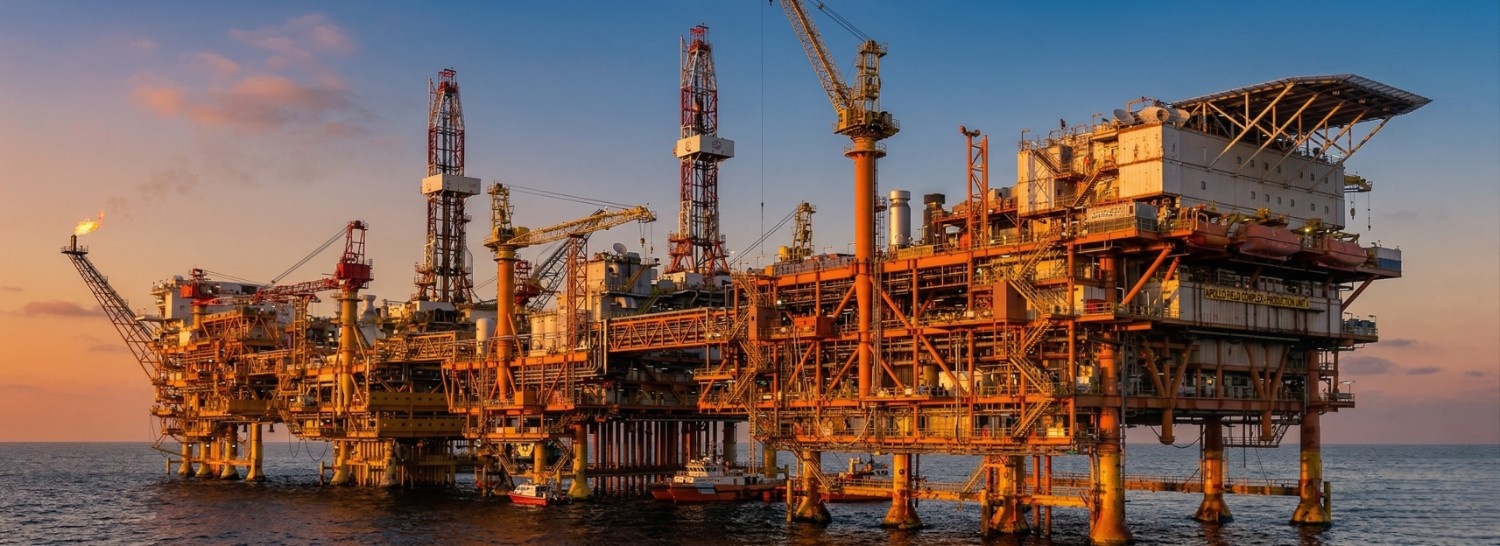
Seamless pipes transport crude oil, natural gas and produced water from the wellhead to a processing facility. Downhole tubing, flowlines, and subsea umbilicals all require seamless construction to ensure pressure integrity.
2. Petrochemical and Chemical Processing
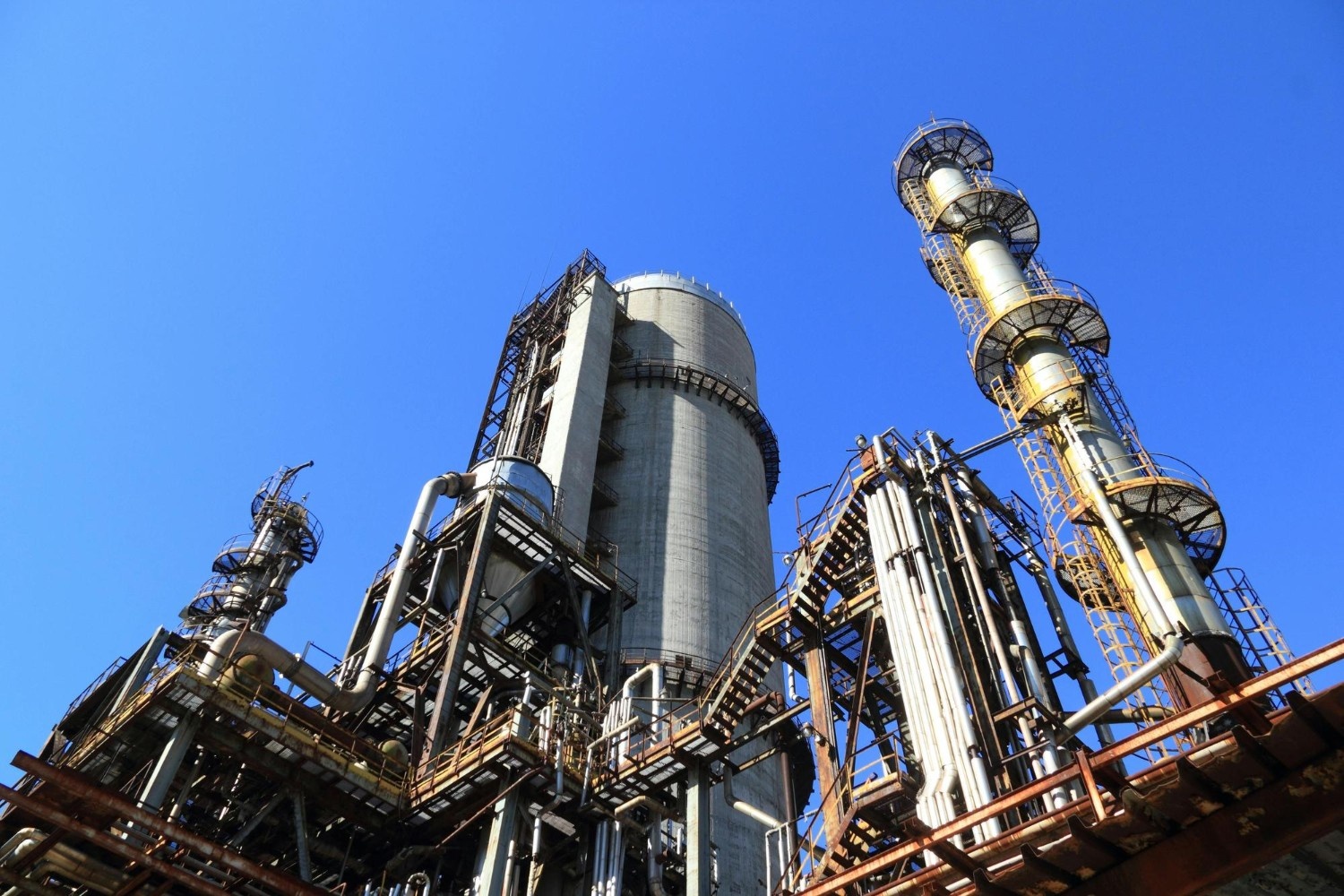
Refineries and chemical plants use seamless pipes for reactor piping, heat exchanger bundles, and transfer lines. The corrosive fluids, acids, caustics, and chlorides demand both seamless construction and the right alloy grade.
3. Power Generation
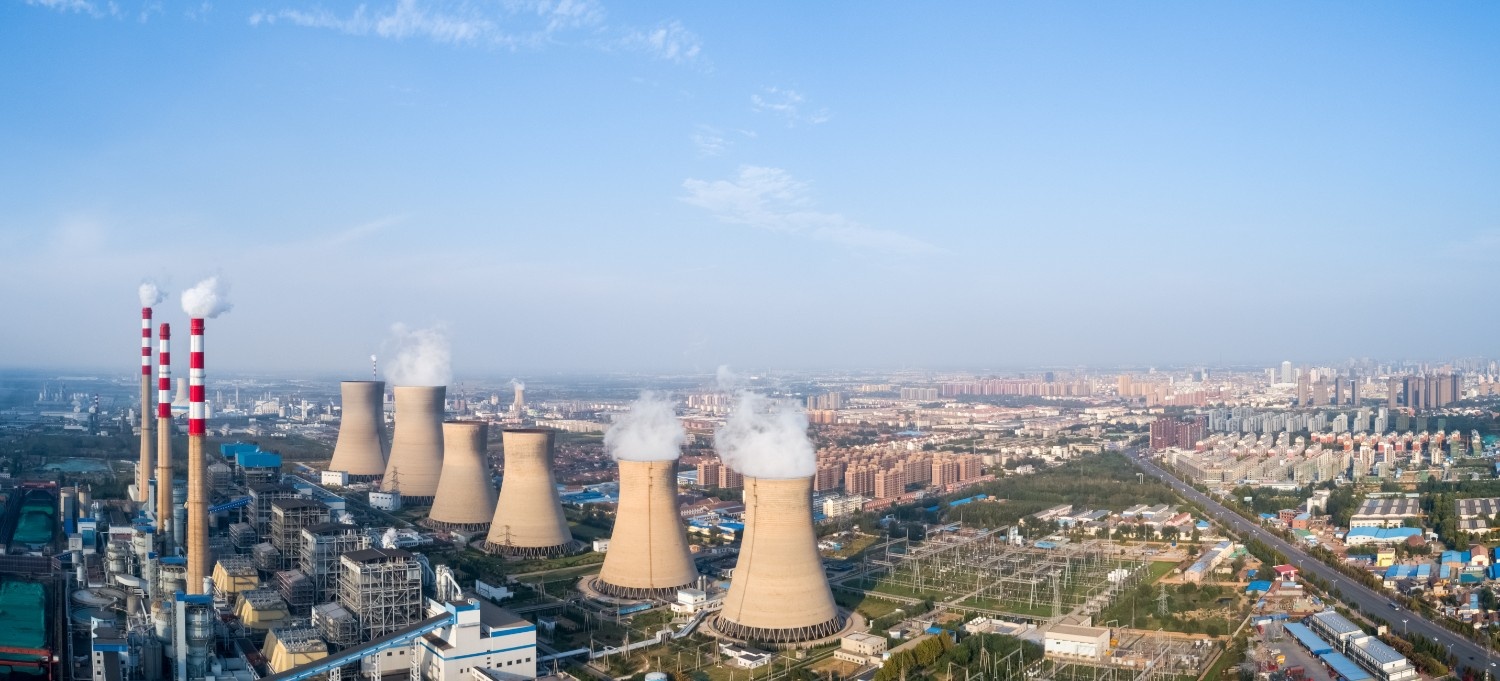
Power plants’ boiler tubes, superheater tubes, and main steam lines operate at pressures and temperatures greater than 2,000 psi and 500°C, respectively. Seamless pipes can handle these conditions without a weld-seam risk.
4. LNG (Liquefied Natural Gas)
LNG transfer lines operate at temperatures of about -162°C (-260°F). Austenitic seamless pipes (304L, 316L) retain strength at extremely low temperatures, where carbon steel becomes brittle.
5. Offshore and Subsea
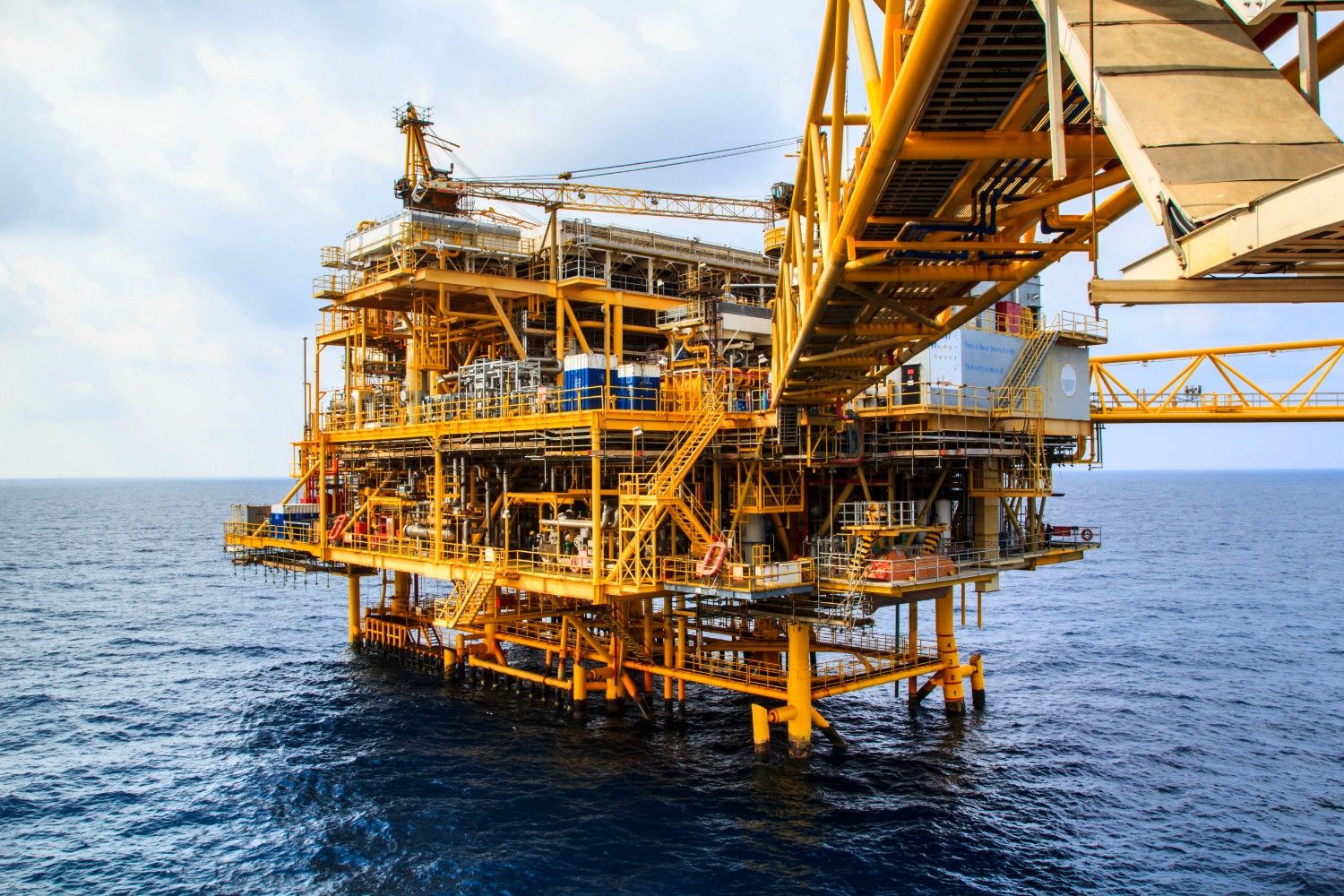
Offshore platforms and marine installations require seamless pipes that can survive seawater corrosion, high pressures, and cyclic pressure caused by waves and currents. Superduplex 2507 and Inconel 625 are common options.
6. Pharmaceutical and Food Processing
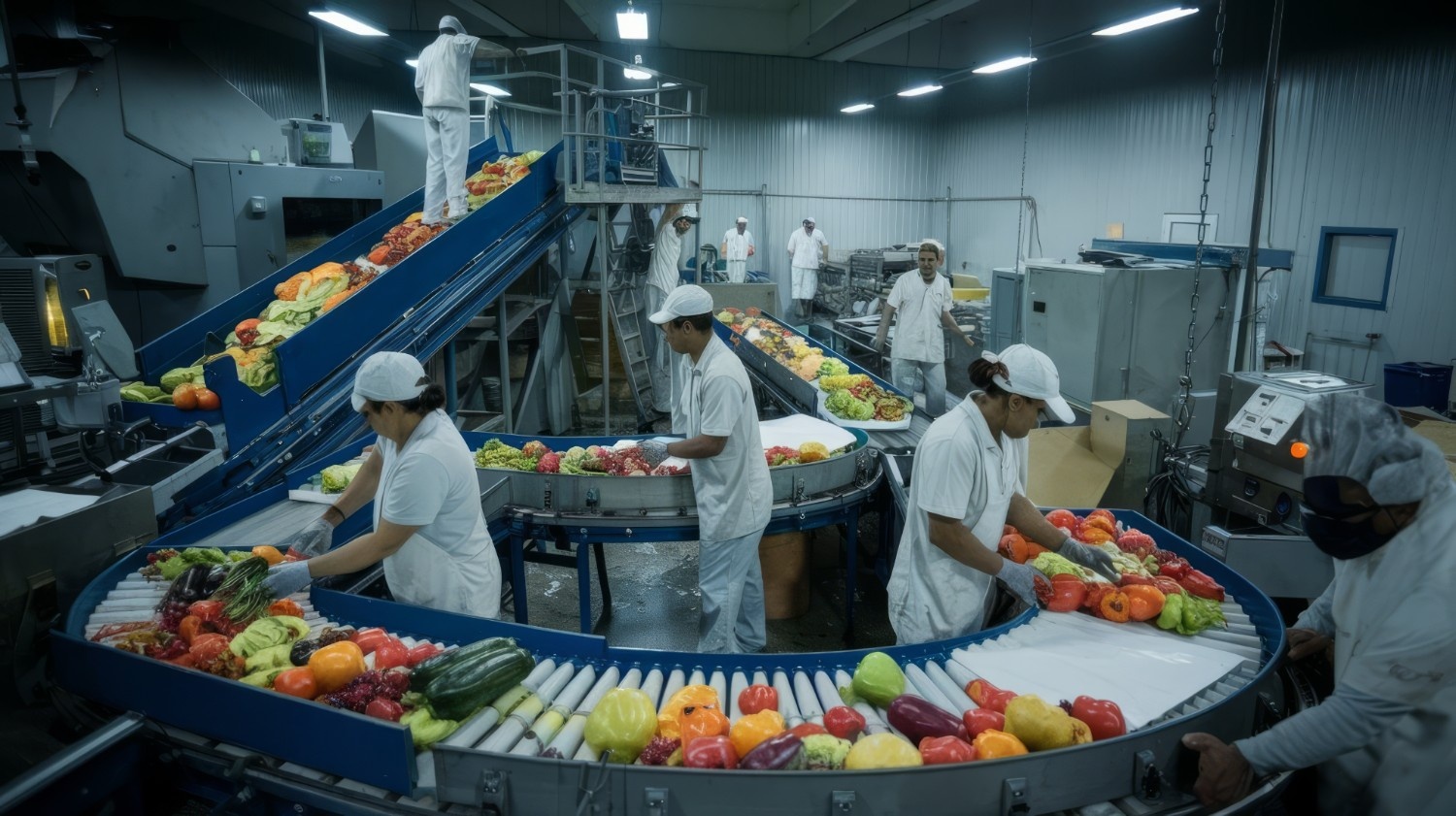
These industries demand a smooth inside surface for hygiene purposes. Seamless pipes avoid the interior weld bead, which may contain bacteria. Polished seamless pipes with Ra < 0.8 μm surface finish are the standard.
How to Order Seamless Pipes?
When you request a quote for seamless pipe, provide these 5 details:
- Grade: e.g., TP316L, Duplex 2205, Inconel 625
- Size (NPS or OD): e.g., NPS 4 or 114.3 mm OD
- Schedule or wall thickness: e.g., Schedule 40S or 6.02 mm wall
- Length: standard mill lengths are 5.8 m or 6.0 m; random lengths available
- Standard: e.g., ASTM A312, ASTM A790
For size reference, check our pipe size chart. For applications served, visit our applications page.
Conclusion
A seamless pipe is made from a solid billet with no weld seam. This offers it higher pressure ratings, a more uniform grain structure, and a longer fatigue life than welded pipe. Seamless stainless steel pipes serve the most demanding applications in the oil and gas, petrochemical, power, LNG, offshore, and pharmaceutical industries.We have been manufacturing seamless stainless steel pipes since 1985. Contact our technical team for pricing, lead times, and guidance on grade and specification selection.