CPT vs PREN: What’s the Difference in Stainless Steel Corrosion Resistance?
Use PREN to shortlist candidate grades, then specify CPT testing on the actual production heat to qualify it.

Use PREN to shortlist candidate grades, then specify CPT testing on the actual production heat to qualify it.

Duplex and super duplex stainless steels share the same dual-phase microstructure. Both contain roughly 50% austenite and 50% ferrite. But super duplex pushes the alloy content higher, giving it a PREN above 40 and a yield strength above 550 MPa.

Both 304 and 316 are austenitic stainless steels that resist corrosion, handle high temperatures, and weld easily. One critical element that separates them is molybdenum. This element improves corrosion resistance and affects both performance and cost. This comparison covers chemical

Incoloy 825 and Inconel 625 are both nickel-based alloys built for extreme corrosion resistance. But they differ in nickel content, molybdenum levels, temperature capability, and cost. An incorrect alloy selection can result in unnecessary cost or premature equipment failure. This

Wall thickness determines how much pressure a pipe can handle, how much it weighs, and how much it costs. Selecting a wall that is too thin risks burst failure. Pick a wall that is too thick, and you waste money

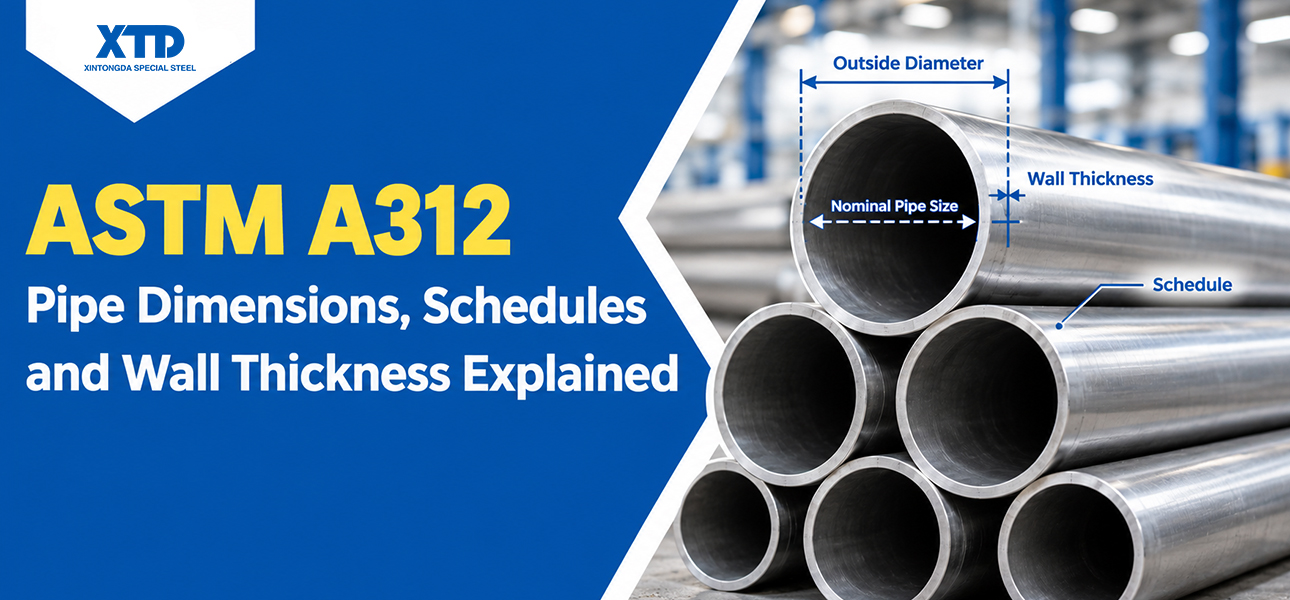
Ordering stainless steel pipe without understanding NPS, schedule, and OD leads to wrong sizes, wasted material, and project delays. These 3 dimensions define every pipe you buy, but they confuse even experienced engineers. This guide explains how NPS, schedule, and

Stainless steel pipes come in many types, each built for a different pressure, temperature, and corrosion condition. Picking the wrong type wastes budget or leads to early failure. Picking the right type gives you decades of reliable service. This guide

A seamless pipe is a hollow, cylindrical steel tube made from a solid steel billet, with no weld joints or seams. The billet is heated until it is soft enough to form, pierced in the centre, and then shaped into

Pipe and tube are visually similar and often stocked alongside one another. They are both hollow, cylindrical, and made from the same metals. But they follow different ordering standards, different dimensional tolerances, and serve very different purposes. This article explains