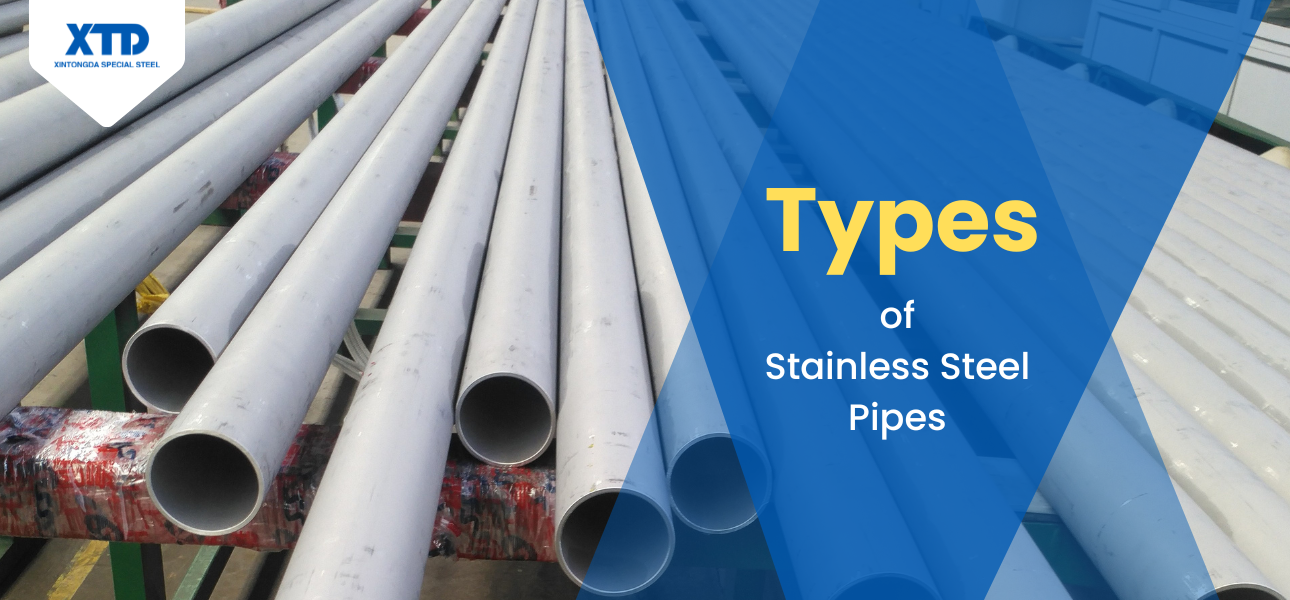
Stainless steel pipes come in many types, each built for a different pressure, temperature, and corrosion condition. Picking the wrong type wastes budget or leads to early failure. Picking the right type gives you decades of reliable service.
This guide covers the 6 main types of stainless steel pipes organised by manufacturing method and by application. We explain how each type is made, what makes it different, and where it works best. We also cover the material grades and ASTM standards for each.
Types of Stainless Steel Pipes by Manufacturing Method
The way a pipe is designed determines its strength, pressure rating, and cost. The 3 primary manufacturing methods are seamless, welded (ERW), and welded (SAW). This is how they compare.
1. Seamless Stainless Steel Pipe
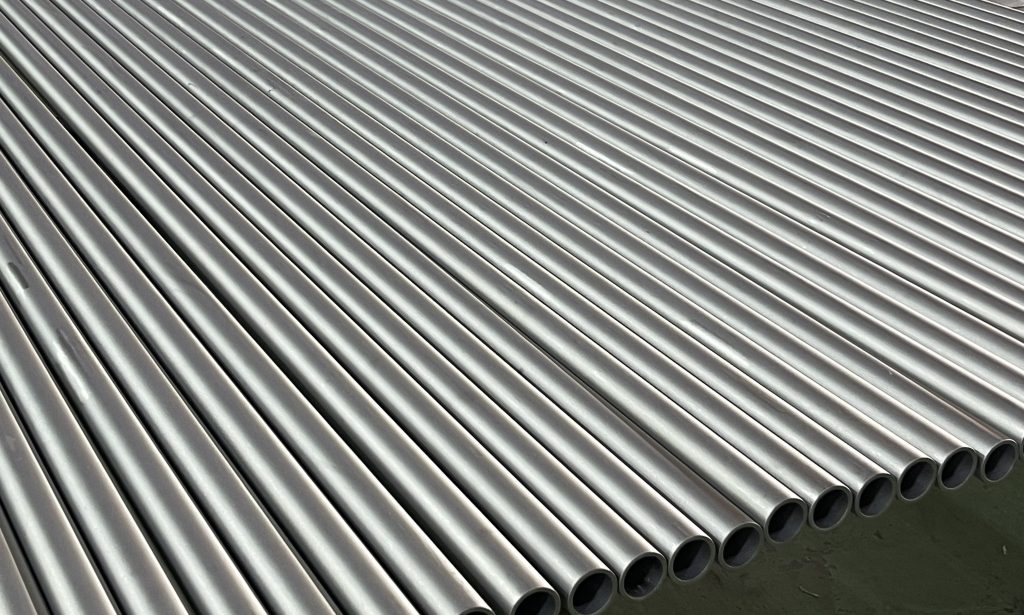
A seamless stainless steel pipe is produced from a solid steel billet that is perforated and drawn into a hollow tube. No welding occurs during this phase. The result is a pipe with consistent grain flow and no weak spots.
Key characteristics:
- No weld seam, highest pressure rating.
- Wall thickness ranges from Schedule 5S to XXS.
- Size range: NPS 1/8 (10.3 mm OD) to NPS 24 (610 mm OD).
- Standards: ASTM A312 and ASTM A790
Ideal for high-pressure, high-temperature, and corrosive service.
We manufacture seamless pipes in various grades, such as 304 and 316L, duplex 2205, superduplex 2507, and nickel alloys.
2. ERW (Electric Resistance Welded) Stainless Steel Pipe
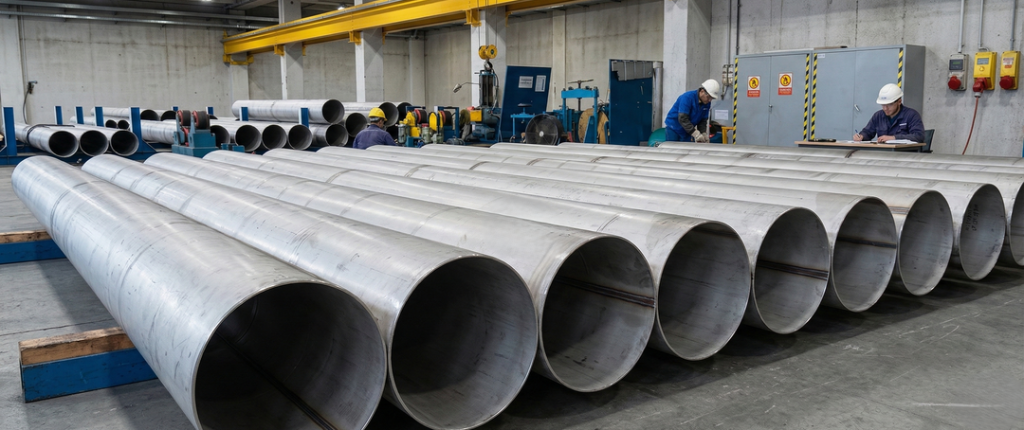
ERW pipes begin as flat stainless steel strips. The strip is rolled into a cylinder and welded along its longitudinal seam with electric resistance welding; no filler metal is used.
Key Characteristics:
- A longitudinal weld seam is evident.
- Lower cost than seamless—typically 20-35% cheaper.
- Good surface polish following weld bead removal.
- Size range: NPS 1/2 – NPS 24
- It is ideal for structural, architectural, and low-to-medium pressure applications.
ERW pipes operate well when the internal pressure is less than the weld joint efficiency factor (0.85% of the seamless rating).
3. SAW (Submerged Arc Welded) Stainless Steel Pipe
SAW pipes are formed by submerged arc welding rolled plate into a cylindrical shape. This method uses flux and filler wire, resulting in a thicker weld layer. SAW pipes are produced in enormous diameters (NPS 16 and above).
Key Characteristics:
- Spiral or longitudinal weld seam
- Available in very large diameters: NPS 16 to NPS 80+
- Thicker walls achievable through plate rolling
- Best for: large-diameter pipelines, water transmission, piling
Types of Stainless Steel Pipes by Application
Beyond the manufacturing method, stainless steel pipes are classified by how they are used. Here are the 3 application-based types.
1. High-Pressure Stainless Steel Pipe
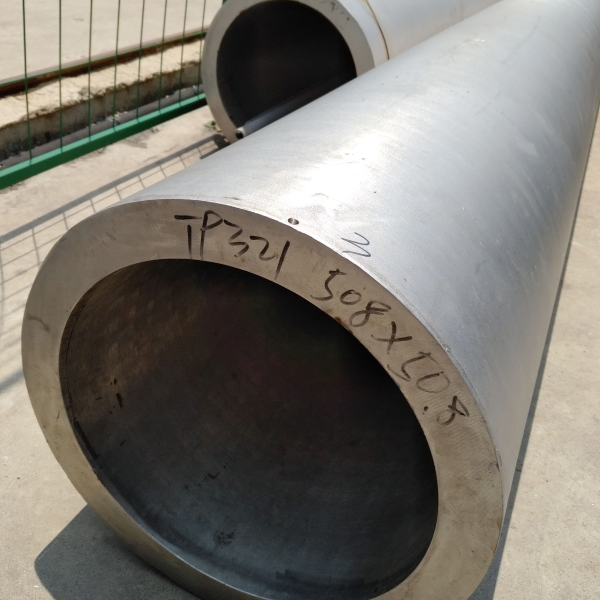
High-pressure stainless steel pipes carry fluids and gases at operating pressures above 1,000 psi (6.9 MPa). They use heavy wall schedules, Schedule 80, 120, 160, or XXS.
These pipes are always seamless. The absence of a weld seam results in the material’s full
pressure rating with no de-rating factor. Common applications include:
- Hydraulic systems
- Boiler feed water lines
- Chemical reactor piping
- Oil and gas production tubing
2. Heavy Wall (Thick Wall) Stainless Steel Pipe
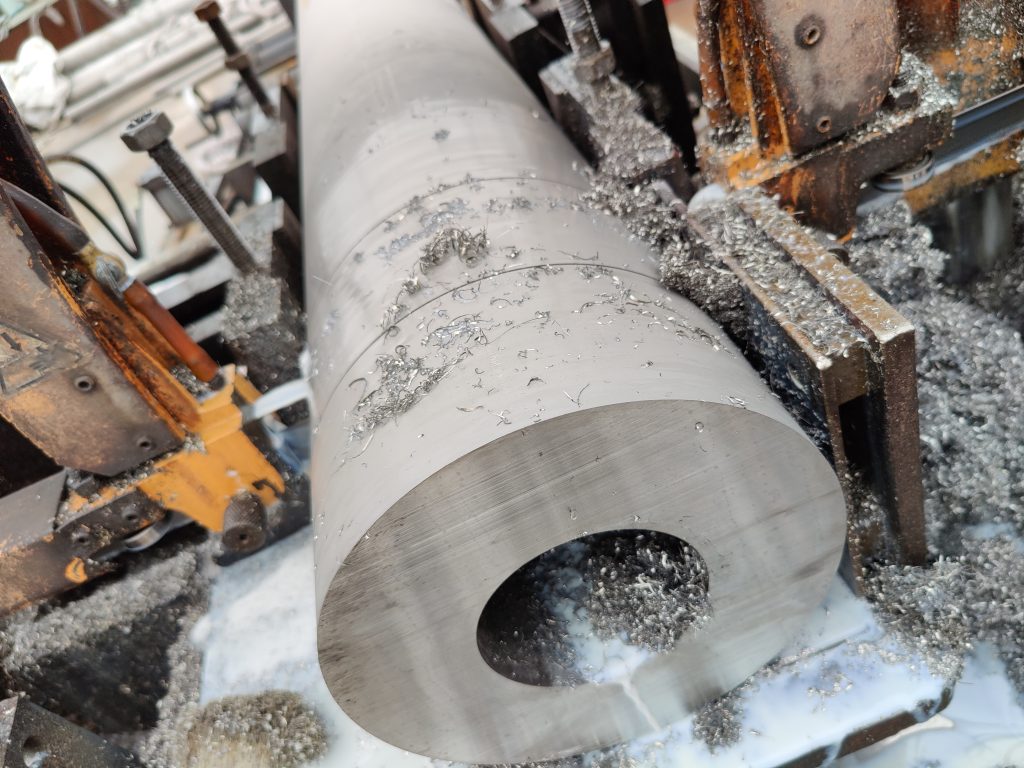
Heavy-wall stainless steel pipes have wall thicknesses of Schedule 80 or above, which can be up to 60 mm. They can withstand severe pressures and provide further corrosion protection for long-term use in harsh locations.
Heavy-wall pipes are used in:
- Subsea flowlines exposed to external hydrostatic pressure
- Sour gas processing (H₂S service)
- High-pressure steam lines in power plants
3. Polished Stainless Steel Pipe
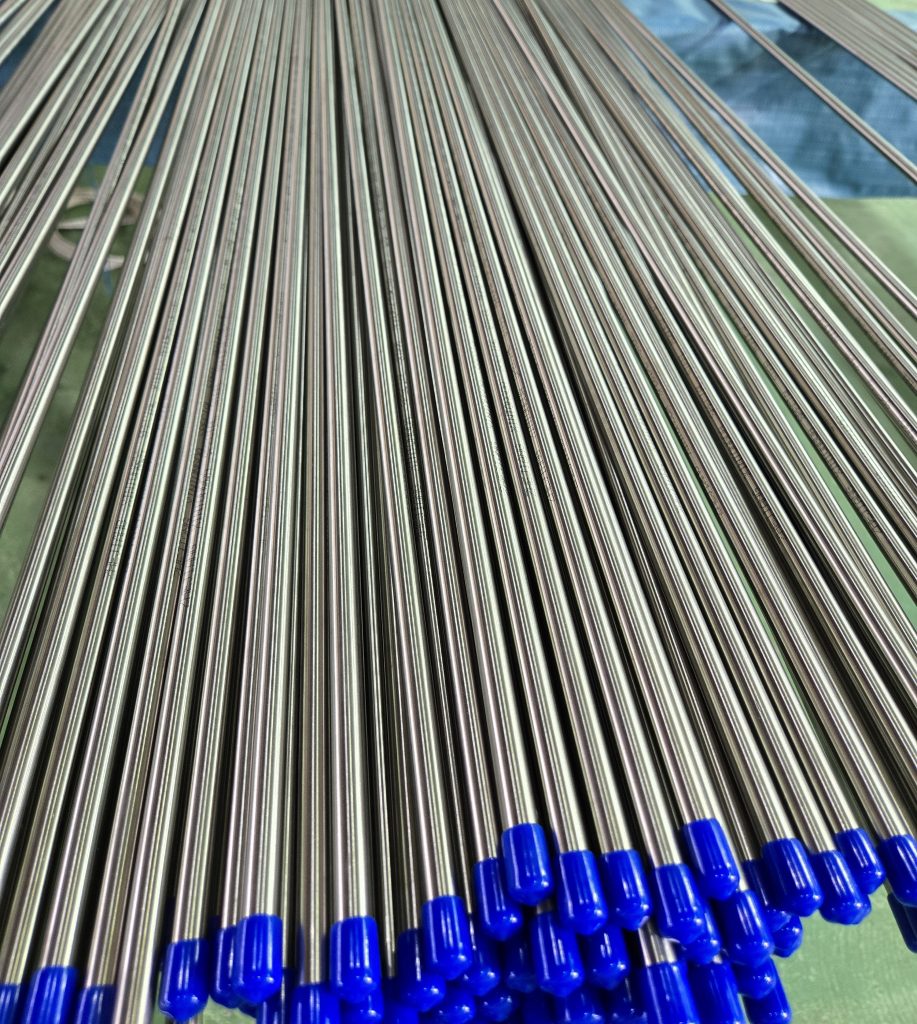
Polished stainless steel pipes possess a surface finish on either the interior or outside that is below Ra 0.8 μm. The polishing process eliminates tiny gaps and cracks that may contain bacteria and corrosion.
Polished pipes are required for:
- Pharmaceutical manufacturing — clean-in-place (CIP) systems
- Food and dairy processing — sanitary piping per 3-A standards
- Semiconductor fabrication — ultra-high purity gas lines
- Architectural and decorative — exposed piping with a mirror finish
Common grades for polished pipe are 304, 304L, 316, and 316L.
Types of SS Pipes by Material Grade
Stainless steel pipes also differ by the alloy grade used. The 2 main material families are:
- Austenitic (300 series) — 304, 304L, 316, 316L, 321, 347, 904L — the most common family
- Duplex — 2205 (S31803/S32205), 2304 — higher strength than austenitic
Each grade family handles a different combination of temperature, pressure, and corrosion. The right choice depends on your specific operating conditions.
Quick Reference: Stainless Steel Pipe Types Summary
This table summarises all 6 types of stainless steel pipes covered in this guide.
| Type | Manufacturing | Key Feature | Standard |
| Seamless Pipe | Pierced billet | No weld, highest pressure | ASTM A312 |
| ERW Pipe | Rolled strip + weld | Lower cost, good surface | ASTM A312 |
| SAW Pipe | Plate + arc weld | Large diameters (NPS 16+) | ASTM A358 |
| High-Pressure Pipe | Seamless, heavy schedule | Above 1,000 psi service | ASTM A312 |
| Heavy Wall Pipe | Seamless, up to 60 mm wall | Extreme pressure + corrosion | ASTM A312 |
| Polished Pipe | Seamless or welded + polished | Ra < 0.8 μm finish | ASTM A312/A270 |
Conclusion
Stainless steel pipes are divided into 3 manufacturing types (seamless, ERW, SAW) and 3 application types (high-pressure, heavy wall, polished, boiler, heat exchanger, condenser, U-tube). Each serves a specific pressure, temperature, and corrosion condition.
We manufacture and supply all these types from our production facility in Zhejiang, China. For help selecting the right pipe type, grade, and size for your project, contact us.