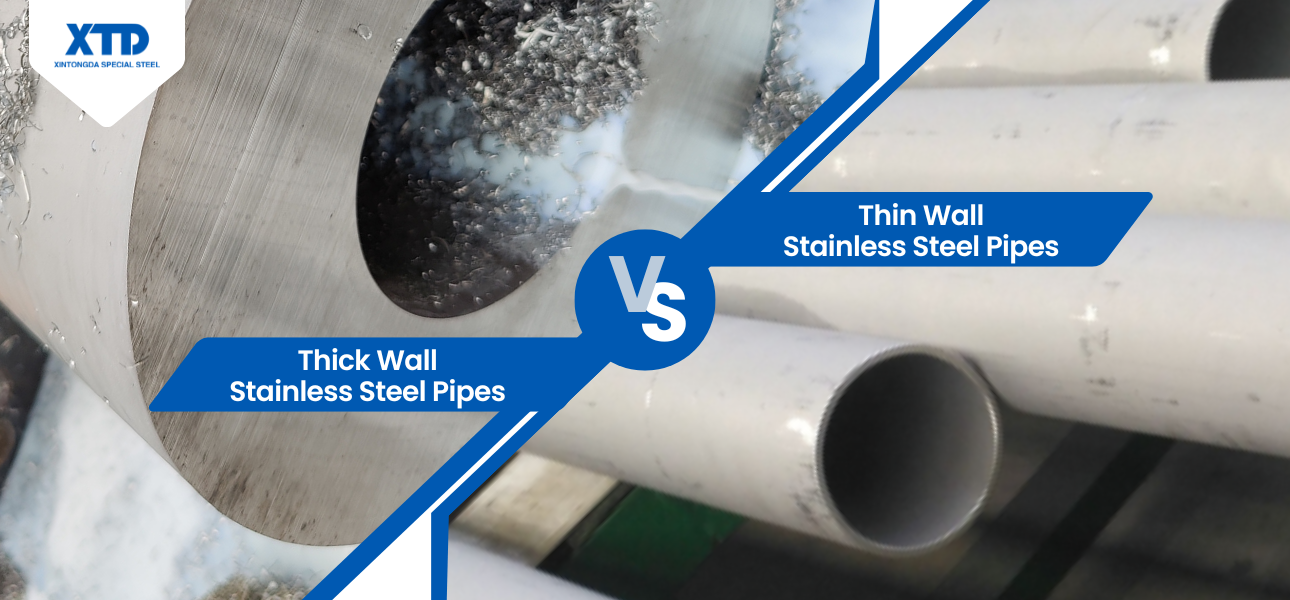
Wall thickness determines how much pressure a pipe can handle, how much it weighs, and how much it costs. Selecting a wall that is too thin risks burst failure. Pick a wall that is too thick, and you waste money on material you do not need.
This guide explains the differences between thick-wall and thin-wall stainless steel pipes. It covers how wall thickness is defined, the pressure ratings for each, cost differences, and the applications in which each type performs.
How is Pipe Wall Thickness Classified?
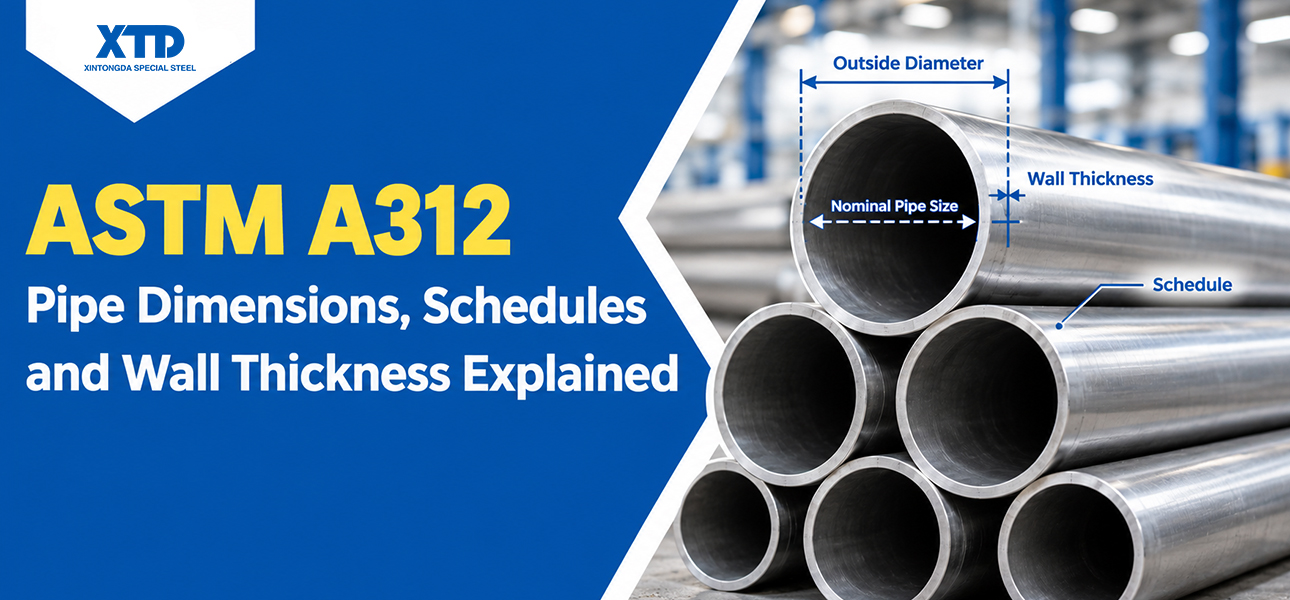
The pipe wall thickness is determined using the ASME or ANSI schedule system. The schedule number indicates how thick the pipe wall is by the given NPS (Nominal Pipe Size). Higher schedules result in thicker walls.
The following is an overview of common schedule classifications for stainless steel pipes.
- Thin wall: Schedule 5S, 10S, and sometimes 20
- Standard wall: Schedule 40S (often the default)
- Thick wall (heavy wall): Schedule 80, 120, 160, and XXS (double extra strong)
For example, an NPS 4 (114.3 mm OD) stainless steel pipe has these wall thicknesses:
| Schedule | Wall Thickness (mm) | Wall Thickness (inches) |
| 5S | 1.65 | 0.065 |
| 10S | 3.05 | 0.120 |
| 40S | 6.02 | 0.237 |
| 80S | 8.56 | 0.337 |
| 160 | 13.49 | 0.531 |
| XXS | 17.12 | 0.674 |
For complete wall thickness data across all NPS sizes and schedules, refer to our pipe size chart
What is a thin-wall stainless steel pipe?
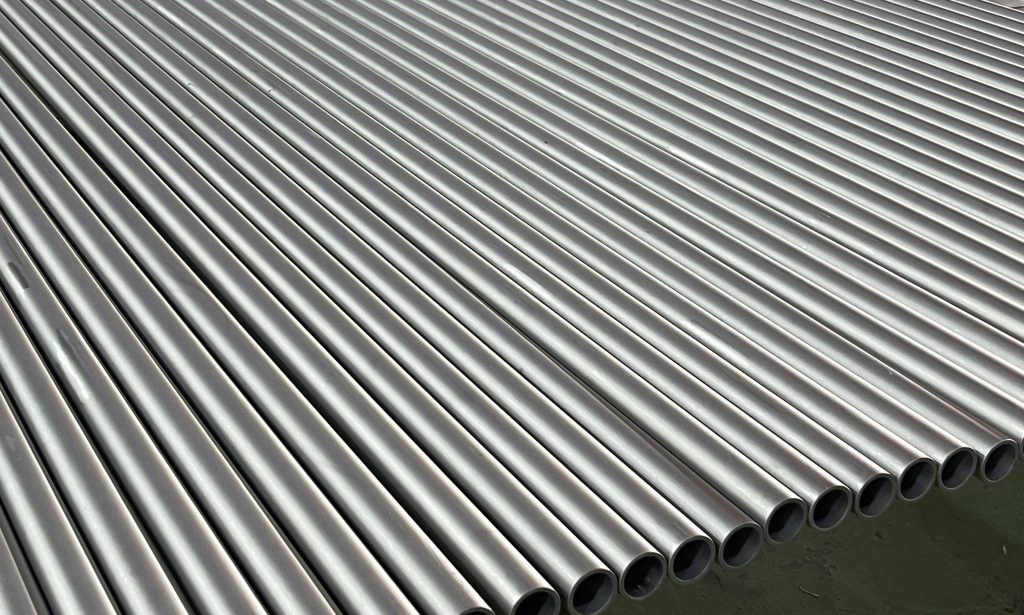
A thin-wall stainless steel pipe typically falls under Schedule 5S or Schedule 10S. These pipes have the minimum wall thickness needed for low-pressure service and corrosion allowance.
Key Properties of Thin-Walled Pipes
- Lower weight per meter: It reduces structural load and shipping cost.
- Lower pressure rating: It is suitable for lower-pressure applications; actual ratings vary significantly depending on the pipe diameter. The pressure table contains NPS-specific values based on size and grade.
- Less material cost: 30–50% cheaper than Schedule 40S for the same OD and grade.
- Easier to bend and fabricate: thinner walls form and weld faster.
Thin-Wall Pipe Applications
Thin-wall stainless steel pipes work best in:
- Food and dairy processing – sanitary piping where pressures stay under 150 psi
- Architectural and decorative – handrails, trim, facade elements
- Instrument and sample lines – low-pressure tubing runs
- Drainage and vent systems – gravity-flow lines with no pressure
- Light industrial transfer – moving fluids at low pressure and ambient temperature
What is a thick-wall stainless steel pipe?
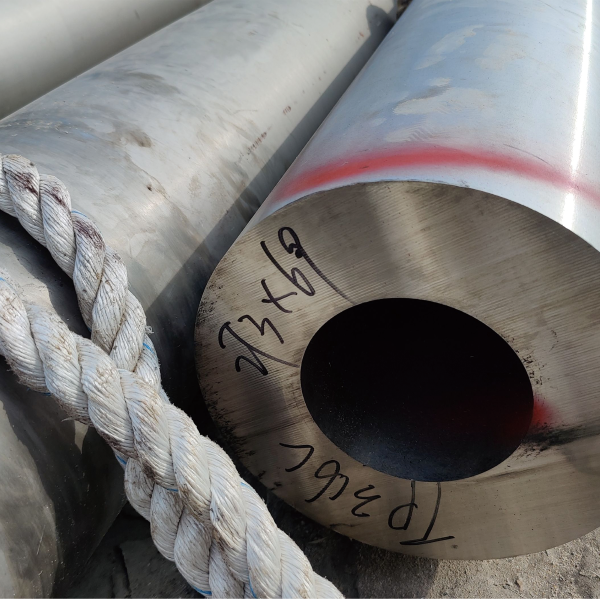
A thick-wall stainless steel pipe uses Schedule 80 or higher, such as Schedules 120, 160, and XXS. We offer heavy-wall stainless steel pipes with wall thicknesses of up to 60 mm, in large-diameter sizes from NPS 10 (273 mm OD) and higher, manufactured to ASME B36.19M.
Key Properties of Thick-Wall Pipes
- Higher pressure rating: It can handle thousands of psi, depending on size and grade.
- Higher mechanical strength: It can withstand external loads, soil pressure, and impacts.
- More corrosion allowance: The extra wall material extends service life in harsh environments.
- Heavier weight: It increases structural requirements and installation cost.
Thick Wall Pipe Applications
Thick-wall stainless steel pipes are required for:
- High-pressure piping systems – boilers, steam lines, hydraulic systems above 1,000 psi
- Oil and gas production – downhole tubing, wellhead piping, subsea flowlines
- Chemical reactors – piping that contacts concentrated acids or operates above 300°C
- Power generation – superheater tubes, main steam lines in power plants
- Offshore platforms – riser pipes exposed to external hydrostatic pressure and corrosion
We manufacture high-pressure stainless steel pipes for all these applications.
Pressure Rating Comparison: Thick vs Thin Wall
The allowable working pressure of a pipe is determined by three factors: wall thickness, pipe outer diameter, and material yield strength. The ASME B31.3 formula is:
P = (2 × S × t × E) / (D – 2 × t × Y)
Where P = pressure, S = allowable stress, t = wall thickness, E = weld factor, D = OD, and Y = temperature coefficient.
The table below provides the approximate operating pressures for NPS 2 (60.3 mm OD) 316L stainless steel pipe at room temperature.
| Schedule | Wall (mm) | Working Pressure (psi) | Working Pressure (MPa) |
| 5S | 1.65 | ~580 | ~4.0 |
| 10S | 2.77 | ~1,000 | ~6.9 |
| 40S | 3.91 | ~1,450 | ~10.0 |
| 80S | 5.54 | ~2,150 | ~14.8 |
| 160 | 8.74 | ~3,600 | ~24.8 |
As the schedule number doubles, the pressure rating increases significantly. The relationship is not linear; it follows the pipe stress formula above.
Cost Comparison: Thick Wall vs Thin Wall
Material cost scales directly with wall thickness because you pay for weight. Stainless steel pipe is priced per kilogram or per metre, and a thicker wall means more kilograms per metre.
This table shows the weight difference for NPS 4 (114.3 mm OD) 316L seamless pipe.
| Schedule | Wall (mm) | Weight (kg/m) | Relative Cost |
| 5S | 1.65 | 4.60 | 1.0x (baseline) |
| 10S | 3.05 | 8.38 | ~1.8x |
| 40S | 6.02 | 16.07 | ~3.5x |
| 80S | 8.56 | 22.32 | ~4.9x |
| 160 | 13.49 | 33.54 | ~7.3x |
A Schedule 80 pipe costs almost 5 times more than a Schedule 5S pipe of the same OD and grade. Over-specifying wall thickness significantly inflates material costs.
4 Factors for Choosing Between Thick and Thin Wall
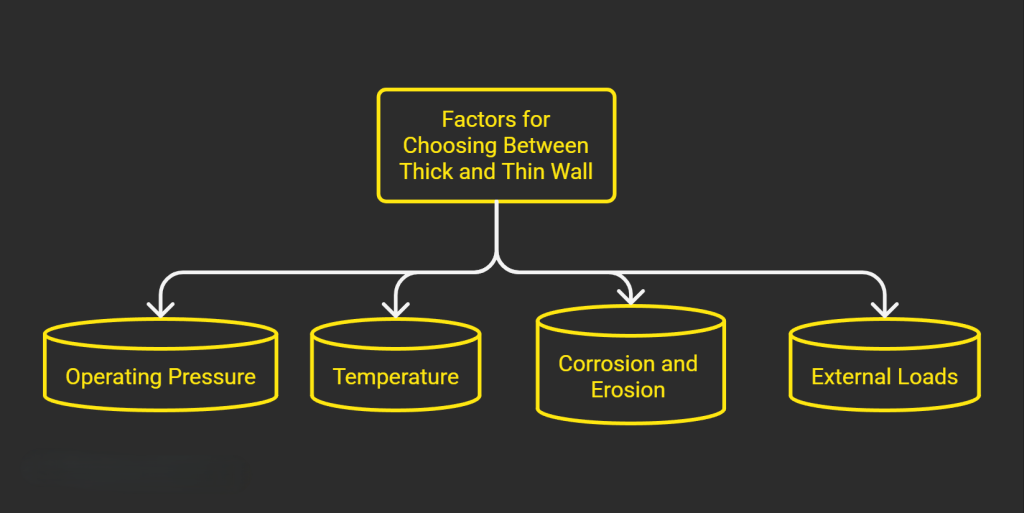
1. Operating Pressure
This is the most important factor. Calculate the required wall thickness using ASME B31.3 or your applicable design code. Add a corrosion allowance (typically 1.5–3.0 mm for carbon steel, 0.5–1.5 mm for stainless steel). Then pick the smallest schedule that meets or exceeds the calculated thickness.
2. Temperature
High temperatures reduce the allowable stress of stainless steel. A pipe that handles 2,000 psi at room temperature may only handle 1,200 psi at 500°C. Thick-wall pipes compensate for this de-rating.
3. Corrosion and Erosion
Corrosive fluids reduce the effective wall thickness over time. If your fluid causes 0.1 mm/year of corrosion, a thin-wall pipe with only 1.65 mm of wall may fail in under 10 years. A thick-walled pipe gives you decades of service.
4. External Loads
Buried pipes face soil pressure. Offshore pipes face hydrostatic pressure from water depth. Both require extra wall thickness beyond what internal pressure alone demands.
Can You Use Thin-Wall Pipe for High-Pressure Service?
No. Using a thin-wall pipe above its rated pressure is dangerous. A burst stainless steel pipe at 1,000+ psi releases stored energy equivalent to an explosion. Always follow your design code and select the correct schedule.
Conclusion
Thin-wall pipes (Schedule 5S–10S) save weight and cost for low-pressure, non-critical applications. Thick-wall pipes (Schedule 80+) can withstand high pressure, temperatures and corrosive environments, when failure is not an option.
Calculate your required wall thickness first. Then pick the schedule that fits. We manufacture both heavy-wall and standard seamless stainless steel pipes in all common schedules. Contact us for a quote.